

Don't Toss Those Potato Peels! Use Them To Season Cookware Instead, Here's How
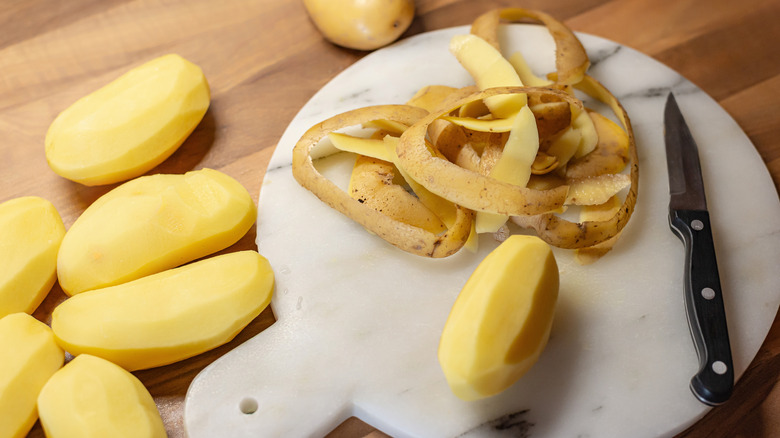
Whether it's new or used, it's always important to season cookware like cast iron pans to prevent them from rusting. There are ways to do so properly, including over an open fire. However, depending on the material of your cookware, it may or may not come pre-seasoned. If it's the latter, there are tips to form that protective, nonstick layer over the cooking surface. One such technique entails using leftover scraps of produce that would otherwise be tossed away: potato peels. While this is not a food waste reduction hack, it's still a savvy way to get the most out of every part of the potato, including those that would be sent straight to the bins.
Once you've removed the wax or grease coating of the pan, allow it to dry over a burner. Next, if you're working with a 10- or 12-inch skillet, add about ⅓ cup of oil, ⅔ cup of table salt, and the peels of two whole potatoes to the pan. Cook this mixture, stirring along all sides of the skillet's cooking surface for about 10 minutes. You'll know you're on the right track when you notice the pan turning brown in large, irregular spots. Once this is done, discard the seasoning mixture and repeat once more or until completely seasoned, before washing gently with hot, soapy water. The last step is to place the pan over heat and, once dried, rub the surface with a bit of oil.
Why does this technique work?
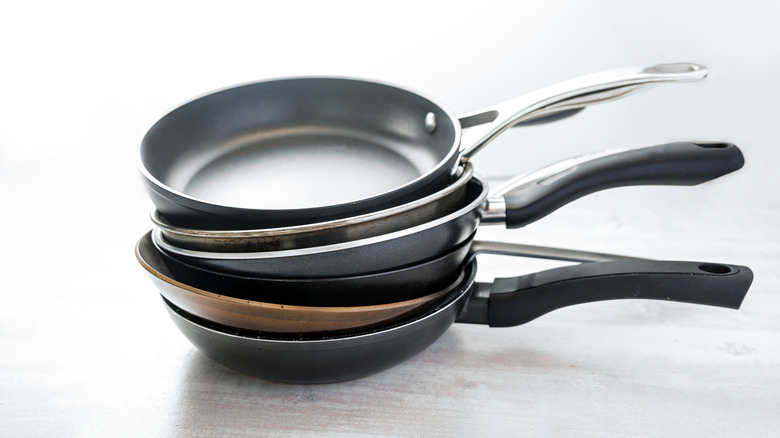
Seasoning, also called curing, is a process by which you form a nonstick layer along the cooking surface of a pan or skillet. This protective coating not only prevents the food from sticking to the pan, but also protects it from rusting and corroding. One of the more common methods involves covering the cookware in a thin layer of oil, then heating it so that the oil polymerizes. Oil polymerization is a chemical process wherein the oil turns into a hardened coating by forming a bond with the cooking surface, which is responsible for the protective, nonstick layer. It's important to pick the best oil when seasoning your pans, and those with lower smoke points like flaxseed will polymerize into a coating quicker.
The aforementioned salt is important as its coarseness helps scrub any residual grease or wax. On the other hand, the potato peels help regulate the heat so that oil polymerizes evenly across the surface. Potatoes also contain a compound called oxalic acid, which can also help lift and remove any surface oxidation or residual build up from the pan's surface. If you don't have potatoes, sliced onions are also recommended as a suitable replacement for potato peels. Once your pan is seasoned, you're ready to cook up some delicious meals with improved flavor – until you notice that it's time to put your potato peels to good use again.