

How A Dictator Was Involved In The Creation Of Pad Thai
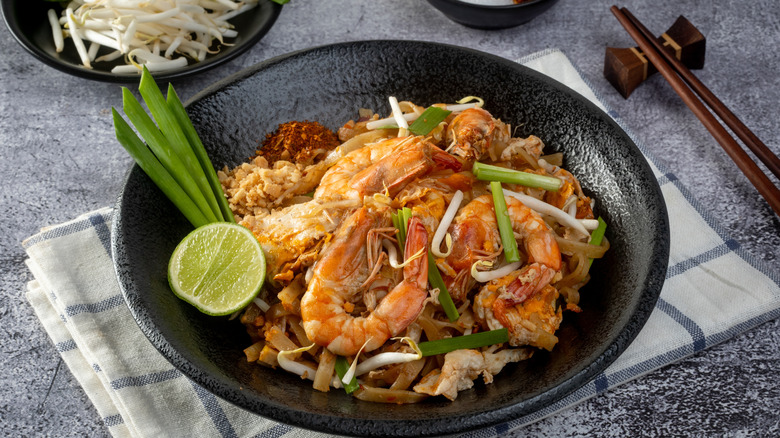
Although many people might think that pad Thai is an iconic part of the Thai culinary canon, the dish doesn't have a centuries-long connection to the country. In fact, it owes much of its identity and particularly its name to a campaign by Thailand's mid-20th-century strongman, Field Marshal Plaek Phibunsongkhram (sometimes shortened to just "Phibun"). During his tenure as prime minister in the late 1930s and again in the late 1940s, Thailand was undergoing cultural "modernization" and nation-building, with Phibun aiming to create a defined Thai identity (to that end, he also banned foreign languages and non-standardized dialects from the school system). Part of his project was to create a gastronomic symbol: A dish that government propaganda would promote widely as unmistakably Thai. This coincided with a rice shortage from flooding in Thailand in the early '40s, so Phibunsongkhram specifically wanted to push noodles, instead of rice. (While pad Thai uses rice noodles, rice noodles require far less rice to produce overall.)
This culminated in a campaign dubbed "noodle is your lunch," through which the government distributed recipes and even free noodle carts to budding entrepreneurs to encourage the public to adopt a stir-fried noodle dish. That dish was "kway teow pad Thai," meaning "Thai-style stir-fried noodles." For Thais at the time, it would have been considered a Chinese dish, although with Thai additions like tamarind (absolutely essential for the noodles' tangy hit) and chilies. (Thai noodles are now eaten with different utensils, too, usually a fork and spoon rather than chopsticks.) But with Phibun banning Chinese food vendors and the name being shortened to just "pad Thai," the dish quickly became seen as Thai.
Pad Thai's contested legacy and how the name stuck
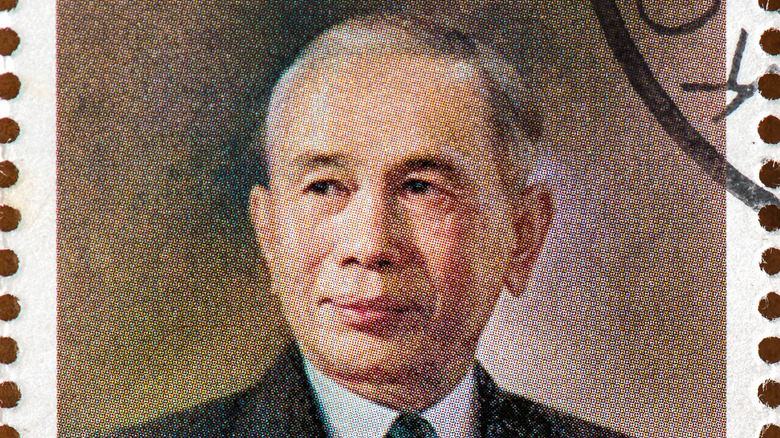
There's some ambiguity around the history of pad Thai and its name, in part due to the argument that the term "pad Thai" didn't appear in a cookbook until the 1960s. Some food historians credit Plaek Phibunsongkhram for making noodles a fundamental part of Thai cuisine, but suggest that he campaigned for the adoption of noodles into Thai cuisine more generally. It's argued that the specific pad Thai recipe — apparently meant to incorporate elements of Thailand's varied regional food cultures but without going too far in any one direction — developed later, without Phibun's direct influence.
That said, there are also slightly different accounts that give Phibun credit. One version of the history argues that he staged a cooking competition to develop the recipe, while Phibun's son claimed that the dish had been cooked in his family before its broader popularization. In any case, it's not the only time that the Thai government has tried to define or promote its culinary culture in such a direct way. A much more recent campaign in 2002, that arguably has similar nation-building aims, sought to subsidize and train Thai chefs and restaurateurs so they could open restaurants internationally, thereby exporting pad Thai and other Thai favorites from soups to curries. Between this and Phibun's original push for noodle consumption, pad Thai effectively went from being nonexistent to world-famous in a matter of decades.