

Freeze Your Tofu Before Cooking And Thank Us Later
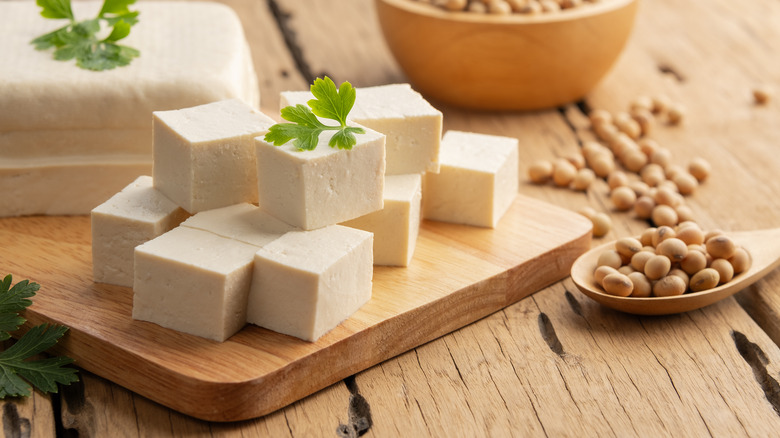
Like the leather jacket-wearing bad boy with a heart of gold in a so-so YA novel, tofu is often misunderstood. But the soybean-derived blocks that some folks still side-eye at the supermarket are actually incredibly versatile across all kinds of different recipes. It's also not unlike animal based proteins when it comes time to prepare. You probably would not unwrap a chicken breast or a nice steak and toss it right on the grill or stovetop, so why would one imagine that you can do so with tofu? Like those other items, tofu needs a modicum of prep before you can get cooking. So Chowhound pressed chef and cookbook author Rich Landau, who owns Philadelphia's plant-based Vedge restaurant with his wife Kate Jacoby, for his tofu tips.
Those who do use tofu probably already press the stuff itself for improved results, and Landau suggests dropping its temperature, too. Squeeze out that extra liquid and let it chill in the freezer before you leave for work in the morning or even overnight to optimize the highly adaptable ingredient. "This is a great way to change the texture of your tofu and make it denser," the six-time James Beard Award finalist exclusively tells Chowhound. These two steps are part and parcel. "If too much water freezes inside of the tofu, it will change the texture into something spongy and squishy." You can either thaw before using or heat straight from frozen in some cases and still reap said benefits.
Getting your tofu from the freezer to the finish line
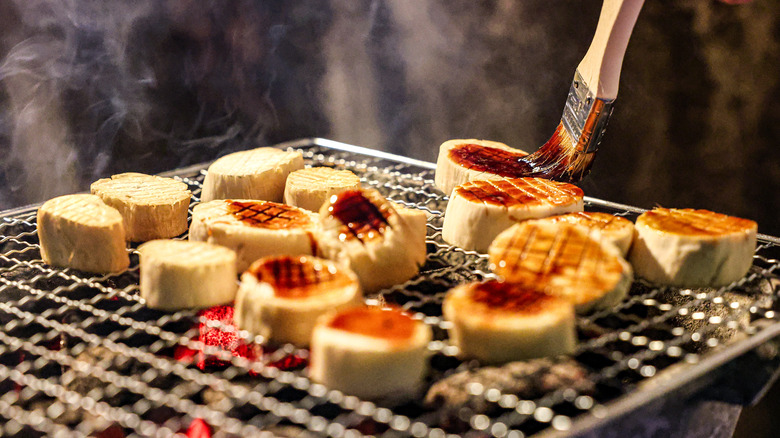
Moisture-wicked and near zero degrees, your tofu is primed for baking, sautéing, frying, or however else you want to prepare it. Just like you'd pat dry those fillets and poultry parts, drying it out a bit will prevent it from the dreaded, unintentional steaming, and render a more pleasantly crisp finished product across use cases. It's also good for the great outdoors.
"After freezing, it's great on the grill," Rich Landau says. "Use a base marinade of neutral oil, tamari, and black pepper, and then take it where you want after that." Your basic marinades should combine a fat like olive oil, an acid like balsamic or red wine vinegar, the compulsory salt and pepper, aromatics like garlic, and a bit of something sweet like honey or brown sugar. You'll tinker from there depending on the day's preparation. And there are some cases where you might want to perform the pressing and freezing in reverse. As we said, the stuff is super conducive to modification.