

The Ethical Reason Some Shoppers Avoid Cashew Milk
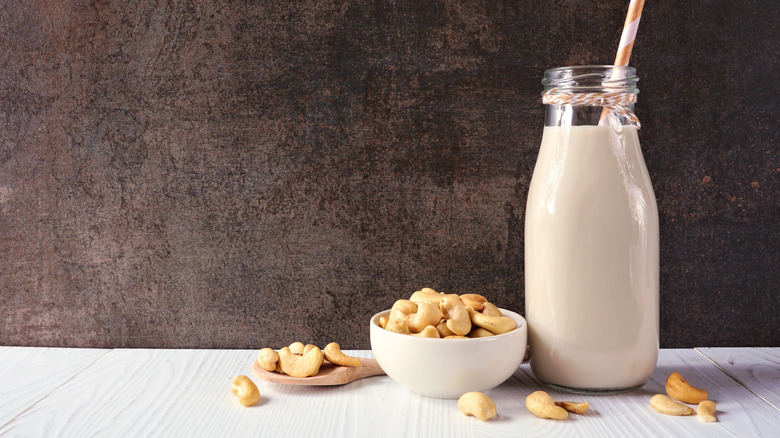
Almost anything can be turned into milk nowadays. Dairy-free milks have become extremely popular, and there are many kinds of non-diary milks there to choose from. Alternative milk may be great for those with dietary restrictions, and it's also a more sustainable choice than cow's milk because of how it is produced, since not all dairy farms treat their cattle humanely. These dairy-free milks may be an environmentally conscious vegan option, but not all non-dairy milks are produced ethically. Some shoppers avoid cashew milk because its production involves human rights abuses.
Cashew milk is made by shelling, roasting, and soaking the nuts in water, then blending with a sweetener. However, much more goes into the process, since cashews have to be picked and prepared manually. India and Vietnam are the two main countries that export the nuts, but a 2011 Human Rights Watch report exposed the cashew industry for its inhumane working conditions. These issues include lung irritation and burns workers suffer during the roasting process. Drug users in Vietnam are sent to drug detention centers, where part of their "rehabilitation" includes forced labor husking cashews for low pay or no pay at all. Anyone who refuses to work is tortured. Human rights activists have tried to urge Vietnam to end the unfair treatment of its cashew industry workers and close these drug detention centers. Vietnam says detainees at its drug detention centers no longer process cashews, but this is difficult to verify.
What alternative milks are ethically produced?
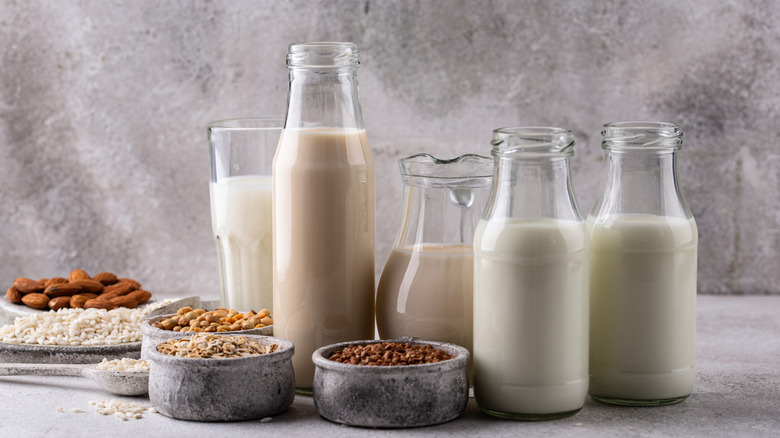
While cashew milk is not the overall most ethical choice when it comes to non-dairy milks, not all of these milks are produced this way. Soy milk is a popular alternative milk that's been around for some time and is one of the more sustainable options in terms of how it's produced. Oat milk, which is known for its creamy consistency, is another environmentally and ethically safe choice, and most brands even use locally grown oats in their recipe. Pistachio milk also uses eco-friendly practices and is a delicious way to upgrade your latte.
Almond milk is very popular, but some consumers don't buy it due to environmental concerns over excessive water usage. Another type of milk to be cautious of is coconut milk. Not only has the coconut industry been plagued by reports of appalling labor practices, but coconut farms have also been implicated in animal rights abuses and deforestation to plant coconut palm mono-crops.
Cashew milk, coconut milk, and almond milk shouldn't be your go-to alternative milks if you're trying to be conscientious. If you're really a fan of the taste of cashew milk, you could replicate it with an at-home recipe. With so many other ethical and delicious alternatives available, most consumers can easily boycott this product.