

Never Store These 2 Vegetables Together, Here's Why

Spinach and tomatoes certainly taste amazing when paired together. Whether tossed into a large bowl with some creamy mozzarella, olive oil, and a drizzle of balsamic vinegar, mixed with red pepper flakes to combine with pasta, or sautéed and served alongside baked fish or eggs, they make an outstanding duo. That is, until you put them in the fridge together. Once you store them side by side, the spinach will become soggy and start wilting at an accelerated pace.
Which is why, if you never want to let another bag of spinach go bad again, it's crucial to understand the reason this happens. Tomatoes are classified as climacteric fruits (no, they're not actually veggies). This means that they continue to ripen even after they're harvested, which is regulated in part by a plant hormone called ethylene, also known as the ripening hormone.
While this natural gaseous plant hormone is crucial because it acts as the messenger that tells fruits it's time to ripen, too much of it can backfire and lead to rapid spoilage in certain plants, such as spinach, cabbage, carrots, broccoli, cauliflower, cucumbers, and leafy greens. This happens because once the gas is released and comes in contact with ethylene-sensitive plants, the plant hormone binds to cell receptors. It then activates enzymes that not only soften tissues but also turn starches into sugars and break down chlorophyll. As a result, the spinach leaves quickly turn limp and yellow or brown.
The golden rule for storing spinach and tomatoes
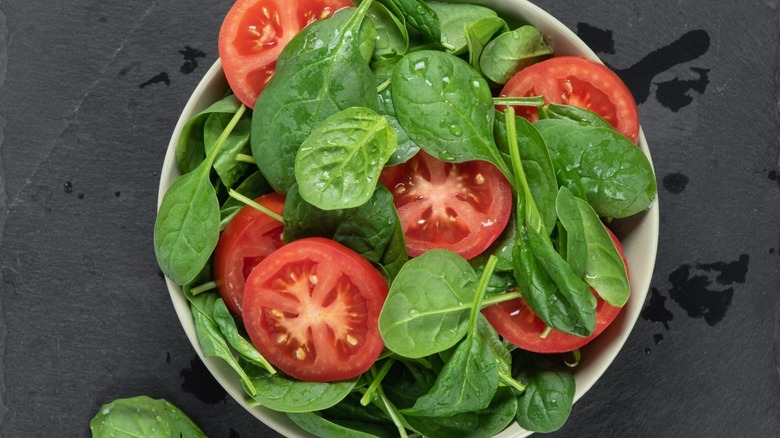
The right way to store fresh produce together, especially when it comes to tomatoes and spinach, is much simpler than you might expect — just keep them apart from each other. Storing them separately will not only help maintain the spinach's crisp texture and deep green color but also keep the tomatoes juicy and flavorful for a much longer period of time.
To keep spinach fresh for up to a week in the fridge, gently pat the leaves dry to remove any excess water and then layer your spinach and fresh paper towels in an airtight plastic container. Paper towels are key when it comes to storing spinach longterm because once you line the container with them, they absorb extra moisture and prevent the spinach from wilting early. To store the leaves for up to six months, wash, blanch, shock, and thoroughly dry your spinach leaves. Then you can freeze them in an airtight freezer bag or container.
Even though you may want to store your tomatoes in the fridge, if you truly want to preserve their flavor and texture, it's best to keep them at room temperature. Cold temperatures activate enzymes that cause tomato cell membranes to break down, leaving them soft and mushy. Tomatoes will also absorb odors from other foods in the fridge, causing them to lose their taste and quality.