

The Biggest Mistake Most People Make When Wine Tasting
If you've ever been to a wine tasting (or had, for example, a tour of a winery), you might have had an experience a little like this: Guests sitting in silence, swirling wine and nodding as if they understood what they were drinking, trotting out terms like "tannic" or "structure" or "oakiness," but secretly feeling unsure. The fact is, though, that by avoiding a couple of pretty simple mistakes and opening yourself up to being just a little more curious, you can really bring your enjoyment of tasting new wine to the next level. To find out more about just what mistakes those might be, we spoke to Lori Budd, the owner of Dracaena Wines Paso Robles, and a wine educator.
According to her, the number one mistake is not asking enough questions — and there's no need to be embarrassed for not knowing something. "I think one of the biggest mistakes that people make when wine tasting is being afraid to ask questions for the fear of sounding 'stupid,'" she exclusively told us. "The only way to learn about wine is to drink it, and to ask any questions." Accept that the sommelier or vintner leading your tasting knows more than you, and see it as an opportunity to learn as much as you can! "The person behind the tasting bar has a broader understanding of the wine and should be more than happy to answer your question." From how to identify certain tasting notes to something as simple as learning how to read a label on a wine bottle properly, wine people love talking, and teaching, so be open to learning and you'll have a much better time.
How staying silent can spoil the experience
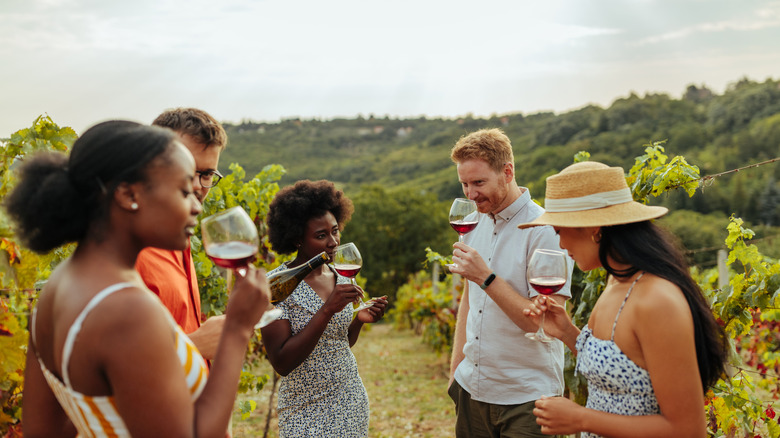
Learning about wine means talking about wine — you can drink as much of it as you like, but unless you know how to vocalize what you're tasting, you won't be able to advance your understanding of it — and the more you understand the wine that you're drinking, the more you'll be able to get out of drinking it. Staying silent might feel like the natural thing to do in a tasting, especially if you're less experienced than other participants, but asking that question that's floating around in the back of your mind will always lead to you having a better time. Remember that even the most experienced wine expert was a beginner once, too. Nobody's going to judge you for wanting to know more about a particular wine.
People often see the world of wine as being intimidating, even snobby — but it doesn't have to be. In fact, staying quiet can actually turn what should be a really pleasurable experience into an anxiety inducing one. "Not asking questions makes the tasting more stressful," Lori Budd told us. "If you don't understand something about the winemaking process or the wine itself, then you can't fully enjoy the wine." Start with how the wine makes you physically feel, sensations that are often easier to describe than certain complex flavors, and go from there. "There's a reason why your gums feel dry after some wines or why your tongue tingles and salivates," she continued. "These are characteristics of the grapes making the wine. Understanding these characteristics helps the enjoyment of the experience."
The easiest way to get more from your wine tasting experience
Wine tastings aren't exams — they're not tests of your knowledge, and there's no right or wrong answers — rather, they're just a way for you to explore your own preferences, to understand how to tailor the wine you might buy in future to your tastes. Lori Budd recommends asking questions, but also keeping notes to help you keep track of what you liked — and importantly what you weren't keen on, too. "Take notes of some sort. Don't worry so much about recording tasting notes per se, but notes about what you like about the wine or didn't like," she said. For example, if you found a wine a little too tannic (caused by the concentration of tannins, a compound found in grape skins and other foods that causes that drying sensation on your tongue).
Ultimately, asking these questions and keeping a record of the answers will help you become better at choosing wine — which will keep your cellar well-stocked, but also encourage you to delve deeper into the wines you do like, helping you become more knowledgeable on the whole — whether that's knowing your cabernet from your pinot, or championing an underrated winemaking region. "If you record how the wine makes you feel after tasting it, you may find a trend, and that helps you become a more informed wine consumer." Wine isn't something to get right, remember — it's something to get to know.