

How To Rid Yourself Of That Kitchen Sink Stink Once And For All
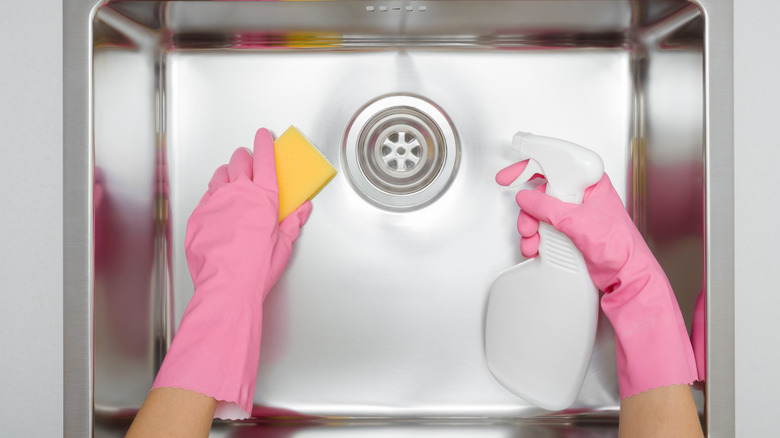
Everybody loves a shiny, spotless kitchen. But when an unpleasant odor starts coming out from the sink, that's a clear sign that it needs a proper scrub. Now, there might be many sneaky reasons why your kitchen sink stinks, but the most common ones include trapped food bits and moisture that create the perfect breeding ground for bacteria and mold growth.
Investigative chemist Alexis Rochester, who owns Chemistry Cachet, a website where she shares science-based tips for cleaning and health, spoke exclusively with Chowhound and explained that bad smells from the kitchen sink are most often caused by bacteria lingering on its surface. These are usually concentrated around the drain area, where food particles get trapped in crevices and inside the garbage disposal. "Bacteria are caused by food particles and grime that are constantly going into your sink," she told Chowhound.
That said, if you've set your mind on getting rid of these foul smells once and for all, regular cleaning, scrubbing, and disinfecting are the best way to keep them away, according to Rochester. On how she manages to prevent them from coming back, especially in sinks with garbage disposals and slow drains, she revealed that a baking soda and hydrogen peroxide solution effectively removes grime from the drain and surrounding rim. "After rinsing, I also apply hydrogen peroxide to the drain surface, allowing it to sit for five to 10 minutes (this is the dwell time, which is important for properly killing bacteria)," she pointed out. "This kills bacteria lingering on the surface."
Don't skip clearing the P-trap every now and then
Alexis Rochester emphasized that limiting food particles going down the garbage disposal, regular sink cleaning, and also cleaning your garbage disposal weekly will keep odors from returning. "You can buy garbage disposal cleaning pods or make your own," Alexis Rochester suggested. What's more, choosing the right scrub brushes to clean every type of kitchen sink is crucial to prevent scratches and keep your sink looking great.
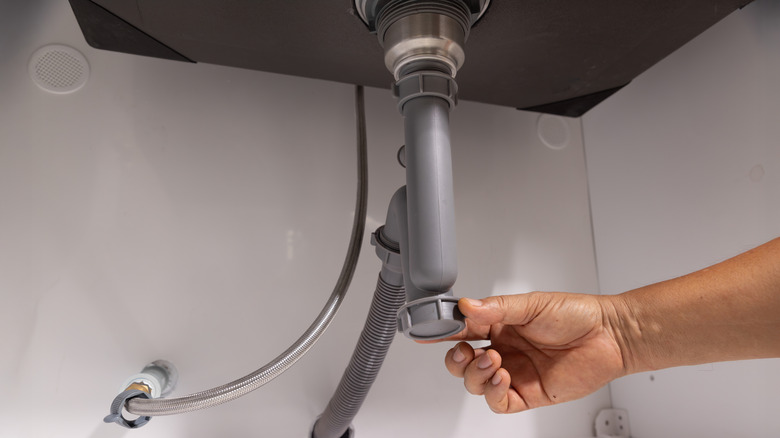
When it comes to additional maintenance tasks or alternatives that homeowners can try beyond regular cleaning, routinely clearing the P-trap goes a long way in keeping your drain odor-free. "Clearing the P-trap is important to do every six months unless you continue to have odor issues, then you can do it more often," Rochester emphasized. "But limiting food going down your drain can really help prevent needing to clean the P-trap more often."
If you've been avoiding taking off the P-trap for ages, you'd be relieved to learn that it's actually surprisingly easy. The first thing you need to do is put a bucket under place a bucket under the pipe to collect water and debris. You then need to loosen the two slip nuts connecting the trap with your hands or a wrench, before removing the pipe. When that's done, simply rinse the trap with warm water, and scrub out any buildup. Once you reattach the P-trap and tighten the nuts, run the water for a couple of seconds to make sure there are no leaks. If the sink still drains slowly, then consider calling a plumber to fix the issue.
The science behind why baking soda and vinegar don't always work
While baking soda and vinegar are considered some of the best natural ingredients to clear your clogged kitchen drain without using harsh chemicals, Alexis Rochester revealed that they're actually the DIY solution that is most likely to make things much harder to fix. "If your kitchen sink is clogged or slow, this can actually make the problem worse," she elaborated.
"When you mix baking soda and vinegar, a reaction occurs producing carbon dioxide, which can break up grease and stains," she continued. In addition to carbon dioxide, this acid-base reaction also results in the production of sodium acetate, which is a colorless, organic salt, as well as water. "Initially, this seems to work, but the end result of this reaction is a salt," Rochester explained. Even though the fizzy bubbling effect from the release of carbon dioxide might seem effective on the surface of the kitchen sink, Rochester pointed out that it doesn't penetrate deep enough to clean the inside of the pipes.
Ultimately, if you've tried everything to keep the smell away but for some reason it's still there, it might be time to decide which professional to call to take care of the issue. "Occasional odors are simple to fix yourself, but if the smell is overwhelming or your kitchen sink is barely draining, calling a professional is your best bet to make sure the problem doesn't get worse," Rochester concluded.