

How To Easily Mash Potatoes (Without A Masher)
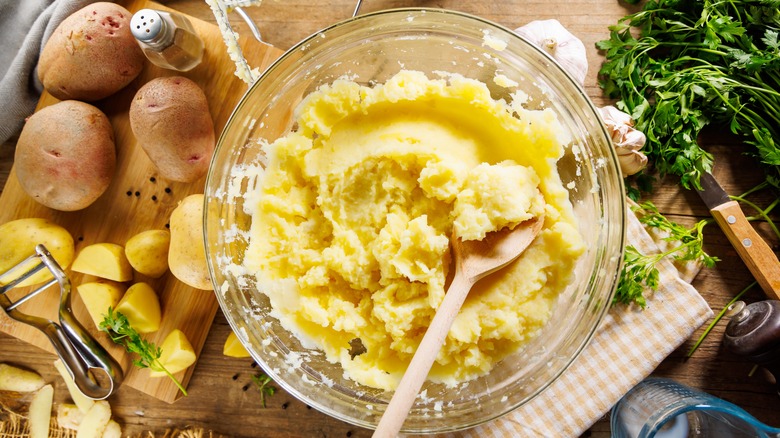
If there's a comfort food more familiar, versatile, or beloved than mashed potatoes, we have yet to discover it. This creamy, buttery, carb-filled dish is not only a favorite during the holidays, but also as a delicious foundation for perfectly browned, restaurant-worthy beef stew, and an exceptionally tasty way to get your daily dose of vitamin C. Of course, this is provided they're mashed properly — and, yes, there are right and wrong ways to mash your potatoes.
The right ways result in a velvety side dish that's lush with the perfect amount of fat and easy to hollow into a vessel for lump-free, old school gravy. The wrong method, however, activates the starches in the potatoes' cells, creating a gluey, gummy paste that's somehow both too dense and too watery. That's why blenders and food processors are the shortcut you should absolutely never use to make your mashed potatoes. If you want a fast, fuss-free way to mash your taters, there are other tools that get the job done very well.
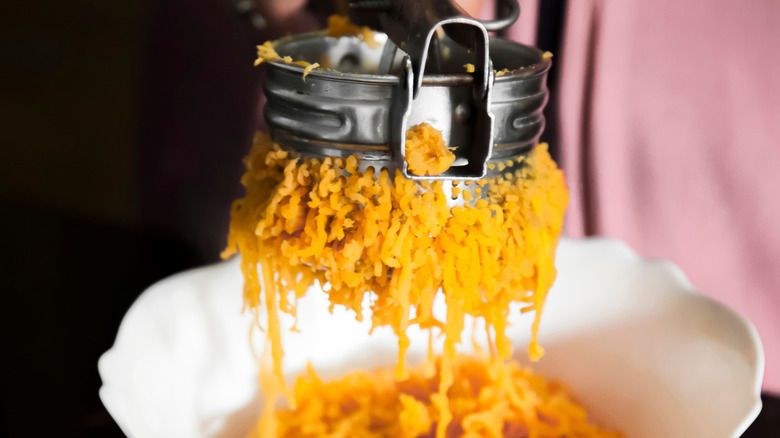
The first of these tools is a potato ricer, which looks a little like a hinged citrus reamer with a perforated cup instead of a ridged dome. Forcing freshly boiled potatoes through these little holes quickly breaks them down into light, fluffy mash when mixed with a little butter and milk. The other tool is a bit unusual — a grid-style cooling rack. Pushing boiled potatoes through the grid offers similar results to a ricer with a convenient DIY twist.
Mastering mixing methods for magnificent mash
Though both methods produce similar results, deciding on a favorite may take some analysis. If you already have a ricer on hand, you might try comparing methods to see which one produces your favorite texture. If you don't have a ricer, it may be worth attempting the cooling rack hack to see whether it's worth it for you to purchase another kitchen gadget.
When trying the cooling rack method, you'll want to boil your potatoes whole — peel and all — to make the process faster and easier. Once the potatoes are fork tender, drain and set them aside, then balance the cooling rack on the hot pan — this saves on dishes and keeps the potatoes hot. Next, slice the potatoes in half lengthwise, and press them cut side down through the rack's mesh. The peel is a little cooler than the flesh, and pressing half a potato is easier than forcing smaller cubes through the rack's mesh.
With the ricer, you'll want to peel and cube your potatoes as usual, and force them through a bit at a time. This method takes longer than the cooling rack, but a ricer also produces smaller pieces of potato, which may make it easier to swirl in butter and cream for a lump-free mash. You may also find that the cooling rack method makes for easier cleanup, as bits of potato can get stuck in the nooks and crannies of the ricer, unless you get a dishwasher-safe model.