

You Don't Need To Precook Rice For Casseroles: What To Do Instead

Casseroles are comforting, unpretentious, and easy to prepare. That's why we love them. From Minnesota's iconic hotdish to chicken and rice casserole, there are plenty of popular one dish wonders to choose from. Generally speaking, they are pretty easy to prepare, and make a great dinner option for those who want to avoid the tedium of making multiple dishes for one meal. However, there's one element of casserole cookery that even the most seasoned home cooks among us can struggle with: rice. It can be difficult to decide whether or not to cook your rice before adding it to your dish. And though there are some exceptions, you might want to skip boiling it beforehand when making your casserole.
To get some advice on this sticky situation, we turned to Tara Bench, a cookbook author and food blogger behind TaraTeaspoon.com. According to Bench, adding uncooked rice to casseroles can work, but there are some caveats. "It depends on the casserole and if there's plenty of liquid like broth, canned soup, or tomato-based sauces," she says. "Cooking rice in the casserole doesn't work well with creamy, low-liquid recipes like the ones with condensed soup or cheese as the main binder." So if you're making hotdish or tuna rice casserole, which tend to use thick condensed soups and lots of cheese, you'll probably want to at least par-boil your rice, or use instant rice, as it will cook better in a low-moisture recipe.
Tips for cooking rice casseroles
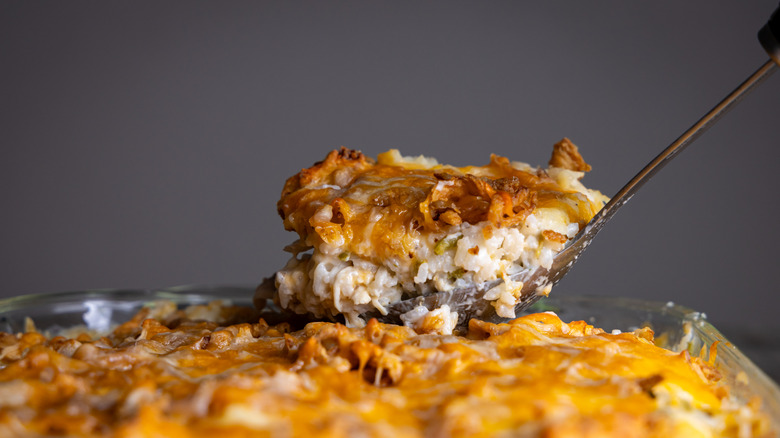
Of course, Tara Bench's advice extends beyond just which dishes you can add uncooked rice to. She also has a few pointers as to how to execute your rice-based casseroles. For starters, she notes, "You should make sure there is a similar amount of liquid to what you would use if you were cooking rice on the stove — about 2 cups of liquid for every cup of rice is a good rule of thumb." You will also need to give your dish plenty of time in the oven. You're not just heating up your ingredients, but allowing your rice to fully cook and absorb the proper amount of moisture. According to Bench, "60 to 75 minutes is what it takes to cook rice in a casserole."
As for which types of rice to use, Bench has a few recommendations. "I'd stick with long-grain white rice like Carolina, Basmati, or Jasmine as it will cook quickly and stay fluffy. Don't use short-grain rice, or you'll get a gummy, overly starchy casserole," she says.
Short grain rice, such as sushi rice or Arborio rice (which is typically used in risottos), should either be avoided, or at least cooked differently to prevent an unpleasant texture. For instance, you can still add short grain rice to casseroles like tuna "sushi" casserole that call for it in recipes, it just needs to be cooked prior to being put in your dish. As for brown rice? Well, that depends. As Bench says, "Brown rice can be an option, but you'll need more liquid and more time in the oven."
What to do when your casserole's rice isn't cooked right
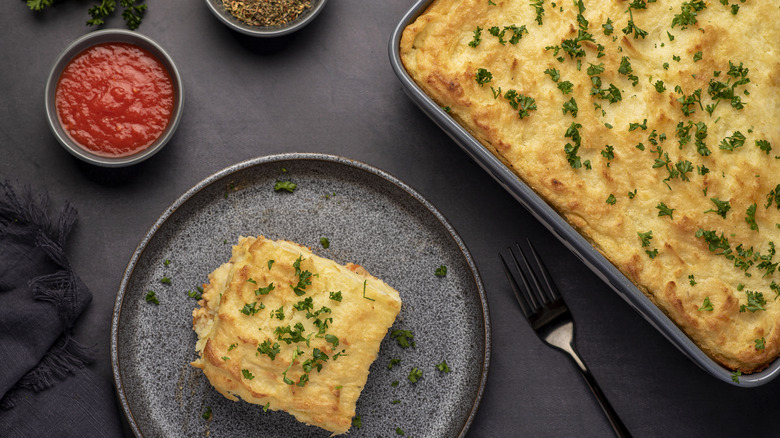
So, let's say you've decided to take the plunge and add uncooked rice to your dish before cooking, only to find that those little grains are still crunchy. What should you do in this scenario? First thing's first: Don't despair. According to Tara Bench, the solution is simple. "Add an extra splash of water or broth around the edges of the casserole and cover the dish tightly with foil. Pop it back in the oven and let that extra steam work for 10 to 15 more minutes," she advises. The key here is to add only a little bit of liquid at a time, this way you won't risk a watery dish. And try to evenly distribute your liquid at the corners.
If your rice is just a bit overdone, or if it is cooked but your dish is still runny, there are a few options for you to try. Let's start with the pesky problem of overcooked rice. If the grains are just a bit too mushy, you can turn the casserole into fritters (think arancini). Just cool in the fridge, then bread and fry. Now, if your rice is done, but your casserole is still too runny, you can remove excess liquid with a large spoon, then broil to ensure a perfectly crunchy top. If your rice is completely mushy, you might want to go ahead and toss that casserole, sad as it is to say. Just remember to keep the pan, and know this: There are better casseroles on the horizon.