

The Controversial Chain From The '80s That Got Its Start On April Fools' Day
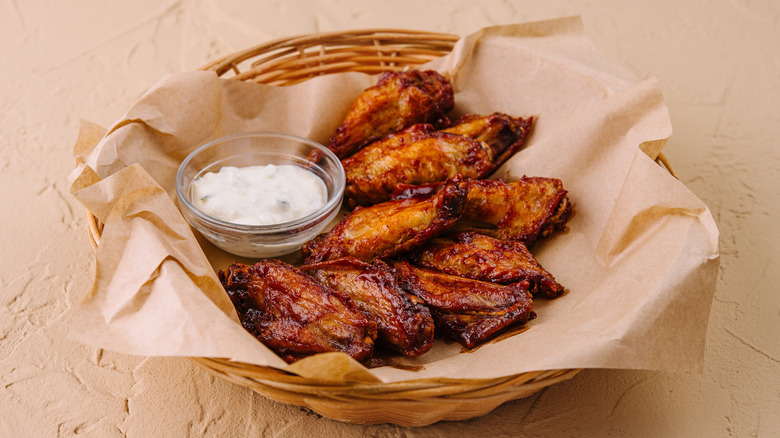
It began, as all great American pranks do, with beer, sunburn, and bad decisions. On April Fools' Day 1983, six middle-aged men in Clearwater, Florida, decided the world needed a restaurant where beer, wings, and beach-bar bravado could coexist without shame. They filed incorporation papers that day because if their half-baked idea tanked, they could just call it a joke. Spoiler: It did not tank. The building itself was a modest beachy joint with orange awnings and surf-shack vibes, more "spring break chaos" than fine dining. Many thought it would flop like the other short-lived ventures in that strip of Clearwater real estate. The men who called themselves "The Hooters Six" wanted a place they actually wanted to hang out in. What they built looked like a tiki bar had a baby with a sports dive. It served beer in mugs, chicken wings by the bucket, and uniforms that made the feminist movement collectively sigh. Yet somehow, it worked.
Hooters was a neon love letter to the 1980s: loud, unapologetic, and weirdly self-aware. It celebrated America's appetite for everything slightly wrong but undeniably fun. The "Hooters Girls," with their orange shorts and white tank tops, became both the brand and the battleground. For some, they symbolized empowerment through performance; for others, an era that confused customer service with pageantry. Either way, people lined up. And in the process, a prank became a multimillion-dollar cultural mirror dripping in hot sauce.
A legacy of wings, winks, and whiplash
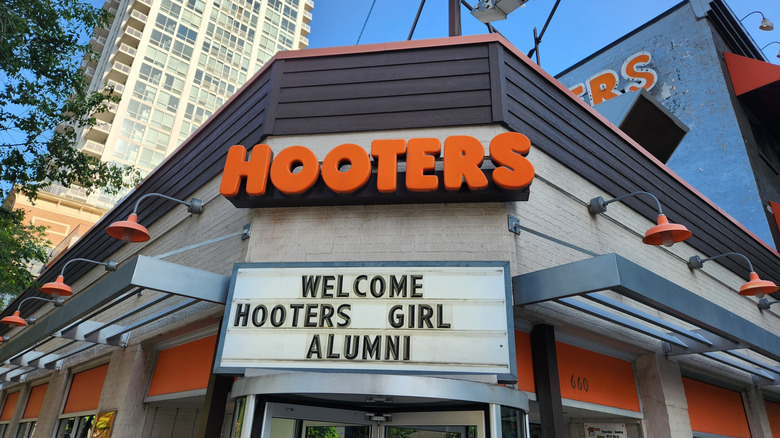
Critics called it sexist, silly, even grotesque. Fans called it Tuesday night. By the late '80s, Hooters had gone national, proving that controversy could be a business model. It was the restaurant world's Rorschach test! People saw whatever they wanted in it: liberation, objectification, or just a really good plate of wings.
While polite society debated, Hooters cashed in. It became a "casual dining concept," corporate-speak for "beer, buns, and branding." The chain went international, popping up everywhere from Singapore to São Paulo. Lawsuits rolled in, parodies flooded pop culture, and still, people ordered wings. Hooters' secret? It never took itself too seriously. The menu stayed simple. The aesthetic, defiantly kitschy. The vibe, perpetually stuck in spring break.
Hooters outlasted its imitators and scandals because it leaned into the absurdity. It knew it was a fantasy, not a philosophy. Even today, the brand survives on nostalgia and that irresistible nacho cheese sauce. The "Hooters Girl" still exists, though corporate spin may now describe them through various euphemistic names. But recently the orange shorts have been losing their shine. In 2025, Hooters filed for bankruptcy in Texas, weighed down by nearly $376 million in debt and shrinking profits. High costs and falling foot traffic have eaten away the margins. Now, the company is selling off its company-owned spots and betting on a franchise group to keep the neon owl glowing a little longer.
Yet even amid financial turbulence, the kitschy charm and notoriety that launched it in 1983 remain intact. Like an April Fools' joke that grew legs and started selling beer, Hooters remains both a punchline and a phenomenon. Forty years later, it still stands as proof that sometimes the most ridiculous ideas are the ones that last longest.