

What To Know About The Blue Eggs You're Seeing Pop Up In Grocery Stores
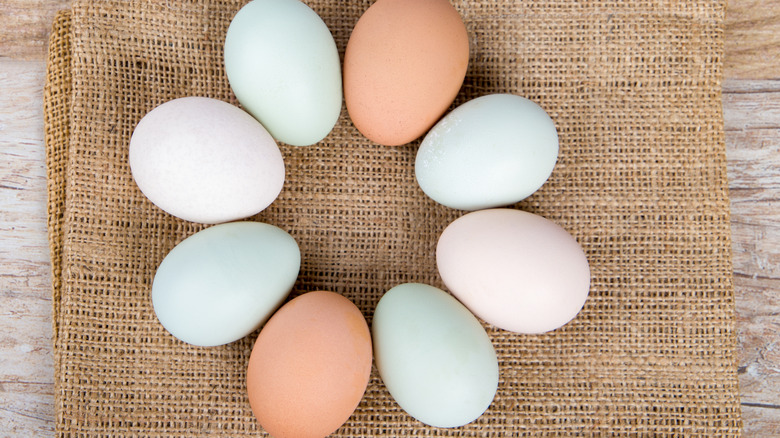
Eggs have had, well, a moment in the news. From politicians arguing about egg prices to egg shortages, this breakfast staple has been in the spotlight for quite some time. Recently, however, there's been talk about eggs that has nothing to do with pricing or availability. Blue eggs have hit the shelves of many grocery stores across the United States, leaving many to wonder what causes eggshells to have different hues — and whether the shell's color is related to the egg's taste or nutrient quality.
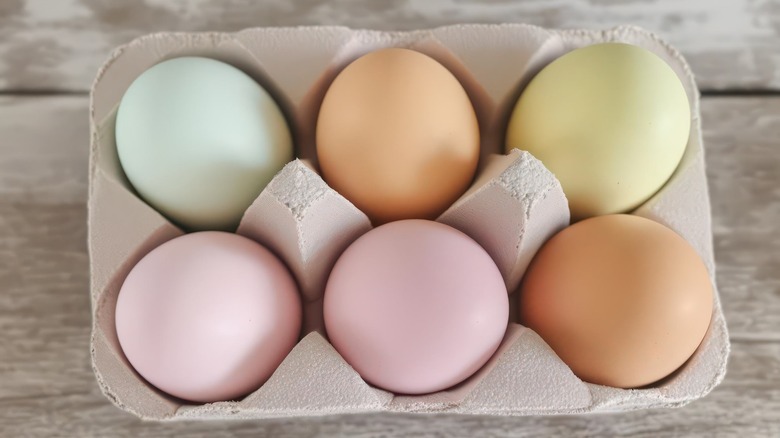
It turns out the color of an eggshell usually has nothing to do with what's inside. While some factors — like a hen's diet — can occasionally affect eggshell color, it's mostly a matter of genetics. Some hens naturally create pigments that color their eggs as the eggs develop, while others are unable to do so. Though eggshell color is important to consider when you're coloring eggs for Easter, it's not something you need to think about when you're choosing a carton of eggs to make Julia Child's famous quiche. The shell's color doesn't affect the taste of the egg white and yolk. That being said, not all eggs are the same, and there are a few important factors to consider in order to ensure you're purchasing high-quality eggs.
How to choose the best eggs
It's easy to feel overwhelmed when you're shopping for eggs. From free-range to pasture-raised eggs to wildly varying price points, there are many things to consider when choosing eggs for the perfect light and fluffy scramble. First, start with the obvious — make sure you check the sell-by date on the eggs. If you happen to buy eggs that are near their sell-by date, do the egg test at home before you use them. Place each egg in a glass of water, one at a time. A super-fresh egg lies flat on its side at the bottom of the glass. A less-fresh egg stands up on one end while still touching the bottom of the glass. If an egg floats, toss it — it's too old to be eaten safely.
You also want to consider where you buy your eggs. While you can certainly find delicious eggs on grocery store shelves, check out straight-from-the-farm options in your area. Hens that roam and enjoy a varied diet tend to produce darker egg yolks than hens that subsist solely on chicken feed. Darker yolks usually offer a more decadent flavor than the light-yellow egg yolks commonly seen with grocery store eggs. Whether they're blue, white, pastured, top-shelf, or standard-grocery-store-issue, eggs have a valuable place in a majority of kitchens. Find the type you (and your wallet) like best and enjoy.