

Ever Notice Soup Always Tastes Better The Next Day? Here's Why
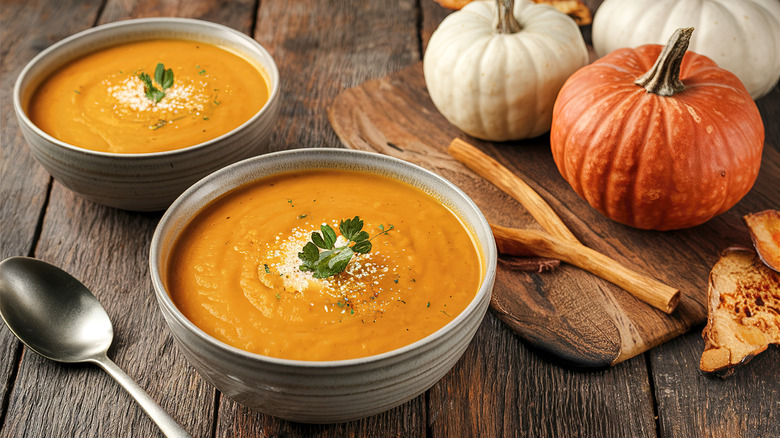
If you've ever spent hours properly simmering homemade soup on a hot stove, then you know how it goes; you mostly just taste-test every once in a while to get the flavor to be exactly how you want it. But have you ever realized that, even when you think the soup is absolutely perfect when you finally take it off the heat, it somehow tastes even more perfect when you pull it out of the refrigerator the next day? In a simple explanation, soup tastes better after it sits because each of the ingredients has a chance to absorb the flavor compounds from each of the other ingredients it's surrounded by, ultimately creating a product with deeper, more balanced flavor than when you first cooked it.
The reason that foods build flavor over heat is because of different chemical reactions, such as the Maillard reaction and caramelization. Kantha Shelke, a certified food scientist and the founder of food research group Corvus Blue LLC, once explained it to Forbes in the easiest possible terms: "When you consume something straight from the stove, chances are your taste buds can pick up on all of the distinct reaction products, or flavor and aroma compounds, that have been produced and can differentiate between them. So, while you're tasting the flavor profile of the curry in its entirety, you're also tasting the individual flavor notes in isolation." But, once food is taken off the heat, other processes still take place.
Letting food sit helps flavors combine, creating balance
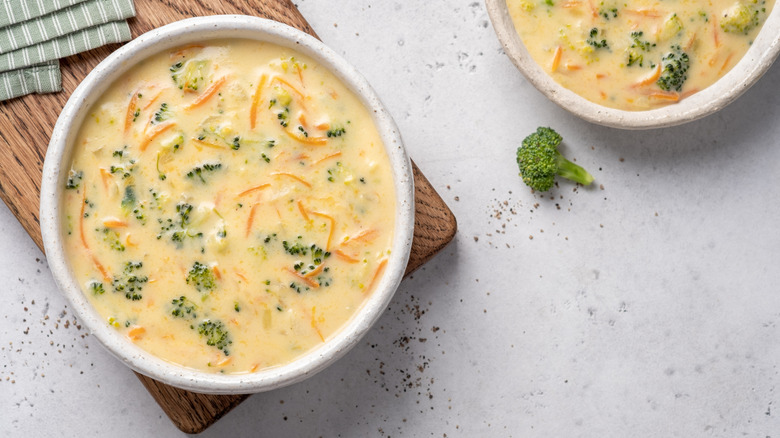
Even if you cook that soup for three hours, it's still nothing compared to letting the flavors marry together for a full 24 hours — and that extra time makes all the difference. "As the dish cools and sits over time, the different flavor and aroma compounds mingle together and develop more seasoned notes," Kantha Shelke said (via Forbes), ultimately giving the dish a more well-rounded flavor where each bite tastes balanced instead of having sharp notes from certain ingredients. It's important to note that in some cases, refrigeration can also dull certain flavors, such as reducing spiciness in food, so it does depend on what you're storing.
Soup isn't the only food where this phenomenon occurs. It can happen with essentially any dish that involves robust, flavorful ingredients; if you're adding onions, garlic, and fresh herbs to a hearty pasta sauce, for example, you experience the same thing. At first, things taste balanced enough. Once you eat it the next day, you realize how necessary it was for those flavors to spend a little extra time getting to know each other.