

The Easiest Way To Make Crème Brûlée Without A Torch
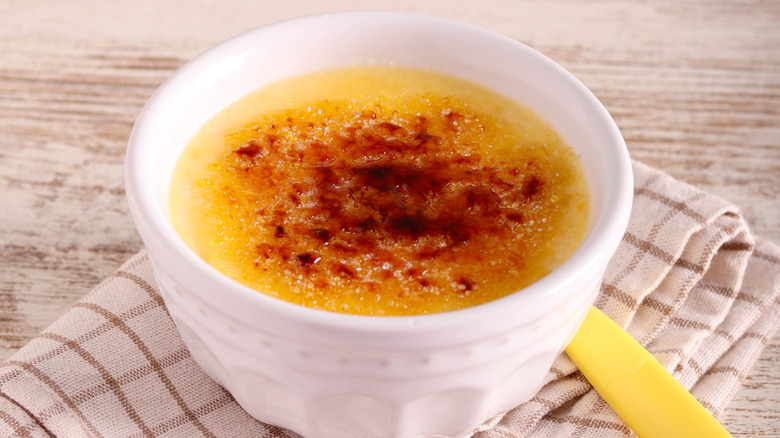
A crème brûlée is not a typical weeknight dessert. When you need an after-dinner sweet treat, you're probably running to mix up a quick batch of chocolate chip cookies or maybe a cake from a box to satisfy your sweet tooth. But when special occasions call, crème brûlée is a sophisticated delight of a dessert to impress guests with. And while it's a heavier lift for an at home cook to pull off, it's totally doable, especially with some short cuts that eliminate some of the more intimidating traditional steps, like torching the top for that signature hard-shelled burnt sugar top.
No need to go out and buy a special tool just for the job, says Trew Sterling — executive pastry chef at Pastis Miami. A classic recipe for the beloved treat employs a kitchen torch to carefully burn the brown sugar top, creating a hard sugary shell layer atop the firm custard beneath. But if you don't have a torch handy or aren't comfy with playing with fire, the oven's broiler does the job just fine, said Sterling when he spoke exclusively with Chowhound. At his South Florida restaurant, inspired by Parisian fare, Sterling oversees a menu of indulgent desserts like sticky toffee pudding, dark chocolate mousse, and a vanilla bean crème brûlée. He assures us that even without the specialty tool, it's totally possible to achieve that "beautiful deep caramelized flavor and satisfying crack when you tap the top."
A few pro tips can help avoid burnt or uneven caramelization
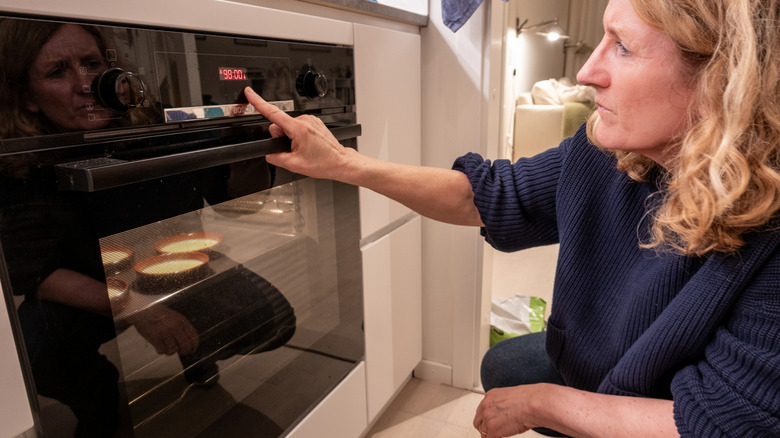
Whether using a torch or your broiler, the goal is the same — simply to melt, but not burn, the sugar sprinkled on top of each ramekin. This creates a beautiful contrast of texture, with bits of candied crunch with each bite of silky pudding. Trew Sterling cautions that when using a broiler, "you may get slightly more uneven caramelization," but don't let that deter you. "As long as you keep a close eye on it," he says, the broiler gets the job done, perfect uniformity aside.
Anyone who's ever used an oven broiler knows, it can be finicky — quickly scorching things you only meant to melt, including the crème brûlée if you're not careful. Sterling shares his expert tips to avoid the common pitfall of a burnt top or a too-hot custard. First, consider the sugar itself. He suggests using a regular granulated sugar on top, not a courser variety, as it has an easier time melting evenly. Crucially, also "make sure your crème brûlées are fully set and well chilled — ideally overnight," he advises.
This is also a situation where oven rack placement matters quite a lot. When the ramekins of custards are chilled, "position the oven rack as close to the top as possible," instructs Sterling. Be sure to keep a close eye on the task, remove when browned and bubbly, then crack in and enjoy your classic dessert.