

The Difference Between Vintage And Antique Glassware
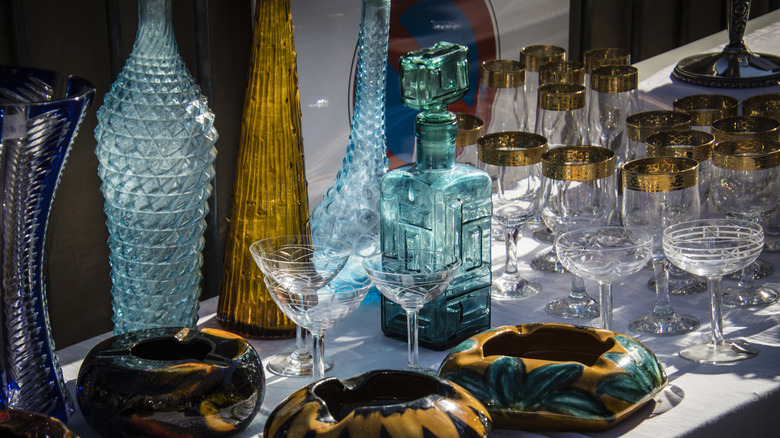
The terms "antique" and "vintage" are often wrongfully treated as interchangeable when referring to collectible glasswares. The primary distinction here comes down to the relative number of years that have surpassed the origin date of your item. When it comes to vintage wares, this refers to anything made at least 40 years ago, though some argue that it actually encompasses anything at least 20 years old. Meanwhile, experts agree that antiques are items made at least 100 years ago. While noting the difference in this way might seem simple, the process of determining age based on the physical properties of the glass can be a bit complicated.
Glassware companies often follow industry trends at the time of production. Therefore, many glassware lines happen to mimic antique and vintage qualities, which can make determining their age tough. Though this can be surpassed with a proper understanding of distinct features by era. It's noted that older glass is usually heavier, and therefore often antique. Bubbles are another giveaway. It's noted this could be resultant of aged manufacturing methods and therefore, older glass.
You can also differentiate between the two by paying attention to pattern and color, which can be characteristic of certain time periods and trends in both vintage or antique wares. When irregularities are present, it is more likely these items were handmade, versus mass-produced collections, which will often present a seam of some kind. Looking for maker's marks can also help corroborate when each product was made, and by what company. While scouring vintage stores, a quick bite may be the last thing on your mind, but there's actually a fast food restaurant that got its start in an antique shop.
Different types of collectible glasswares
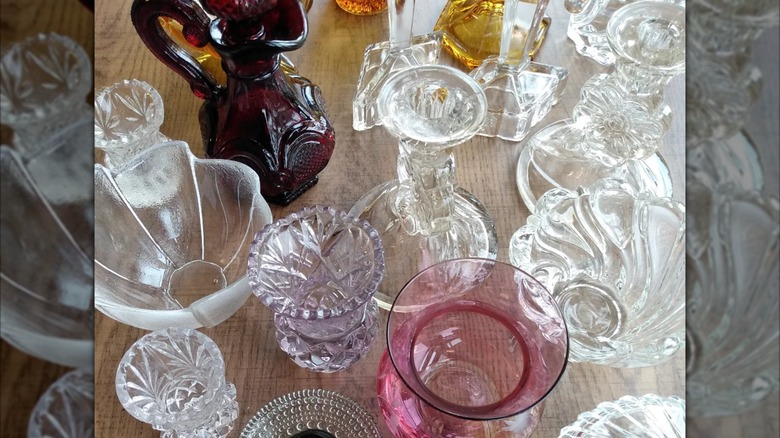
Whether you're a seasoned collector or just starting — Etsy and eBay are solid marketplaces to hunt, alongside Ruby Lane. While you're hunting for collectible glass, you may actually realize you have a set of vintage salt and pepper shakers that could be worth big money, too. If antique and vintage stores aren't working for you, you could try estate and garage sales instead. Knowing where to go is one thing, you'll also want to know what styles and brands of glasswares to keep an eye out for.
If you're looking for vintage glasswares, Depression glass is a common style — which usually leans toward pale blues, yellows, and uranium. But with a name like that, you may be wondering: Is uranium glass safe to eat and drink from? This type of colorful transparent glass was made in the 1920s and 1930s which means it is not quite an antique, but close. Another type of glassware is Carnival glass, which often have colorful iridescent qualities, and toe the line between antique and vintage as some of these products were produced up through the '30s.
Fenton Art glass production started in 1905, meaning the first couple of decades of products now situate in the antique designation. Many of these products come in pink and cranberry color ways, which happen to be some of the most vied after. This glassware company is also known for its unique designs, which are one of a kind, and it has been known to also produce Carnival glass. When all else fails and you're struggling to determine if it's vintage or antique, you could always get an expert's opinion to confirm either way.