

The Major Frozen Fruit Recall That Still Haunts Costco
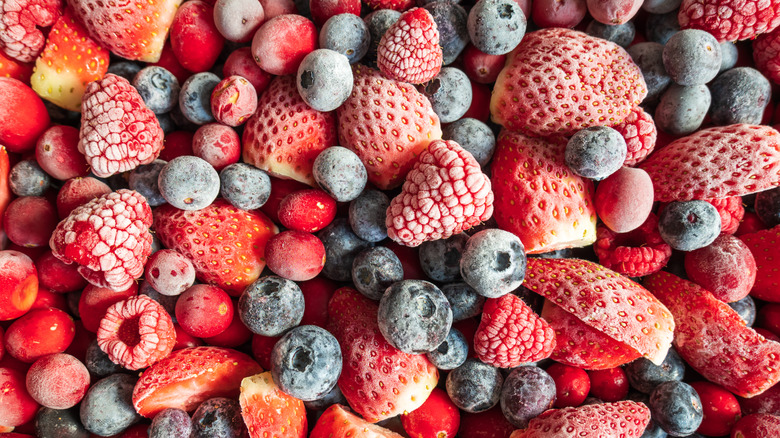
Back in 2013, Costco found itself caught in one of the more unsettling food safety scares of its time: A hepatitis A outbreak from Townsend Farms' Organic Antioxidant Blend frozen berry mix, which came in 3-pound bags from Costco's freezer shelves. Costco voluntarily recalled specific batches of the berry mix after epidemiologists linked it to illnesses in multiple states. The recall also included 10-ounce bags of the berries that were sold at Harris Teeter stores, although they were labeled with a Harris Teeter store brand instead of Townsend Farms.
The mix contained berries and pomegranate seeds, but the culprit was reportedly imported pomegranate seeds processed abroad. Some 162 people were infected across several states including California, Arizona, Colorado, and Hawaii, with 71 people hospitalized. Costco responded by notifying members who had purchased the product since several months before the outbreak (one reason for this is that due to hepatitis A's long incubation period, consumers would not have immediately become sick). The bulk giant also removed the berry and pomegranate mix from shelves and offered returns or refunds.
This wasn't the biggest foodborne hepatitis A outbreak in United States: That was in 2003, from green onions served at Mexican chain Chi-Chi's, causing around 555 cases and three deaths. However, the Costco incident was nonetheless a prominent scandal. Later hepatitis A outbreaks from food have tended to be smaller, although a 2016 outbreak from frozen strawberries did number over 100 cases, and a 2023 Costco frozen strawberry outbreak was one of the store's biggest ever recalls.
Food safety lessons from this outbreak

This outbreak can teach us a few food safety lessons. Perhaps most importantly, it underscores the fact that when it comes to food, "frozen" doesn't always mean "safe forever." Although freezing usually stops microbial growth, it doesn't kill viruses like hepatitis A — if the item was contaminated before freezing, the pathogen can survive.
Because of this, you may want to wash or even blanch frozen fruit or berries when using them in smoothies or recipes (when safe and applicable) and avoid using them raw — though it's important to note that while blanching can kill certain pathogens, blanching won't always necessarily kill hepatitis A. This is one reason why leafy greens cause so much food poisoning: They're not usually cooked, meaning that pathogens aren't killed off.
If you worry that you've been exposed to hepatitis A, look out for symptoms like fatigue, nausea, abdominal pain, jaundice, or dark urine — in the 2013 outbreak, symptoms took 15 to 50 days to appear. That said, hepatitis A is not commonly transmitted via food. According to Anses, the French agency focused on health risks in food, the environment, and work, it's estimated that only 5% of cases in that country are linked to contaminated food or water. Food recalls linked to other pathogens have often been far larger. There's also a vaccination available against hepatitis A. So, it may be wiser to worry more about common pathogens like salmonella or E. coli. Finally, pay attention to product recalls: If a product is flagged, don't eat it; throw it away or return it instead.