

The Classic Vintage Dishware Brand To Look For At Thrift Stores
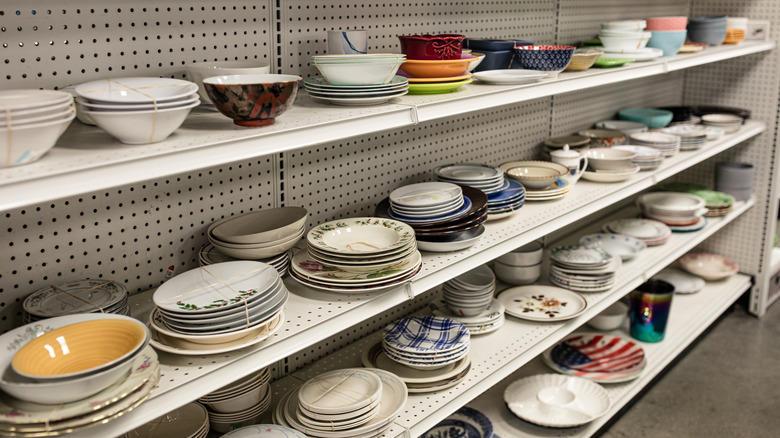
To everything there is a season, not only in life, but in folk rock and kitchenware alike. A time to embrace avocado green appliances, a time to refrain from embracing such questionable vintage home decor trends, and so on. In other words, yesterday's "not" might just be today's "hot," and previous pooh-poohing might make some of those revived items a little bit easier to come by on the secondhand market. In fact, plenty of Pyrex classics are poised for a comeback the likes of which the world hasn't seen since retro refrigerators and countertop television sets took over design pages. And if you spot any such dishes at the thrift store, you just might want to snag them.
Pyrex items are imbued with unmistakable nostalgia (even if you didn't necessarily grow up with the stuff). After all, they obviously last for a long time, as evidenced by their presence on the resale circuit. Being that your find has likely baked countless casseroles, holiday dishes, and easy weeknight dinners, odds are they can stand up to whatever you have in store, too.
Displaying and using your reclaimed Pyrex at home
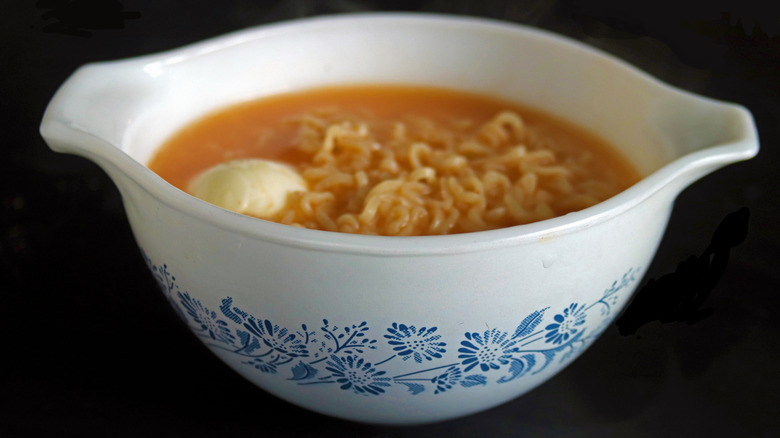
Now, easier to come by does not necessarily mean cheap, and the iconic white Pyrex with the pale blue cornflower tableau can carry almost unbelievable price tags on some user-generated resale platforms. At more than $10,000 a pop, those might not be the pieces that you want to cake with potato gratin. Like any old-timey finds that could be worth a pretty penny, or just shake out as simply nice to have, you may want to poke around online for a few Pyrex value guidelines before you make any major moves.
Let's say you find a more gently priced Pyrex at your local brick-and-mortar thrift store, however. You might still want to keep it out of the oven and use it, instead, as a creative way to decorate your open kitchen shelves. But you can cook with it as well. As much as we may prize throwback possessions such as these, Pyrex has always been designed with utility in mind. It's generally going to be okay up to around 425 degrees Fahrenheit, with the obvious caveats that you don't want to send it straight from the heat to the freezer, or vice versa, which will likely cause it to crack (or worse). Provided that you keep those general guidelines in mind, you're good to get cooking with your vintage dishware find.