

The Mistake You Have To Avoid When Scaling Up A Recipe
We may receive a commission on purchases made from links.
There's an assurance in following an existing recipe, allowing you to steer clear of mistakes as long as you're careful, whereas adjusting a thing or two brings an equal amount of excitement and worry — especially if you need a larger serving. Whether you're a hardcore recipe abider or you transform into an experimental chemist as soon as you pick up a spatula, scaling up a recipe can be a challenge, but we've asked an expert for a solution to make it a bit easier. Chowhound exclusively spoke with author and co-founder of The Financial Diet, Chelsea Fagan — who has a new party hosting book coming out, "Having People Over" — to figure out the best way to do it. And it all starts with avoiding one common kitchen mistake that's sure to ruin your food: overcrowding.
When scaling up a recipe, it's only obvious that you'll be working with more ingredients. It sounds easier to just toss everything in and wait longer for it to fully cook, but that's not the smartest choice — not if you want your food to cook evenly. "Often, great texture while cooking requires that each piece of food has its own breathing room, so be cautious about crowding any cooking vessel," Fagan said. "Make sure that you are giving your food room to breathe if you want it to crisp, brown, dry out, or anything similar," she added. Having an extra pan or two on hand can be a lifesaver, allowing you to let all the ingredients find their own cozy spot. This is why scaling up a recipe that requires roasting can get tricky, whereas Fagan suggested that braising won't give you much trouble.
Scale your recipes like a total pro
When it comes to scaling up a recipe and increasing the amount of ingredients, Chelsea Fagan offered another helpful tip. Her advice, albeit short and sweet, is a great rule of thumb that can help guarantee success: "Be conservative and add as needed." As a kitchen experimentalist herself, she advised going easy on thickening agents in particular. "[I] have learned the hard way over the years that a little bit of a thickening agent goes a long way, and you can very easily overshoot a sauce from 'glaze-like' to 'gelatinous' with just a touch too much cornstarch," she said. As such, it's considered a mistake when creating an original recipe — or when you're going in blind — to simply dive in headfirst. It's best practice to read a recipe thoroughly from start to finish and take it slow when planning and making modifications.
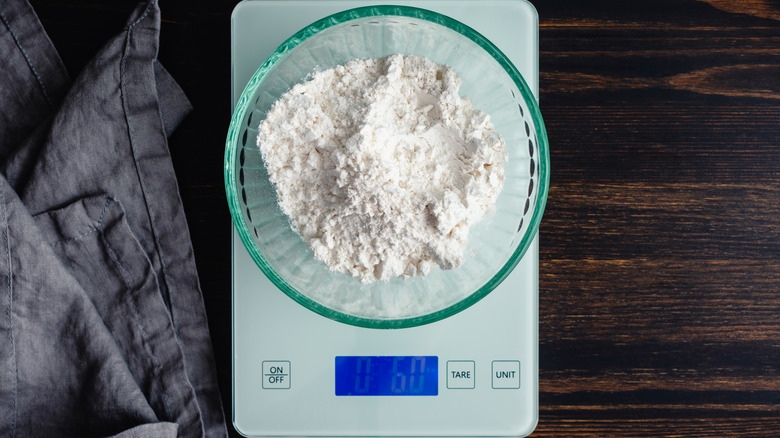
Nailing your measurements is perhaps the most important part to ensure a successful dish. A rule to live by is to compute your scaling factor first, which can be done by dividing your desired serving by the number that's written on the recipe. Once you figure out the scaling factor, multiply the measurements of each ingredient with that number. For ultimate accuracy, switch to weight measurements — a digital scale is a must-have for your baking projects, especially when scaling recipes. When in doubt, always test a revised recipe out before the big event for good measure.