

The Best Kind Of Skillet To Use When Cooking Up Eggs
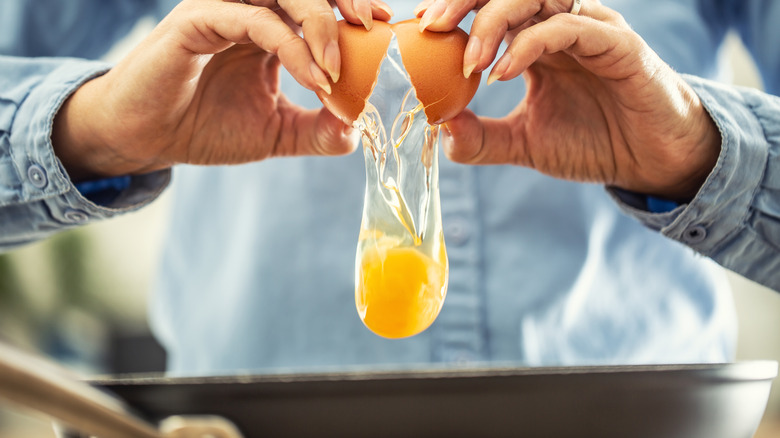
Eggs are super versatile and great at any time of day. From savory egg bakes to a classic, buttery eggs Benedict, there are a ton of different ways you can take your eggs to the next level. One of the simplest ways to elevate them is to simply switch up your skillet. Cookbook author and chef Rick Martinez, who has started a new Substack, talked exclusively with Chowhound about how to choose the right pan for your morning (or afternoon, or evening) eggs.
Martinez says that a cast iron pan is his go-to for making eggs at home. "I have a million skillets and dutch ovens and saucepans that are cast iron, and they're all really well seasoned," he says. "I always use that, because it's never going to stick." He says that the key to successfully cooking eggs in a cast iron pan is to use a bit of fat alongside high heat. If you try to cook your eggs on medium-low or medium heat in a cast iron pan, they're likely going to stick — to the point where your eggs will seem glued to the bottom of the pan, making them difficult to remove, according to Martinez. "You need to make sure that it's really, really hot. It's kind of true of pretty much everything with cast iron," he says.
Tips for choosing the perfect pan for cooking eggs
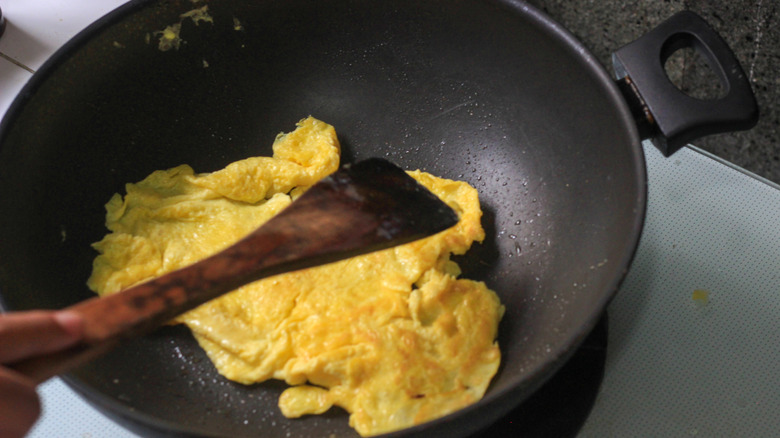
Ready to pick and prep the perfect pan for your morning eggs? If you're comfortable with cast iron, seasoning is key (Rick Martinez says that this is also true of black steel pans). Whether you buy a pre-seasoned pan or go through the cast iron seasoning process yourself, a well-seasoned skillet is key to ensuring that your eggs easily glide from your pan to your plate. In addition to managing the pan's heat, you should also make sure to use the appropriate amount of butter or oil. "For cast iron, the trick I think is you have to make sure that the pan is hot and also there's a little bit of fat in it," says Martinez.
If you're not comfortable using a cast iron pan, or you don't have one in your kitchen, you can still make great eggs with a nonstick pan with some extra patience — no matter what temperature setting you prefer for the cooking process. "Like, you could cook a scrambled egg on low, you know it will take a long time, but it is never, ever going to stick, and you're going to have creamy, delicious, custardy eggs at the end," says Martinez. As long as you keep an eye on the amount of fat and heat that you're using to ensure you're moving toward your desired result, and don't mind waiting a little longer for your breakfast, nonstick pans are far more forgiving than cast iron pans when it comes to cooking eggs.