

Wait, Is It Actually Safe To Refrigerate Hot Food?
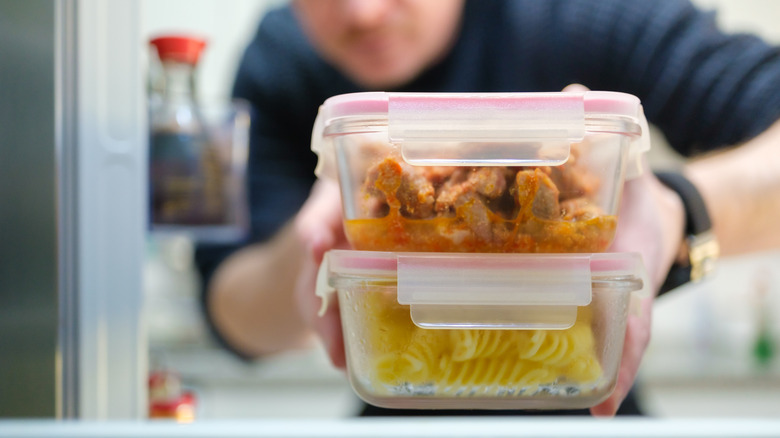
Temperature regulation is absolutely key to food safety — it's why we have refrigeration in the first place, and why some foods need to be cooked to a certain temperature before we can eat them. If you've ever worked in food service, you've probably heard that the "temperature danger zone" occurs between 40 and 140 degrees Fahrenheit, a sweet spot for harmful bacterial growth. Avoiding this range is why we don't leave cooked chicken out at room temperature for more than a couple of hours or use hot water to defrost meat, but it's easier to forget that other actions can leave food in the danger zone as well.
For instance, maybe you're used to transferring piping hot leftovers into a storage container and leaving it in the fridge immediately, without thinking about how this dramatic temperature drop could affect the safety of your food. We wanted to know how safe this practice really is, so Chowhound spoke exclusively with Campbell Mitchell, founder and managing director of food safety management systems company Quest 4 Food, and an industry expert with over 25 years of experience in food safety and quality assurance.
Mitchell says, "Yes — small amounts [of hot food] can go straight into the refrigerator." For larger volumes, however, he advises following USDA recommendations and taking one of two approaches: either "divide [it] into shallow containers ... or use an ice-water bath first to cool quickly and keep food out of the 40–140°F 'danger zone.'" A shallow container is less than 2 inches or 5 centimeters in height, he says.
Here's how to safely cool and store hot food
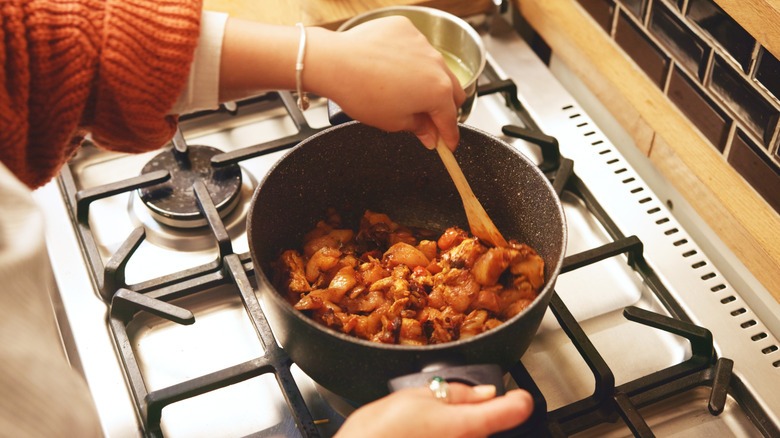
Next time you make too much pasta bolognese or meal prep a large pot of soup, you should know the safest ways to refrigerate your leftovers without letting them fall into the temperature danger zone. Don't just pour a whole pot of freshly cooked food into a huge Tupperware container and call it a day — take the time to divide it into smaller, shallow containers first. Food in a large, dense container will cool slowly, especially in the center, keeping it in the danger zone for longer, but dividing it increases the surface area and allows it to cool more quickly and evenly.
Once you've portioned food out, Campbell Mitchell says, "leave [it] uncovered until steaming stops, then cover and refrigerate within two hours." Cooling food at room temperature for longer than that is not recommended. "Over two hours at room temp (or one hour above 90°F/32°C) allows rapid pathogen growth — discard if these limits are exceeded," he says. With soups and stews, Mitchell advises, you should also use an ice-water bath and stir regularly, since liquid foods typically hold heat better than solid ones. Once cooled, you can choose whether to freeze or refrigerate your soup.
One of the big issues with putting hot food directly into the fridge is that it can raise the temperature of the whole environment and force the appliance to expend more energy. Monitor your refrigerator temperature with the help of an appliance thermometer. You can also prevent it from increasing too much by "spacing hot containers, avoiding stacking, and using shallow portions," Mitchell says.