

For The Crispiest Bacon Strips Don't Skip This Crucial Step
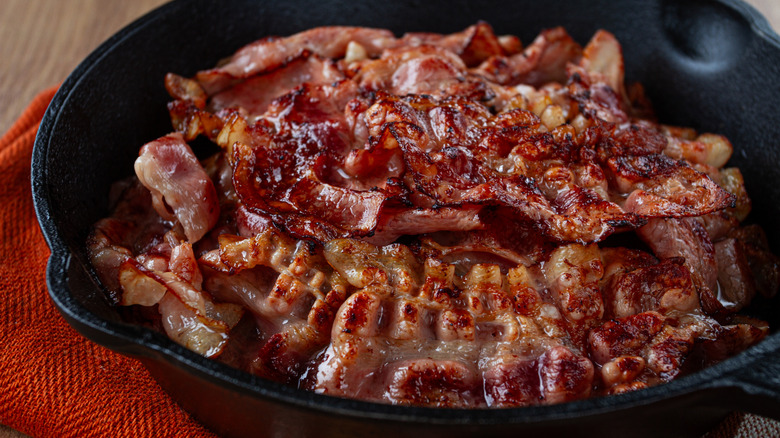
Okay, this one might get controversial — we know that crispy bacon isn't exactly a top-of-line priority for everyone, but for those who are not a fan of excess fat and moisture when it comes to the pork breakfast side, listen up. Robert Cornett, executive chef of Rancho de los Caballeros in Wickenburg, Arizona, spoke to Chowhound about how to cook up the perfect slice of bacon, and his exclusive tips include one that will give your strip the crunch you're looking for. "Resting matters," Cornett explained. "This allows the bacon to finish cooking at a lower, more controlled temperature, so that you avoid overcooking."
So what does resting your bacon look like, exactly? Essentially, it means taking your bacon off the heat before it's all the way done cooking, and placing it on a cooling rackFor the crispiest bacon strips don't skip this crucial step. The residual heat will help it crisp up much like soft cookies hardening as they cool, and Cornett says this technique can help keep them from overcooking as well. The expert says this doesn't need to be a huge change in your bacon-making routine — you only need to rest your bacon for two to three minutes, so you can certainly still serve the strips side-by-side with your fluffy buttermilk pancakes while they're piping hot. Is that still not crispy enough for you? Cook your bacon on a sheet pan in the oven instead of on your stovetop and leave it in there until it's properly brittle enough for your liking.
More tips from an expert on cooking up the perfect bacon strips
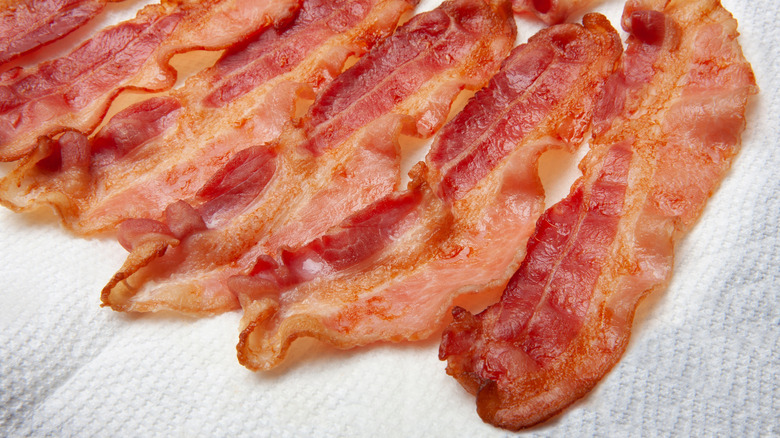
Letting your bacon strips rest after taking them off the heat might be a crucial starting point to help take your breakfast expertise to the next level, but it's not the only tip Robert Cornett has to offer. Making sure you properly drain the fat is another key aspect of achieving peak crispiness, and of avoiding sogginess. In fact, that's the reason why Cornett uses a rack for resting them, rather than a plate with a paper towel over top, like a lot of home chefs might first do. The paper towel might cause the bacon to sit in and soak in its grease, which is the opposite of what Cornett's going for. "I want the excess bacon fat to run off," Cornett said. "I want some grease on the bacon, but I don't want the bacon to be greasy."
If you don't have a cooling rack to use, Cornett says a paper towel covered pan or plate isn't the end of the world — just make sure you don't layer the towels, letting the grease from each subsequent layer of bacon drip down onto the one below. If you have leftovers, you can place your strips of bacon in an air-tight Ziploc bag and store in the refrigerator to enjoy having ready-made protein to add to your BLT or elevated grilled cheese sandwiches — but first make sure you let them cool to room temperature, to avoid condensation inside the bag ruining the crispiness of your perfectly cooked bacon. And if you really find yourself with an excess of the salty, savory pork product, use your newfound crispy bacon-making skills to try some creative recipes for candied bacon, asparagus bacon gnocchi, hearty bacon-wrapped chicken, or spicy red pepper "Billionaire's Bacon." Bacon this good demands to be shared.