

The Arby's Fast Food Roast Beef Rival From The '80s You Completely Forgot About

What do you know about Rax Roast Beef? If you're under the age of 40, the answer is probably "very little." However, for Generation X, baby boomers, and even a few elder millennials, this alliterative fast food chain might just conjure memories of roast beef, baked potatoes, and some frankly bizarre television commercials. At one point during the 1970s and into the 1980s, Rax Roast Beef was a fast food chain on the upswing. Offering a simple menu of roast beef sandwiches, baked potatoes, salad, and fries, Rax rivaled the similarly roast-beef-centered Arby's, at least for a time. During the 1980s, the restaurant chain boasted over 500 locations across 38 states.
All of this is pretty impressive, considering Rax's humble origins. The restaurant opened in 1967 under the name Jax Roast Beef in the town of Springfield, Ohio. From the start, the restaurant was a sort of culinary counterbalance to Arby's, which got its start (also in Ohio) in 1964. However, while Arby's struggles in the world of fast food, it remains a nationwide presence with over 3,300 restaurants operating today. Rax Roast Beef, on the other hand, has all but faded into obscurity, with only six remaining locations spread across Ohio, Kentucky, and Illinois. So, how did Rax go from budding fast food contender to all but extinct? The story of this chain's decline isn't in its roast beef (which was actually pretty good, according to those who remember it), but in the many misguided messages in its marketing, the clustered and confusing menus, and the failed reinventions set forth by the owners.
You can't have it all, but Rax sure did try
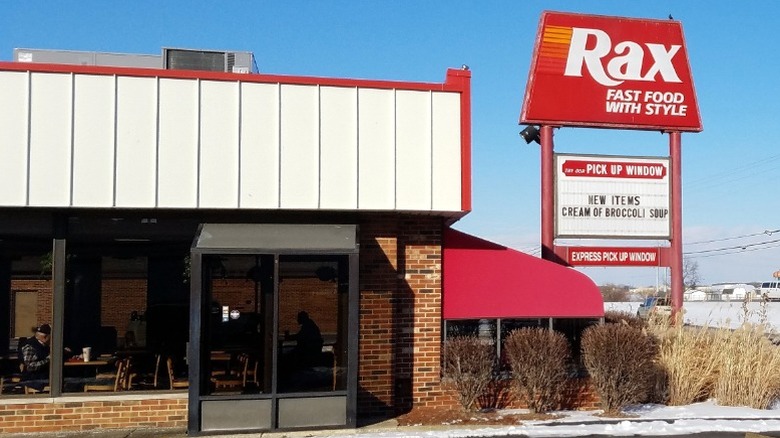
When discussing a chain with an unambiguous name like Rax Roast Beef, you'd think that the menu would be pretty simple. However, the company behind the chain, Restaurant Administration Corporation, was not content with keeping things basic. At the peak of its popularity in the 1980s (fast food's golden era), Rax pulled a series of blunders that lead to its undoing. As with the similarly downtrodden Sizzler, the chain opened a salad bar. Now, this in and of itself wasn't too bad. After all, the 1980s were replete with salad bars and buffets (Wendy's broke the mold for fast food chains with its buffet-style SuperBar, enjoying much success). Other adjustments, however, were downright baffling.
The addition of Asian-inspired menu items, tacos, and pocket bread-based sandwiches alienated the chain's core customers, who just wanted roast beef. There was no new trend or fad that the chain didn't glom onto. Additionally, many locations were revamped to include features such as solariums, flower vases, and even porcelain plates to class up the atmosphere, none of which helped keep its original customer base.
Mr. Delicious and Rax's demise
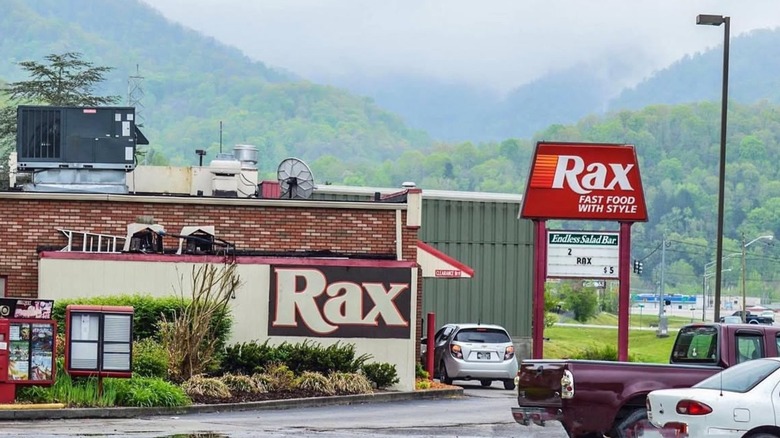
Perhaps the biggest misstep by Rax Roast Beef came from the chain's bizarre and erratic marketing. During the 1980s, Rax churned through a series of campaigns that were often just plain odd. From a 1983 commercial touting its extensive baked potato selection to an explosive "pocket taco" ad, it was clear that the chain simply didn't have a clear identity. This was also evident in their ever-changing slogan lineup, which included "Fast food with style," "Nobody stax up to Rax," and, perhaps most perplexingly, the subdued and ironically unappetizing "You can eat here." The chaos gave potential diners very little to hold on to.
All of these components caused the chain to flounder. Despite this, there is one figure in the chain's history that is often credited as the harbinger of Rax Roast Beef's downfall: Mr. Delicious. Introduced as the chain's mascot in 1991, the monotone, bland cartoon business man going through a frankly troubling midlife crisis was the chain's last grasp for relevancy. Maybe this was the chain's attempt to appeal to the sardonic taste of Generation X, or perhaps they just wanted to cause a stir. Either way, Mr. D did little to appeal to its blue-collar, Rust Belt customer base. And, frankly, who wants to eat at a restaurant represented by a grumpy animation who, as he explained in one TV spot, "just had some rather delicate surgery"? Well, no one, as it turns out. In 1992, the chain filed for bankruptcy, and now only a few locations remain.