

What Is Estate Whiskey And Is It Worth The Higher Price?
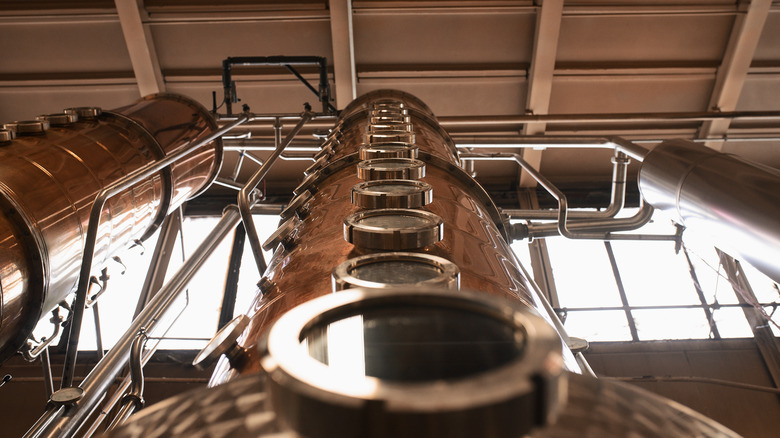
Estate whiskey — grain-to-glass whiskey making — is gaining traction with U.S. consumers. It now has its own organization, the Estate Whiskey Alliance (EWA), and a growing number of distilleries, both large and small, that are making the leap to an estate model. "Consumer interest in estate products continues to grow as the whiskey market becomes more saturated," Landon Borders, EWA's director, told Chowhound. "Distilleries need ways to distinguish their products, and consumers seek unique attributes." These distilleries typically grow their own grains that they then mill, cook, ferment, and distill on-site. Barreling, aging, and bottling also take place at the distillery. The result is whiskey with a unique terroir (like wine) produced with unrivaled transparency and quality control.
These much more labor-intensive processes can sometimes come with a higher price tag for the consumer. Some bottles, like Maker's Mark Star Hill Farm American Wheat Whiskey, which was the first to carry the EWA certification mark, cost around $100. There are some less pricey options that still deliver. Among these are Nevada's Frey Ranch, which has been at the forefront of the estate distillery movement for a decade and is producing some exceptional award-winning whiskeys. Its four-grain bourbon (no, bourbon doesn't have to come from Kentucky) is a great place to start exploring the estate distillery scene and will run you about $50. If you're interested in a range of flavor profiles and care about sustainability and traceability, then estate-produced whiskey may be for you.
An estate distillery is also a working farm
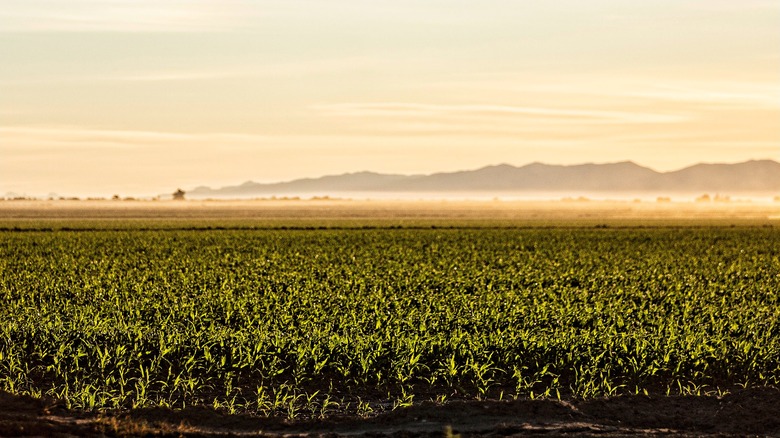
Colby Frey is a fifth-generation farmer raised on his family's 2,000 acres in Fallon, Nevada, but beginning in 2006, he and his wife, Ashley, began to explore a new avenue that would combine agriculture with another of their passions. "We are both avid whiskey fans, so it felt like a natural progression to produce whiskey with our slow-grown grains," Colby Frey told Chowhound. They tapped Russell Wedlake, a certified crop adviser who made the jump to master distiller in 2013. With Wedlake and the Freys' agricultural background, the grains take center stage at the distillery. "We sacrifice quantity for quality," Wedlake told Chowhound. "We also don't rush the growing process, as we want the grains to grow slower, resulting in a better quality."
The results can be tasted in the brand's straight bourbon, which is made with the farm's own non-GMO corn, soft winter wheat, malted barley, and winter rye, that's then double distilled to help refine the flavor profile. It's aged for five years and bottled at 90 proof. This grain-forward bourbon really spotlights the distillery's unique practices. The Freys are able to keep the price point reasonable since they control every step of the process, giving them built-in efficiencies other distilleries don't have. They're not paying markups on grains or dealing with middlemen. "The fact that we grow everything on-site means we can ensure consistent quality while managing our costs effectively," Colby Frey said.
Estate whiskey is on the rise

Frey Ranch also produces an exceptional bottled-in-bond rye, a designation that includes strict production guidelines and more unusual expressions like its Single Grain series. Among these are a 100% Wheat Whiskey and 100% Oat Whiskey that have garnered a dedicated fan base. "They want to explore different flavor profiles and understand how different grains impact the final product," Ashley Frey explained to Chowhound. Although estate whiskey is relatively new to consumers, Colby Frey believes there's a momentum building around it in part due to the Estate Whiskey Alliance, which Frey Ranch joined this year.
In 2023, the University of Kentucky worked with several distilleries, including Maker's Mark, Heaven Hill, and Hillrock, the first modern estate distillery in the United States, to launch the EWA. The organization offers estate certification. The distillery must prove it does all the work from milling to bottling on premises and grows at least ⅔ of all mash bill grains on land it owns or controls. Certification generally takes a few weeks and includes on-site visits, according to Alexa Narel, the EWA's operations manager. If the distillery passes, it can put the alliance's certification mark on its labels. While there are investments a distillery must make to qualify, the payoff comes with distinctive whiskey. "The higher operational investment is reflected in the enhanced quality and authenticity of the resulting product," Narel told Chowhound. That thinking can be extended to the consumer looking for a whiskey that's one of a kind and worth the price.