

Before You Age That Bottle Of Whiskey, Make Sure You Consider This
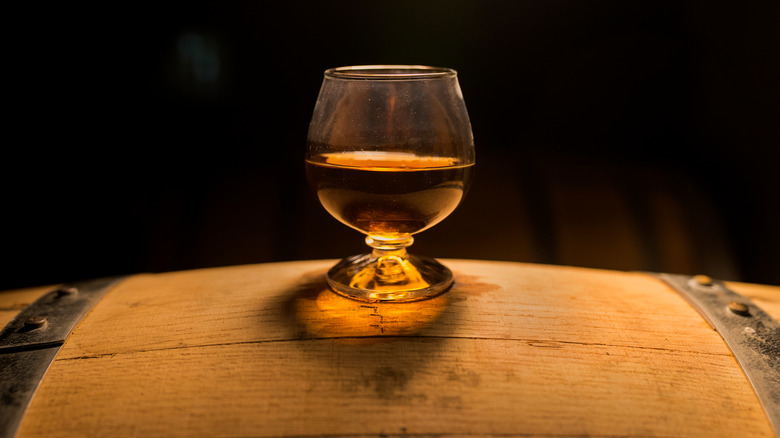
Whiskey has been aged in wooden barrels for centuries, imparting the spirit with its distinctive color and much of its flavor while removing harsher tones from the unaged liquor. Oak remains a go-to wood for distillers — in some cases, it's the law, as with bourbon that has to be aged in new charred American oak barrels. But oak isn't the only wood that's used. This is especially true with whiskey that's gone through a second barreling. Keep in mind, if the barrel is made of exotic wood, the final whiskey product can be super pricey. If you're toying with the idea of turning a subpar whiskey into something better by aging it at home (or you just want to experiment with exotic wood), there are some things to consider.
Chowhound asked Francesco Lafranconi of Carver Road Hospitality, to explain some potential downsides of this practice. Carver Road recently opened The Blue Vault, a high-end whiskey tasting room in Manhattan. Lafranconi told us there are some issues that can crop up when aging your own whiskey. They often relate to the fact that it's nearly impossible to duplicate the conditions the pros use when aging whiskey. "The optimal environment often resembles that of professional warehouses, which may not be attainable at home," he said.
It's hard to duplicate whiskey aging like the pros
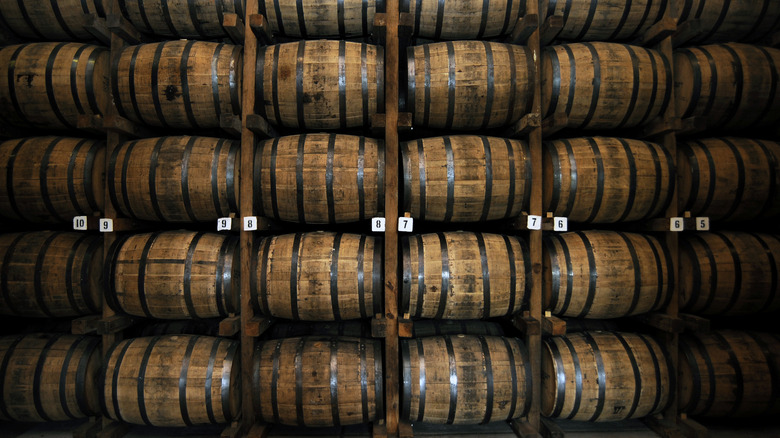
As Francesco Lafranconi points out, simply storing whiskey in a bottle won't age it since glass is inert. If you want to age whiskey at home, it needs to be in contact with wood. The simplest method involves aging whiskey in a mason jar with wood chips or staves that interact with the spirit. This method will quickly alter the flavor of whiskey, but lacks the integral oxidation that takes place in a traditional wood barrel which provides the more complex flavors you're probably looking for.
Lafranconi explained that distilleries age their whiskeys in oak barrels under controlled conditions with other important factors also coming into play. "Whiskey matures in barrels through a delicate interaction with the wood which is influenced by temperature changes, humidity levels, the barrel size, and wood type," he said. It can be difficult to recreate these conditions at home, especially if you're only working with a bottle's worth of whiskey as opposed to a whole barrel's worth.
Another option for at-home whiskey aging is buying a small wooden barrel, but this method also has issues since it requires careful monitoring. "The main danger lies in creating a whiskey that is overly woody or lacks balance, leading to a less pleasant experience," Lafranconi said. His advice? Leave it to the pros.