

Here's How To Make Quick Pickles
We may receive a commission on purchases made from links.
When you're a pickle fan, you often want to take them right out of the fridge to enjoy a crunchy bite for a quick and simple snack. They're always perfect on a sandwich or burger, of course, but take a leap and try some new combos like pickles and roasted potatoes or pickles paired with pizza. There's a lot of room to work with in terms of their sour, salty flavor profile. And if you're ready to expand your horizons beyond your current store-bought brand, take a look at Chowhound's ranking of pickles to get a new perspective.
That said, have you ever considered making homemade pickles? It might seem a little intimidating, but it's really quick and easy if you follow the right process. For some help on the issue, we reached out to Melissa King, a "Top Chef All-Stars" winner and author of "Cook Like a King: Recipes from My California Chinese Kitchen." To make a quick pickle, King says, "Make sure the liquid is at a rolling boil before you pour over your vegetables. Keep the vegetables consistently sized and shaped. I go for bite-sized."
Getting your pickling liquid to a properly hot temperature will ensure that the water, vinegar, and sugar have thoroughly mixed. The right temperature will also help release the flavor of added aromatics. Keeping the veggies consistent will give you reliable flavor from pickle to pickle.
More tips and tricks for making quick pickles
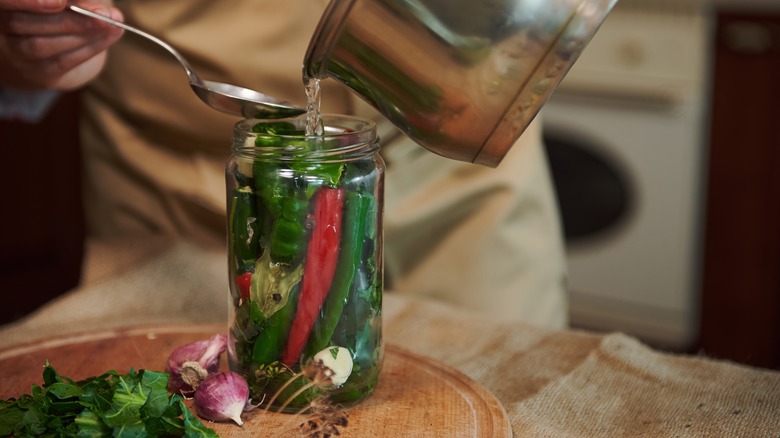
For the simplest quick pickle recipe, you can follow the 3:2:1 rule — 3 parts vinegar, 2 parts water, and 1 part sugar. Bring the ingredients to a boil and make sure the sugar is fully dissolved, then pour the liquid into a jar full of your pickling vegetables and refrigerate. Because of the acid in the vinegar, it's best to use a non-reactive pan when boiling — stainless steel, glass, or ceramic are all good choices.
For more flavor, Melissa King says, "You can add in whole spices and aromatics like traditional peppercorns, coriander, mustard seeds, or play around with lemongrass, ginger, and dried Sichuan chili pods." For a standard dill pickle mix, garlic, mustard seeds, coriander, and dried dill work beautifully. When using extra ingredients, they should be added during the boiling process, but you don't want them to cook for too long or they might start to lose their flavor.
Pickled veggies are ready to eat as soon as they've cooled in the fridge, but they'll have a bit more character if you let them soak for at least a day. King says you can cut your veggies into smaller pieces or slice them with a mandolin to allow them to pick up the flavor of the brine more quickly. And, if you're looking to go beyond cucumbers, you've got options. "Technically you can pickle anything," King says. "But I prefer pickling heartier vegetables that have a crisp like carrots, cauliflower, fennel, radishes, and green beans. I know people do it, but I'm not a big fan of pickled eggplant or pickled mushrooms because of their texture."