

One Common Mistake Everyone Makes When Adding Butter To Cakes

It's hard to argue that cake-making isn't a true art form. Whether you're making an old fashioned whiskey cake from scratch, or taking your usual chocolate cake to the next level with one simple swap (aka dusting the pan with cocoa powder instead of flour), it takes a lot of skill and creativity to nail every detail.
However, if there's one thing most amateur bakers tend to get wrong, it's using butter at the wrong temperature. To master the texture, you need to make sure the butter is at room temperature. This means that it's firm enough to hold its shape, while at the same time, soft to the touch and easy to melt into the batter. Kristina Lavallee, owner of Florida's The Cake Girl — a bakery known for its custom cakes and mini cupcakes — revealed in an exclusive Q&A with Chowhound that butter's temperature can greatly affect a cake's texture and structure.
"If the butter is too cold, it doesn't blend evenly which can lead to having clumps in your batter," Lavallee told us. "If it's too warm, it isn't able to hold air and the cake can come out too dense." Lavallee further highlighted that butter at room temperature, which is typically about 65 to 68 degrees Fahrenheit, should feel cool and leave a dent when pressed. Still, the butter shouldn't feel very greasy and your finger must not be able to go through it. "With a butter knife, it should glide through with little resistance, if you are having to force your knife it's too cold and if your knife just sinks through with no pressure, it's too warm," she added.
Butter temperature truly matters for proper creaming
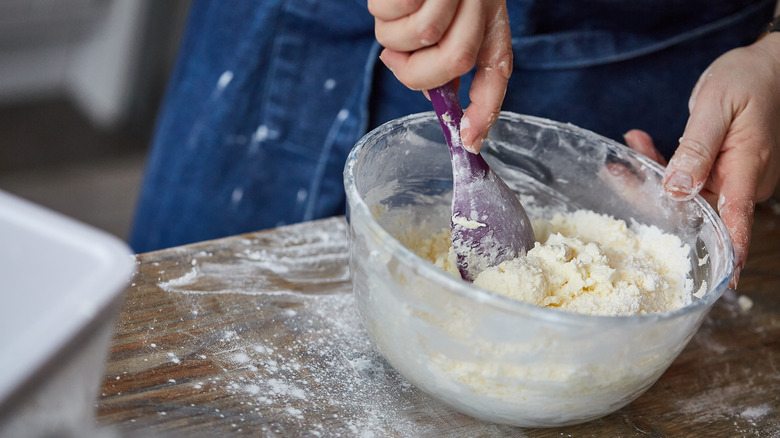
There's a scientific reason why butter temperature plays such an important role in cake baking. And getting it wrong is one of the mistakes only beginner bakers make. It turns out that, at room temperature, the butter, along with the eggs and the dairy ingredients, creates an emulsion that enables small pockets of air to form. "As the cake bakes, those air pockets expand creating proper lift and texture," Kristina Lavallee elaborated. "When your butter is too cold, it does not mix right and does not allow the ability for air to be incorporated into the batter, and when you have butter that is too soft the air pockets collapse and it won't rise properly."
When asked how to quickly bring butter to room temperature without ruining it, Lavallee suggested cutting it up into cubes and then laying them out on a plate. While using the microwave to soften the butter can be tempting and might seem like a quick fix, it will likely melt the butter unevenly, destroy its structure, and make it unusable for baking. Instead, cut the butter into cubes and "Allow it to sit for around 10 to 15 minutes and it should be almost at the perfect temperature," Lavallee recommended, once again stressing how crucial it is to get the temperature right.
How to prevent butter from melting when it's hot out
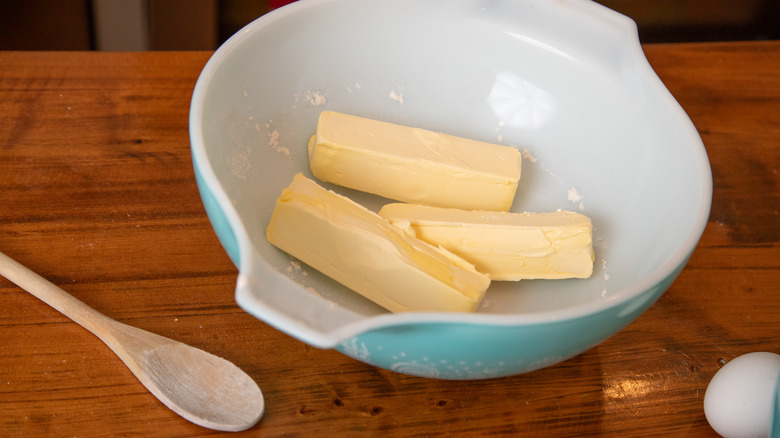
Butter can start to melt almost instantly during the summer heat and completely wreck your cake plans in a matter of minutes. On how to keep butter at the right temperature a bit longer during a heatwave or in warm regions, Kristina Lavallee revealed that the secret lies in taking it out of the fridge at the right time. "A couple of tricks when you live in hot climates is to be mindful of when you take out the butter during your prep, you do not want to take it out too early before you are ready to start to avoid it melting too quickly," Lavallee stated.
Meanwhile, even your prep station's location can have an impact on the butter's firmness. "If you are prepping near a window with sunlight, that will lead to it melting quickly, try to keep it in a cool area away from sunlight," Lavallee continued, and shared another smart tip on how to gain a few extra minutes before it melts. "Some bakers also chill their mixing bowl to buy themselves a little more working time," she concluded.