

Anthony Bourdain Believed America Needed More Of These Types Of Meat Cuts

We may receive a commission on purchases made from links.
Chef, author, and TV personality Anthony Bourdain may be gone but his legacy of helping to shape opinions on food tastes and travel continues. His advice on how to pick the best dish at any restaurant (ask for what they're good at making) remains solid. Similarly, his belief in being curious and open-minded when eating abroad has become a touchstone for many travelers. One of Bourdain's food takes that hasn't quite become a norm, but does continue to gain some ground, is his love for offal and other offcuts – organ meats and various animal parts, like tongues and hooves, that aren't as popular in the United States.
Writing for the New York Times in 2003, Bourdain expounded on the importance of these meats that many Americans continue to scoff at and admitted, "I have become increasingly interested in the pleasures of offal, even evangelical about it." His championing of what he called "the nasty bits" continued the next year when he included a recipe for tripe (the edible stomach lining of a cow — in his "Anthony Bourdain's Les Halles Cookbook." The dish also included pigs' ears and trotters, among other less popular cuts. Over the years, he continued to highlight offal and offcuts via his various TV shows like "Parts Unknown." He even tried to convert the broadcast journalist and finicky eater Anderson Cooper into a tripe fan (it didn't take).
Why Bourdain championed offal and offcuts
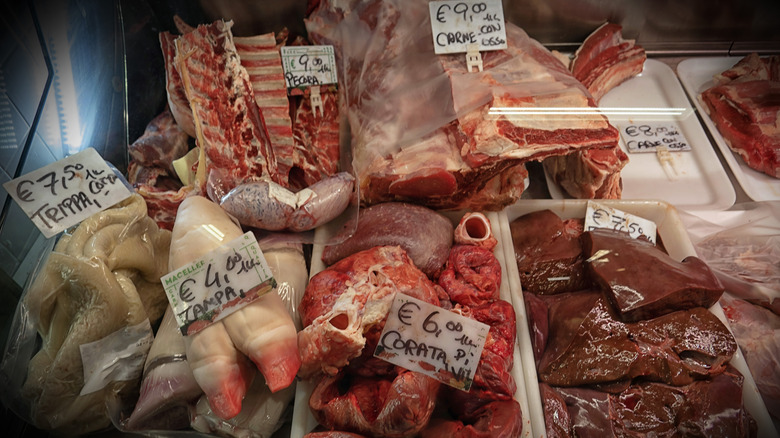
So why did Anthony Bourdain become such a champion of offal and other offcuts? One reason likely stems from his training as a chef at the Culinary Institute of America and the various restaurants where he worked. "As a young cook I came up in an old school system: use everything, waste nothing," Bourdain said in the 2017 film "Wasted! The Story of Food Waste." He abhorred food waste and believed Americans needed to better embrace these cuts in an effort to avoid it.
However, there were other reasons as well, including America's lost heritage related to these meats. He noted in his 2003 New York Times article that at the turn of the century, offal was a staple ingredient in U.S. kitchens. Later, during the Great Depression, many Americans turned to beef jelly sandwiches – made from simmered beef hearts and tongues and pig's feet — to stretch their food budgets. He also felt that these various meats, like tripe, and sweetbreads (the pancreas and thymus glands of veal, lamb, and pork), among other offcuts, were simply delicious. Maybe it's time to find out for yourself why Bourdain championed these "nasty bits" as undersung gustatory gems.