

The Cucumbers You Never Want To Use When Making Homemade Pickles
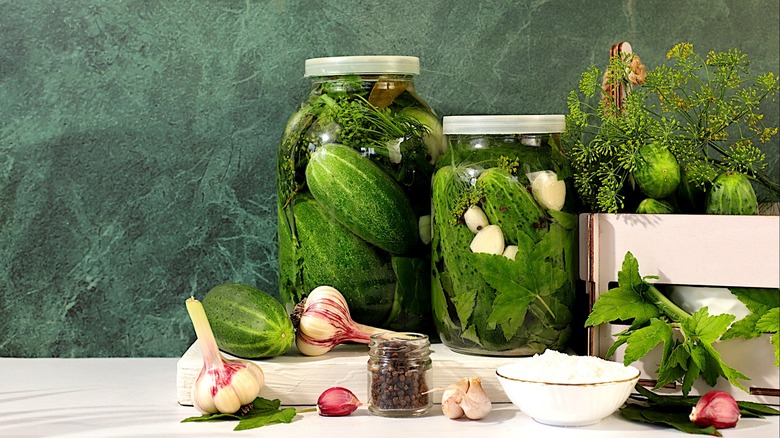
Let's get one thing straight — there's almost nothing a good pickle can't fix. Delectably salty and tangy, pickles are the ultimate snack made to soothe the soul. Whether you head to the nearest supermarket and buy the best store-bought pickles that pack bold flavor and a snappy crunch, or try the expert-approved technique for super-crunchy homemade pickles and prepare them yourself, they'll never let you down. Except, of course, if you choose the wrong variety to pickle.
As it turns out, not every cucumber deserves a spot in the pickle jar. There are good picklers and bad picklers. While the first ones are specially bred for their thin skin, satisfying crunch, and smaller seed cavities, science suggests you might want to steer clear of the ones that have a waxy coating, which creates a barrier that keeps the brine from penetrating the cucumber. But according to Eli Collins, a chef at a.kitchen+bar, which has locations in Washington DC and Philadelphia, there are a few more cultivars that are worth skipping.
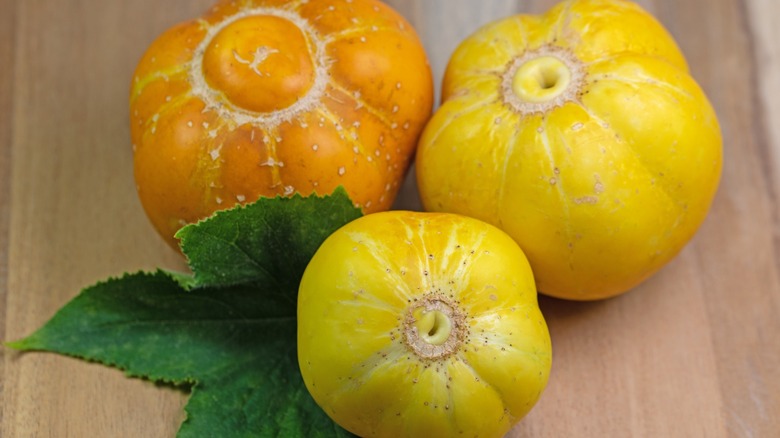
When asked about the worst cucumber varieties for pickling, the chef told Chowhound in an exclusive that lemon cucumbers are at the bottom of his pickling list. "I don't like to use lemon cucumber or other heirloom varieties that have more of a melon-like texture," he stated. "They fall apart and are far better served raw." Instead, Collins recommended going with Kirby, English, or gherkins for the best results. "Also, a new variety from Row 7, called the 7082 cucumber, produced a great pickle we used at a.kitchen this past summer," he told us.
Smart tips to take your pickles from good to great
Eli Collins explained that the best pickling varieties stand out because they can handle both hot and cold pickling methods without turning mushy. "The texture remains crispy and they absorb flavors very well," he said. However, it's not just about the variety. The technique and recipe you follow matter just as much when it comes to the final result. There's some real science behind the pickling process. Collins emphasized that adding enough salt to the brine is crucial. Adequate concentrations of salt enhance the taste of the pickles and preserve their crunch. "I usually do a 2% salt ratio; I feel like most homemade pickles are not seasoned enough," he explained. "I also lean toward more vinegar than sugar in my brine."
On whether there are any unusual spices or ingredients worth adding to the brine, Collins stated they often make their own infused vinegars at his restaurant by using overripe herbs or leftover citrus peels for more depth. "So we can [make] holy basil vinegar, using the stems, or black garlic vinegar, using the peelings, trying to use up ingredients that might [otherwise] be wasted," he concluded. "It's a great way to not waste product and also create something unique."