

What You Need To Know Before Thrifting That Vintage Tupperware
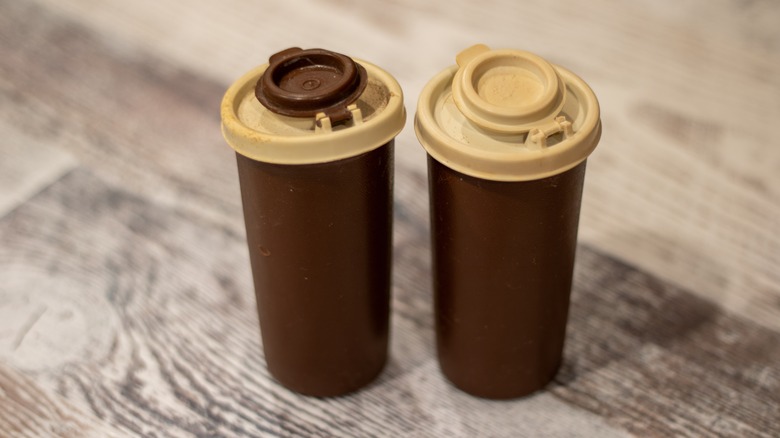
We may receive a commission on purchases made from links.
Even if you don't have a piece of Tupperware in your kitchen right now, chances are you have memories of these blocky plastic containers, especially from the late 1990s and early 2000s when their sales peaked. At the time, a Tupperware box stood out; there was nothing quite like it in the kitchen. One container to freeze, heat, and eat out of, the nostalgic connection for many is strong. Therefore, when the company filed for bankruptcy in 2024, for the first time, it felt like these ubiquitous kitchen mates may not be around forever. Sure, there are now plenty of substitutes, which is one of the reasons behind the rise and fall of Tupperware, but the fact that the vintage Tupperware trend is brewing shows just how attached we are to the OG plastic containers.
There are decades-old Tupperware pieces that you'll find in second-hand stores everywhere. Unlike stoneware, which is a hardy but rare vintage kitchen thrift find, these plastic containers are still available at very low prices, making them tempting spur-of-the-moment purchases. However, those vintage containers may only be good for adding a nostalgic touch to your kitchen, but not for actually storing food. Depending on when they were manufactured, Tupperware pieces could contain harmful chemicals.
Like many daily practices of yore that are only now being discovered as harmful, plastic containers, including Tupperware, were earlier made using dangerous chemicals. One of the most widespread is Bisphenol A (BPA), which is found in a variety of plastic products, including kitchen containers. While Tupperware stopped using BPA after 2010, vintage containers manufactured prior to that will still have it. Plus, older Tupperware containers were also found to contain harmful chemicals like lead, arsenic, cadmium, and mercury.
How to spot vintage Tupperware that's unsafe for storing food
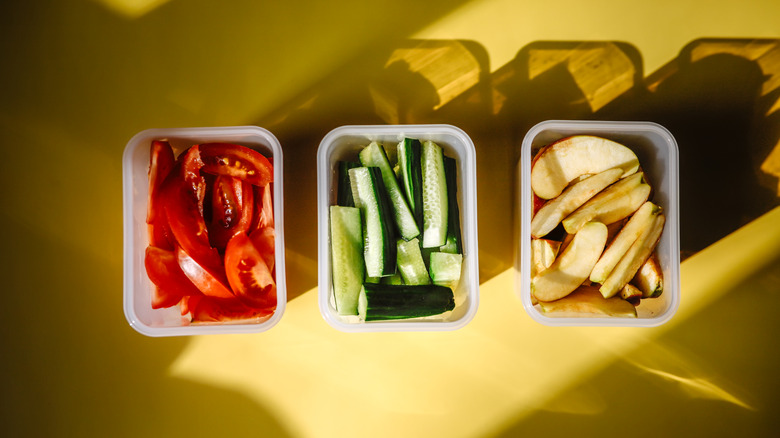
Many high-quality plastic products, including Tupperware containers, originally used BPA-containing polycarbonate plastic. Studies found the largest source of BPA in humans to be through diet — the chemical leaches or gets absorbed by food through the plastic container it is stored in. While any Tupperware product available after 2010 in the USA or Canada is BPA-free, when it comes to thrifting, there is a lot of ambiguity about the source and also when the container was manufactured. In fact, if you're buying it at a thrift store and it has a vintage Tupperware design, there's a high chance the container is from before 2010, making it unviable for storing food.
Additionally, to check which thrift Tupperware can be used in the kitchen, look at the bottom for symbols. A fork and wine glass mean you can use it for food. While freezer and microwave symbols convey that the container is safe at extreme temperatures, this isn't true for thrift store finds, since wear and tear can make plastics more susceptible to leaching. With the thrift container's use history unknown, it's best to avoid putting it in contact with hot or cold temperatures. Look for discoloration or scratches to gauge just how much wear and tear the container may have experienced. Furthermore, if you notice a PC (for polycarbonate) symbol under the container, do not use it for storing food since it most likely contains BPA.
Keeping track of forever chemicals in your kitchen helps avoid ingesting them. For vintage-style food-safe containers, consider Tupperware's BPA Free Heritage Collection, and keep those nostalgic thrift store finds for decoration and other uses.
Non-food uses for thrift vintage Tupperware
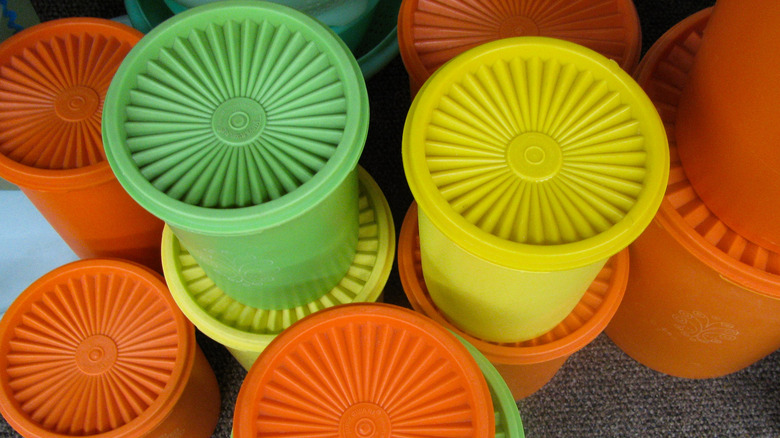
While not usable with food, you can still pick up thrift Tupperware for its hardiness and versatility around the house, especially if you find one with a quirky, relatively rare vintage design. There's a lot that can be done using these containers, even if you want to limit them to your kitchen. Depending on the container's shape, it can be used to store small items like napkin rings, cookie molds, openers, cutlery, or even make a convenient caddy for condiment bottles. You can also use lidded containers to discard food waste during prep or post-meal clean up, or to collect material for composting. If the container is still airtight, you can store packaged food, like a bag of chips, inside it to keep it fresh while avoiding direct contact between the food and the container.
Outside the kitchen, vintage Tupperware works well as an organizer for stationery or art supplies. The containers can even be decorated and placed around the house, or outside in the garden as small planters. Paint a large container in bright colors or with a metallic finish to give it an interesting look so you can use it as a centerpiece to show off decorative items. Smaller Tupperware pieces can be kept in your car or backpack to be used to easily dispose off small trash like food wrappers on the go. The uses of thrift Tupperware are virtually limitless, so you can enjoy the nostalgia without any of the dangers, as long as you don't use it to store food.