

Save Those Potato Peels: How To Use Them To Polish Silverware
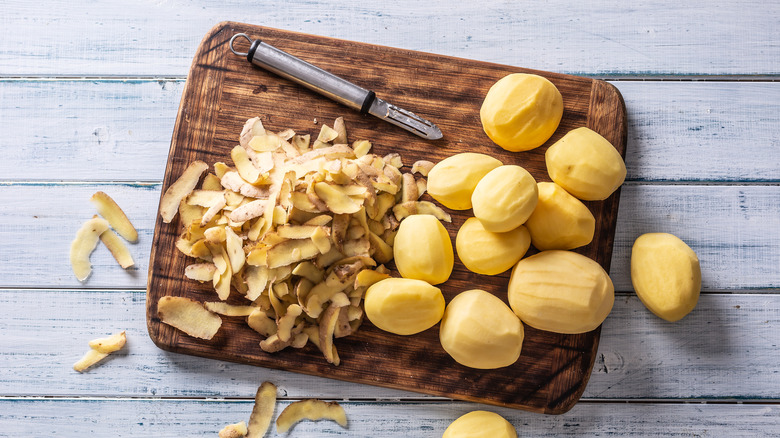
Potatoes are undeniably delicious. Maybe it's because of their high carbohydrate content that triggers our brains to produce a bunch of those feel-good hormones such as serotonin. Or perhaps it's their incredible versatility and the fact that you can bake, roast, boil, fry, or mash them, and they'll still taste amazing. You can absolutely pick any of these 12 different types of potatoes and be completely certain that none of them will leave your taste buds disappointed.
Having said that, no matter how irresistibly tasty potatoes are, peeling them remains one of their greatest drawbacks. Dealing with all the leftover potato peels afterward is yet another one. Now, you may have heard that turning them into a delicious snack is a remarkably tasty way to repurpose potato peels. But here's another mind-blowing alternative that you probably weren't expecting: Potato skins actually make a great silverware polish.
The secret behind potato peels' polishing powers lies in their chemical composition. Potato peels are particularly rich in natural acids, especially oxalic acid, which helps transform insoluble iron compounds into a soluble complex ion. In other words, it helps dissolve stubborn rust and lime deposits. Another compound potato skins contain in abundance is solanine, a toxic substance that also tackles grease and creates a soapy foam once it's exposed to water. That's why both compounds are common ingredients in many chemical cleaning agents made to remove stains and polish tarnished metal. So how can you actually use potato peels at home to restore your silverware's shine, without wasting any money on ridiculously expensive cleaning products?
Potato peels can easily bring back your silverware's sparkle
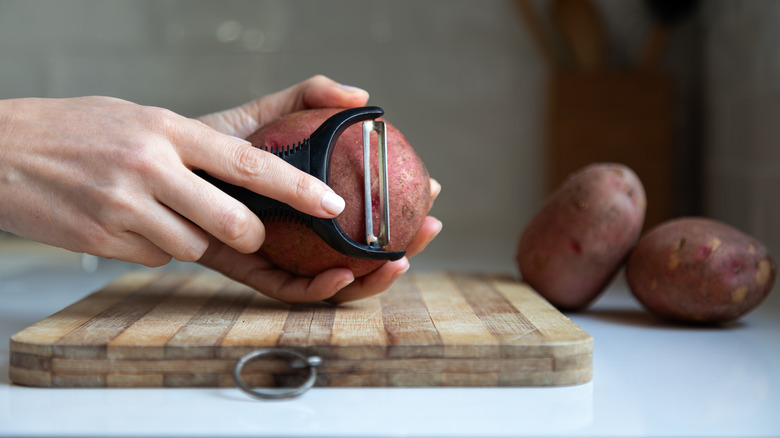
If you were ever wondering whether you should peel your potatoes when making fries, then knowing the skins can do wonders with your silverware should answer that for you. So once you peel the spuds, drop them into a bowl of water along with your silverware. On that note, make sure to add just enough water to cover the peels and silverware. This way, the oxalic acid we mentioned earlier will stay highly concentrated and deliver better results.
All you have to do then is let the silverware soak for about half an hour and let the skins do their job as you watch an episode of your favorite Netflix show. When done, simply take the silverware out of the water bath, wipe it clean with a cloth or paper towel, and give it a thorough rinse before you put it away.
Then, instead of pouring that potato water down the drain, another thing worth trying out is adding some baking soda to it and turning it into a cleaning paste. Baking soda works as a mild abrasive, and when combined with the oxalic acid in the potato water, it can clean silverware even more effectively, especially when it comes to tackling stains that remain after soaking. Finally, if your silverware is heavily tarnished and you aren't quite in the mood to make a paste, just rub the inside of a potato peel on it. You'll be amazed at how effortlessly potato peels bring back your silverware's shine.