

Why You May Want To Avoid Buying Certain Types Of Tilapia
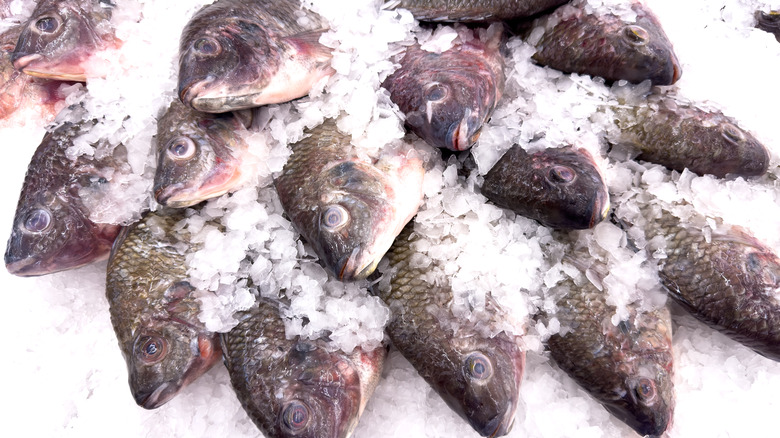
Nutritionists often agree that adding more fish to your diet is a smart decision. And with so many choices and ways to prepare fish, this isn't a difficult task. But while there are plenty of fish in the sea, so to speak, one in particular should be approached with a little caution. Tilapia, a popular fish that is full of flavor and nutrients, often comes under fire from rumors about subpar farming practices that can be harmful to the environment, and in some cases, to the health of consumers.
The problem with tilapia boils down to the fact that farming practices are not the same in every part of the world. Some reports have suggested farmed tilapia in countries like China are fed fecal matter, while others report harmful, toxic chemicals being used. Luckily, the Monterey Bay Aquarium Seafood Watch has been generating a sustainable seafood advisory list for 25 years, offering recommendations about what is safe to eat and warnings about what is best to be avoided.
When it comes to tilapia, the advice is clear: check where the fish was farmed and if it is a product of China, skip it and opt for something else. Tilapia farmed in Mexico also needs a closer look — as long as it is ASC certified, it's safe, but if not, pass for tilapia farmed in places like the U.S., Columbia, Indonesia, or Taiwan. The ASC certification refers to the Aquaculture Stewardship Council that sets the global standards for responsible seafood farming and, along with other certifications like the Global Seafood Alliance Best Aquaculture Practices (BAP) and Naturland certification, lets you know that the fish has been raised safely and sustainably.
Tilapia has plenty of redeeming qualities
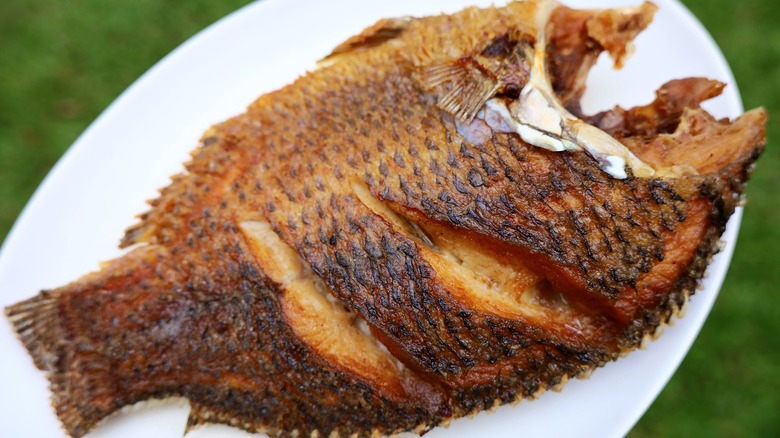
Thanks to the questionable farming techniques that some countries allow, tilapia has earned the nickname garbage fish. But despite this unfortunate moniker, it isn't all bad, as long as you avoid the types that Seafood Watch advises against. For instance, Nile, Mozambique, and hybrid tilapia farmed in ponds of China are best avoided — as are any Nile tilapia farmed in ponds or freshwater net pens of Mexico. As long as you avoid these, tilapia is an excellent fish to eat. In fact, tilapia is one of several types of white fish that are a great choice — and the EPA seems to agree, listing it as one of its "Best Choices" for children and women who are pregnant, breastfeeding, or might become pregnant.
What you should know about tilapia is that it has some incredibly redeeming qualities that you might want to familiarize yourself with when planning your next seafood meal. Despite the fact that it is originally native to Africa, it is now available around the world (it's farmed in more than 135 countries). Moreover, on average, Americans eat around a pound of tilapia a year or more. It's known for its mild flavor with a hint of sweetness that doesn't overpower a recipe with a strong fishy note — in fact, it does a great job of soaking up seasonings that are added, so you can develop any flavor profile your palate desires. This versatility makes it an incredibly adaptable fish that you can do just about anything with, from pan frying to grilling and everything in between.