

The Reason Walmart Keeps Its Milk Prices So Low
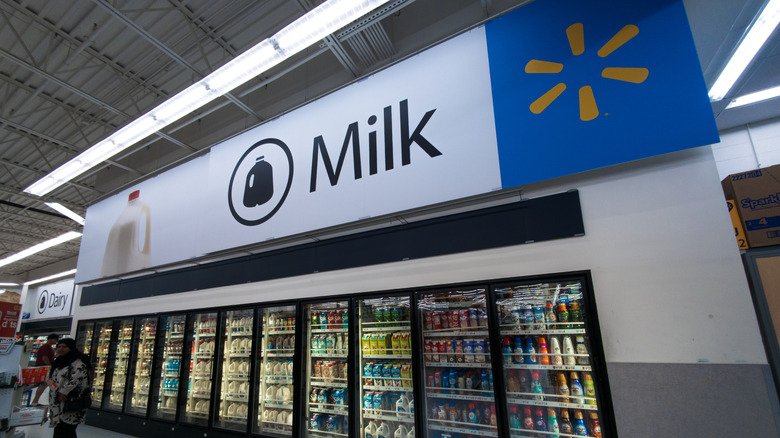
Walmart is a great place to find a bargain, and every shopper worth their coupon booklet knows this to be true. You can find everyday staples for low prices. In particular, the store's in-house brand, Great Value, offers less expensive staples for grocery shoppers. Great Value sells everything from canned vegetables to soda and the grocery staple of all grocery staples: milk. And not just any market price milk; Great Value is known to sell milk at a reliably low price point, a feat that is particularly notable considering the relatively erratic nature of milk prices in the United States. This is largely due to the fact that Walmart's Great Value milk is made in-house.
Milk is one of those grocery staples whose price seems to be a bellwether for the economy writ large. For this reason, milk prices can soar and dip pretty violently. In recent years, milk prices have increased due to multiple factors. Still, throughout all of this chaos, Walmart has managed to keep its milk prices relatively low. And in some cases, it's managed to price its milk well below market value.
While there are many factors that go into Walmart's low prices, one of the biggest factors in its low-priced milk is the company's push to move its milk processing to Walmart-owned facilities. This means that the brand need not pay an outside company to process its dairy products before they hit the market. This greatly reduces operation costs and allows the chain to sell milk at a lower cost than other stores.
Everything you need to know about the low milk prices

Walmart's move toward using in-house milk processing plants is relatively recent. The chain opened its first milk processing facility in 2018 in Indiana. This move allowed the company to trim any separation between the company's milk supply, sourced from dairy farms, and the end variety of dairy products, such as milk and cream, that you can find at your local Walmart. This allows Walmart to have more control over the final product as well as its price point.
Walmart isn't alone in owning its own milk processing facilities. Kroger, for example, is known to own and operate its own dairy processing facilities for its in house brands, too. Since Walmart's first facility opened in 2018, the brand has quickly expanded its dairy production capabilities, opening plants in Georgia in 2025, and a third one set to open in Texas in 2026. Milk products made by these plants are sold under the Walmart Great Value and sister company Sam's Club Member's Mark labels. This streamlining of Walmart's supply chain allows the chain to price its milk products at a lower, more consistent price point, which is certainly good news for the stores' many customers. However, there are those who are not as keen on Walmart's dairy strategy. According to some reports, Walmart tends to source its dairy primarily from larger dairy farms, which can put smaller farms at a potential disadvantage. So those great bargains do come at a cost.
Other ways Walmart keeps prices low
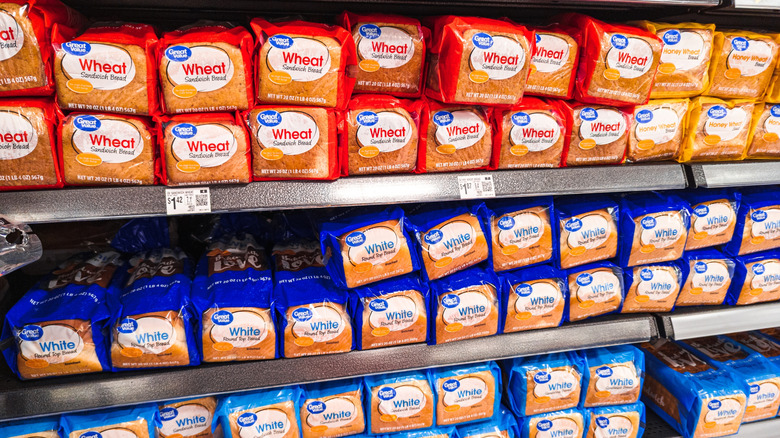
Walmart owning and operating its own dairy processing plants is part of a business strategy known as vertical integration. Vertical integration is the process by which companies seek to control as much of the production and distribution process as possible. This strategy allows businesses to keep prices low. This is only one strategy Walmart uses of many. Another strategy? Sheer ubiquity. The fact is that Walmart is the largest retail entity across the globe and within the United States. Most people in the U.S. live within driving distance of a Walmart, making it the most accessible option for many rural Americans. Having such a large customer base of guaranteed repeat customers allows the chain to price its items at a lower point.
Walmart is also able to negotiate with its suppliers thanks to its large market share. Its dominance in the realm of home supplies, groceries, media, and clothing allows it to get the best prices possible for its customers. Walmart's use of in-store labels at large also helps keep prices low; this is a strategy also used by retailers such as Trader Joe's (which rarely sells name brand products at all) and Costco. Both of these chains have in-house labels that have garnered quite the fanbase among their customers (seriously, many shoppers swear by Kirkland brand beef pot roast). Walmart's Great Value label is similar to Kirkland brand items, in that the products are sourced by Walmart and sold at a lower price point than name brand. And though it doesn't have a cult following in the same way Costco's Kirkland brand does, it is a great choice for customers looking for a great deal.