

When To Peel Potatoes Before Vs After Cooking
We may receive a commission on purchases made from links.
Whether roasted in the oven for a beautifully crispy and crunchy bite or boiled and transformed into a smooth, rich, and creamy purée, potatoes are undeniably delicious. With so many ways to play around with their texture and flavor, it's easy to see what makes them so irresistible. That's why it should come as no surprise that the crispiest, butteriest fried potatoes are an architectural marvel. But if there's one thing about potatoes that still sparks debates, it's certainly the age-old question: to peel or not to peel? Or better yet — when to peel?
We typically suggest boiling potatoes with the skin on for more flavor and nutrients, but in an exclusive conversation with Chowhound, Eli Collins, a chef at the a.kitchen+bar, which has locations in Washington, D.C., and Philadelphia, revealed that whether you peel potatoes before or after cooking completely depends on how you plan to use them. "For gnocchi, we bake them in the peel to keep the potato drier," Collins told us. "For pomme purée, we peel and cook them in water to achieve the right texture."
Collins explained that the recipe plays a significant role in knowing if peeling is actually necessary. "It's very based on what you are trying to achieve," he said. "Peeling potatoes for potato gratin or even pave-style preparations allows for even texture and a clean appearance."
The best method to peel potatoes is incredibly simple
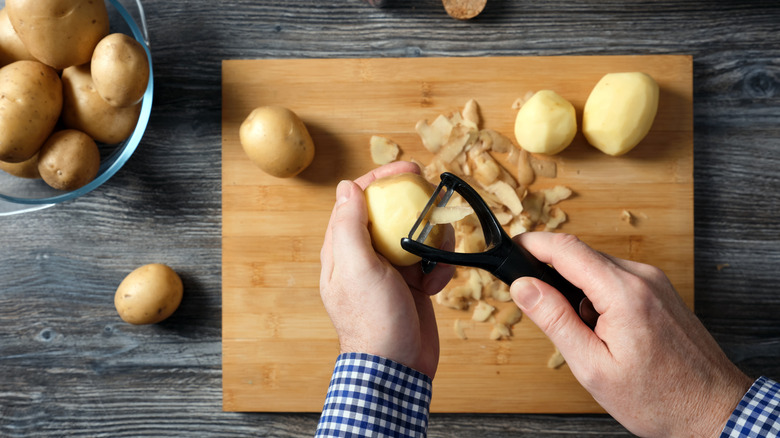
When it comes to the best way to peel potatoes, Eli Collins swears by a good, old-fashioned vegetable peeler. That said, there's only one model he has in mind: a Kuhn Rikon Swiss Peeler. "It's the only one allowed in my kitchens," he explained.
The chef also offered another clever potato hack that could come in handy regardless of the dish you're preparing. "Keep peeled potatoes in cold water to prevent oxidation," he said. This helps prevent the potatoes from turning brown, which happens as a result of their enzymes reacting with the oxygen present in the air. Keep in mind, though, that submerging peeled potatoes in cold water won't completely stop oxidation, but rather just slow it down. You also have only about 24 hours of soaking before the tubers' starches start to fall apart due to absorbing too much water. So try not to get carried away and peel more potatoes than you plan to use the next day.
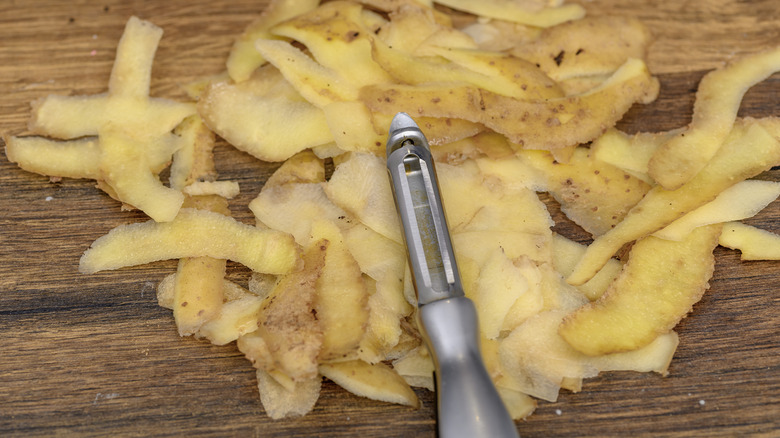
And finally, when it comes to those leftover potato peels, there's absolutely no need to throw them away. Believe it or not, there's a tasty way to repurpose your potato peels. Simply get a bit creative and turn them into a mouthwatering appetizer by frying them up into crisp, golden chips, or add them to the crust of a rich and savory potato peel pie. Your taste buds will thank you.