

Why Cornstarch Is Crucial When Baking With Blueberries
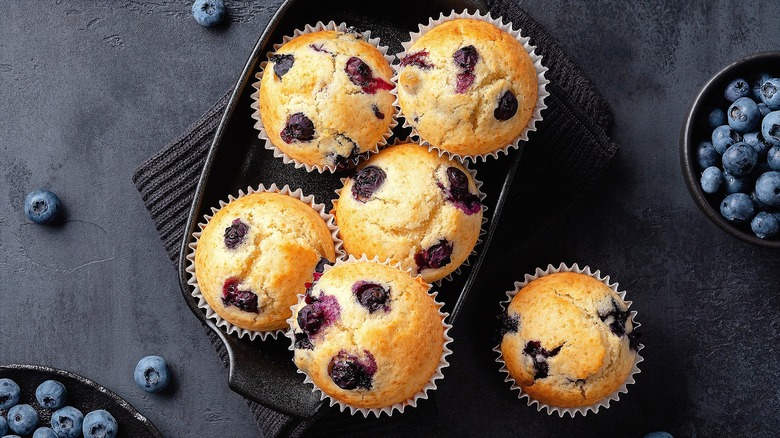
If you're an avid baker, you know when it comes to desserts like a bakery-worthy blueberry pie, cornstarch is primarily used as a thickener. However, for certain baked goods, such as muffins or snacking cakes, cornstarch plays a different role. Sure enough, when strategically mixed with lemon juice and used to coat blueberries, this ingredient allows them to remain neatly suspended in your batter throughout baking.
To better uncover the details surrounding this process, Chowhound garnered the expert opinions of two noteworthy bakers: Cynthia Christensen, writer and recipe developer at But First, We Brunch, and pro baker and cookbook author Joy Wilson from Joy the Baker. When it comes to preparing certain blueberry-loaded treats, Christensen says that "tossing your fresh fruit in cornstarch and lemon juice helps to thicken the juices that come out of the blueberries as well as helping to prevent them from sinking to the bottom of your baked goods."
Lemon juice adds both flavor and moisture. Thus, as your confections bake, any added blueberries (when properly coated in a slurry of lemon juice and cornstarch) are not only unable to fall to the base of your pan but remain perfectly moist and tender. Wilson adds that "cornstarch helps gently gel the juices released by the fruit (even if you're using frozen berries), keeping your batter from getting soggy or streaky" during the baking process. While this simple technique may seem intriguing, before you try this hack for yourself, there are a few factors worthy of additional consideration.
Does cornstarch and lemon juice work its magic in all blueberry-flavored baked goods?
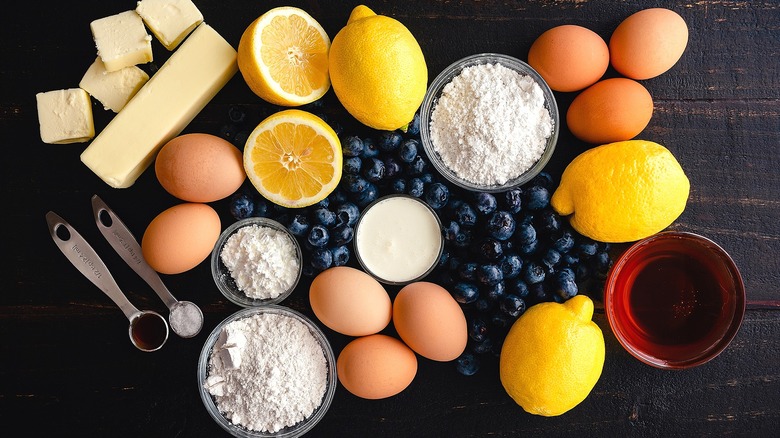
Among the many things you never knew cornstarch could do, keeping berries from sinking in desserts is one of the most important. That said, you may wonder if cornstarch and lemon juice work better in certain recipes than others. Sure enough, this mixture may be easier to incorporate in recipes that have a little more depth.
Since blueberries may also release some liquid during baking, you can even out excess moisture by incorporating more yogurt or sour cream to batters that include either ingredient. "This will thicken the batter without the need to add more flour, which will give you a more tender and moist crumb," advises Cynthia Christensen.
Speaking of flour, given the magical properties of cornstarch, you might still wonder if you need to toss your blueberries in flour before adding them to baked goods. For most recipes that have comparable ingredients, both flour and cornstarch work in similar ways yet cornstarch may give you better results. Christensen states that "when using flour, you can sometimes end up with patches of dried flour or gumminess around your berries, while the cornstarch slurry is more effective in keeping the fruit in place and baking into the cake itself." Joy Wilson adds that "tossing berries in flour is the OG method. ... The lemon-cornstarch slurry is a more modern, flavor-forward take. It's especially helpful when you want both a cleaner crumb and a pop of brightness."
When it comes to the type of blueberries that work best for this hack, both Christensen and Wilson recommend either fresh or fully frozen berries. Partially thawed berries tend to seep excess juice, which can affect the consistency of your baked goods.