

Peanut Butter On Its Own Is Not A Complete Protein — Here's What To Pair It With To Fix That
Whether you are an athlete or a NARP (non-athletic regular person) looking to boost your protein intake to fuel performance or stave off aging by promoting cell growth and repair, you are likely talking about protein on a fairly regular basis. Everything from the best high protein snack bars to protein-forward meal prepping and even parody songs about getting enough protein are probably pervading your social media feeds. The quest for protein in today's world is real.
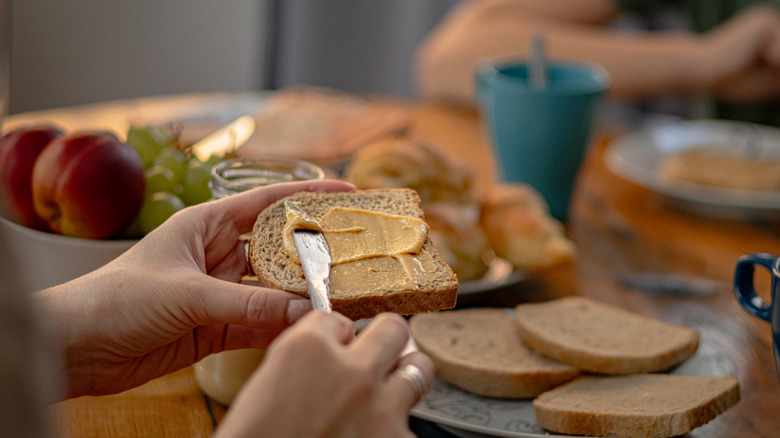
Besides animal proteins like turkey, beef, chicken, and fish, peanut butter may spring to mind as a common plant-based protein go-to. Though peanut butter is nutrient-rich, packed with fiber which helps you feel full, magnesium, vitamin E, and is an excellent source of protein, it is not a complete protein. The simplest way to make it complete? Eat it on a piece of whole wheat toast (and maybe butter the bread to really boost those nutty flavors).
The science bit about complete proteins
If your high school science is leaving you grasping here, perhaps a quick flyover on the meaning of a complete protein would be helpful. Protein is made up of amino acids, which are commonly referred to as its building blocks. It takes 20 unique amino acids for your body to work properly. Your body makes plenty of amino acids on its own, but there are nine it can't make (which are called essential amino acids), and you have to get them regularly from food. This group of nine has names like phenylalanine and threonine that may make your eyes glaze over like reading the periodic table, but tryptophan may have a familiar ring, as it is the culprit for that sleepy feeling after your Thanksgiving turkey dinner.
If a protein contains all nine of these essential amino acids it is, you guessed it, considered a complete protein. On its own, peanut butter does not fit this bill, but by combining it with the wheat in, say, a piece of toast, you reach that magic number nine. Though aiming for complete proteins does give your body all of the building blocks it needs, the good news is that you don't have to eat complete proteins in one meal. Your body processes protein throughout the day, so you can eat a variety of foods, at different times, that will still provide the full array of these critical little guys. These plant-based foods pack a protein punch, but if you are looking for plant-based proteins that are already complete, quinoa, buckwheat, hempseed, blue-green algae, and soybeans all make the grade.