

Avoid These 6 Mistakes When Cooking New York Strip Steak
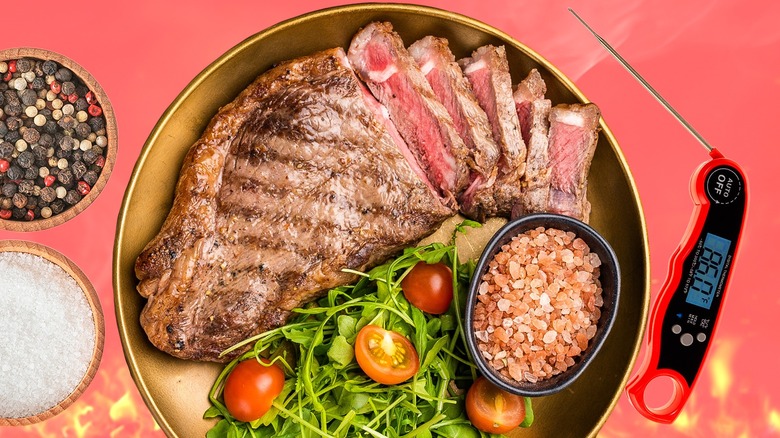
One of my favorite steaks to cook, and most importantly to eat, is New York strip steak. Everything from the marbled fatty flesh, beefy flavor, and the perfect balance of tenderness makes it one of my favorite dinner options for both weeknights and special occasions.
I used to cook countless New York strip steaks at Oak And Coal, a Japanese yakitori restaurant where I worked in the early years of my chef career. Cooked over our blistering charcoal grill, then doused in a miso-shiso compound butter, our New York strip steak made me fall madly in love with this specific cut of meat. After years of working behind the grill, trying to get the perfect sear and tender center, I've learned how to master the art of cooking beautiful New York strip steak. Here are six mistakes I believe people need to avoid when cooking a New York Strip steak.
1. Mistake: Not letting the steak come to room temperature
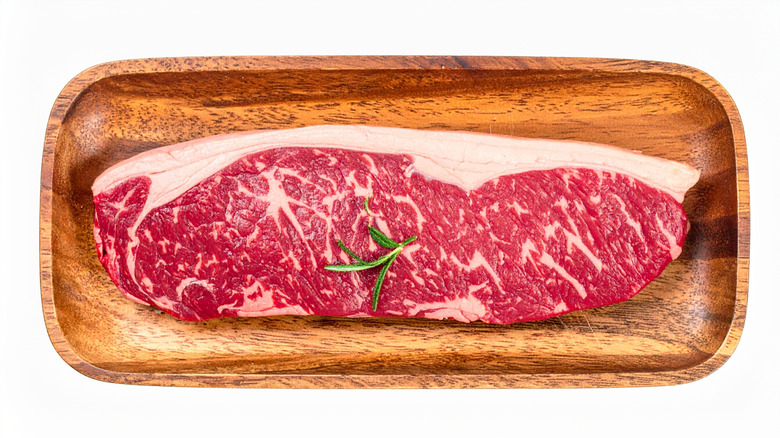
Probably one of the easiest mistakes to make when preparing a New York strip steak is not letting it come to room temperature before cooking it. You've probably been there before — eager and excited to whip up a delicious steak dinner after work, you have everything prepared, from homemade compound butter to your cast-iron skillet heating on the stove. Then, you realize the steak is sitting in the refrigerator and it's basically ice cold. At this point, you're probably wondering if it even matters. Well, yes, it does!
The main reason you shouldn't cook a cold steak straight from the refrigerator is that it results in uneven cooking. The outside of the steak can easily overcook before your desired internal temperature is reached. To prevent this from happening, it's best to let your steak sit at room temperature for 20 to 30 minutes before cooking to ensure even heat distribution throughout.
Now your steak doesn't have to be completely warm to the touch — it just needs enough time to let the muscle fibers and fat strands relax, so it's not a shock to it when you place it in a searing hot skillet. Be mindful of the USDA's temperature danger zone (40 degrees F to 140 degrees F), where bacteria can multiply rapidly; never leave raw meat in this temperature range for more than two hours.
2. Mistake: Not getting the seasoning just right
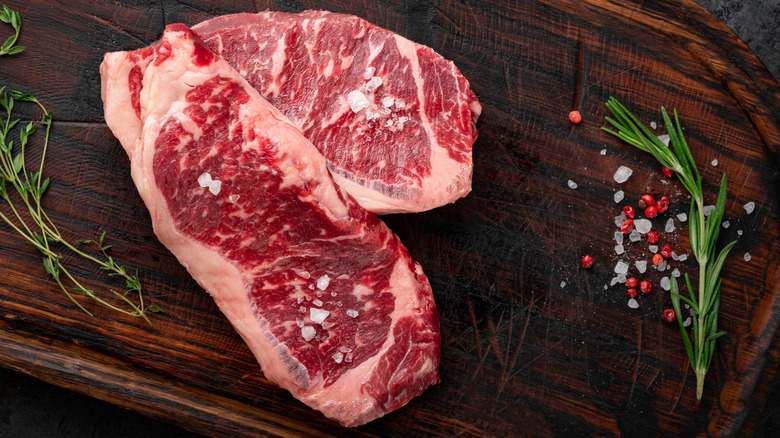
The New York strip has excellent natural flavor. It has an abundant amount of fat marbling, giving it an intense, rich flavor and solid, chewy texture. Most professional chefs will agree that there isn't any point in overwhelming it with excessive seasoning blends and intensely flavored marinades. The key to seasoning a New York strip steak is to just keep it simple.
All you need is a generous amount of sea salt and freshly ground black pepper applied immediately before cooking. If you're just using salt and pepper, you can easily highlight the meat's natural qualities and delicious flavor. Now, this isn't the time to be using table salt or ground black pepper that's been sitting on the countertop for months — whip out the high-quality flaky sea salt and use freshly ground black peppercorns to maximize the flavor. At the end of cooking, feel free to baste it with a compound butter and fresh herbs to give it that final touch of rich and fatty flavor.
3. Mistake: Using the wrong cooking temperature
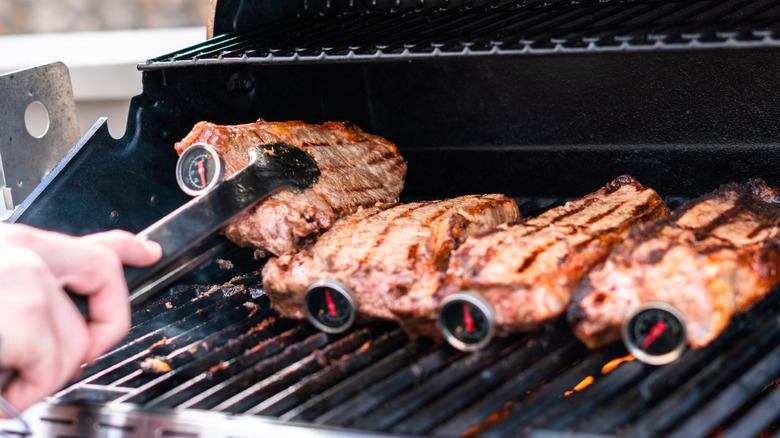
Another mistake people often make is cooking a New York strip steak at the wrong temperature. If you cook it at too low a heat, the steak won't develop a proper sear and crust. On the other hand, excessively high heat can easily burn the outside before the inside cooks properly.
Most chefs find that medium-high to high heat is ideal for creating that delicious caramelized crust while maintaining control over the interior doneness. The thickness of the steak for a medium-rare is typically around 130 to 135 degrees F. To ensure optimal results, you should pull your steak off the heat when it is 5 to 10 degrees below your target temperature to allow for carryover cooking during the resting period. Carryover cooking is the residual heat that continues to cook the meat after it's been removed from the heat source. Heat from the hotter exterior of the steak can transfer to the cooler center, which can raise the internal temperature by several degrees. So, unless you want your medium-rare to turn into well-done steak, then it's important to keep in mind carryover cooking.
4. Mistake: Moving and flipping the steak too frequently
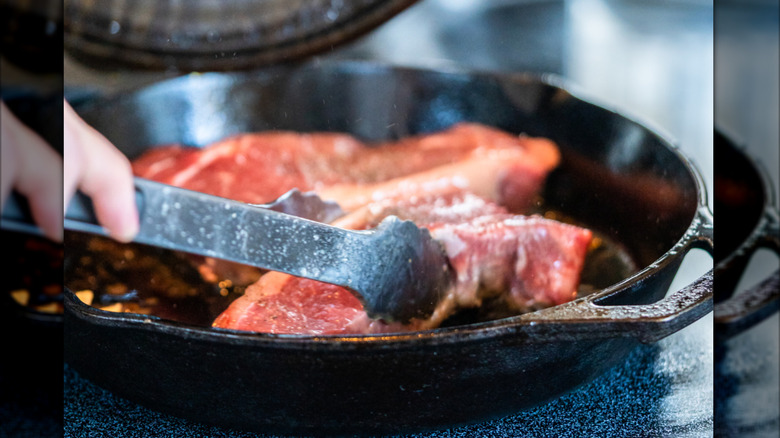
One mistake you should definitely avoid is moving and flipping the steak too frequently when cooking. Oftentimes, when novice home cooks are cooking a steak for the first time, they feel the need to constantly flip it. However, you're actually doing more harm than good.
To allow for the proper Maillard reaction to develop an even, flavorful crust, you shouldn't be flipping your steak frequently. Doing so can result in uneven cooking, with the center becoming overcooked before the surface is adequately browned. The key is to only cook the steak once on both sides, so you can develop a deep golden brown crust.
Depending on the thickness of the steak, 2 to 3 minutes on each side is typically sufficient for achieving a medium-rare doneness. One of the best parts of a properly cooked New York strip steak is its golden brown crust, and to achieve that, you've got to let it sizzle!
5. Mistake: Skipping the resting period
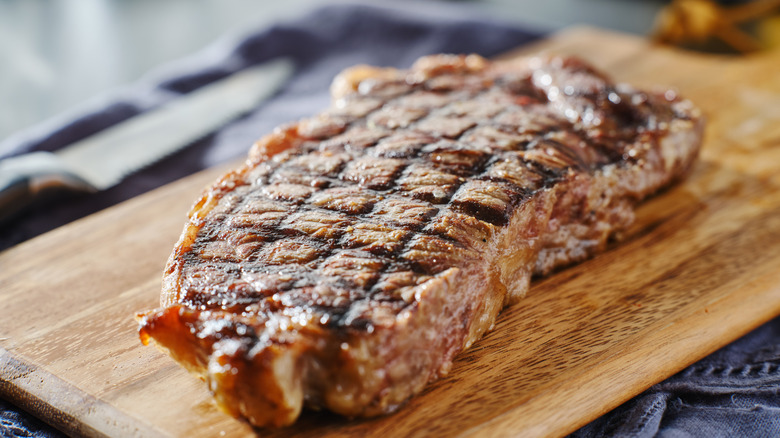
Probably one of the worst mistakes you can make when cooking a New York strip steak is cutting into it immediately after cooking. This causes the steak's precious juices to run out, which will leave you with a drier, less flavorful piece of meat.
To prevent this from happening, make sure to rest your New York strip for at least 5 to 10 minutes to allow the juices to redistribute throughout the meat, and muscle fibers can relax. During the cooking process, the muscle fibers contract and push the juices towards the center of the steak. By letting it rest, you are allowing it to redistribute these juices in the steak, which will allow for better flavor, texture, and tenderness.
After the resting period has finished, it's key to slice your steak against the grain, which means to cut it perpendicularly to the muscle fibers. This will help shorten the long muscle fibers, making the steak tender and easier to chew.
6. Mistake: Not preheating your cooking surface properly
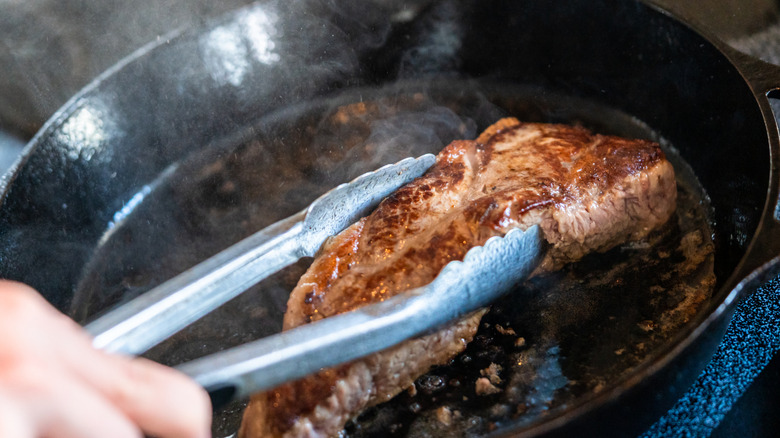
One of the first things you should even think about before buying a New York strip steak is what cooking surface you'll use. For years, there's been a long and heated debate on how and where you should be cooking this cut of meat, and in all honesty, it depends on what result you're looking for: a crispy crust or smoky grill marks.
A barbecue, specifically a charcoal or wood chip-based one, will provide the steak with a smoky flavor, and if you're cooking it properly, will get those scrumptious grill marks that are so sought after. Allow your barbecue to heat for at least 10 to 15 minutes or until the temperature gauge reaches 450 to 500 degrees F. If you're cooking it on the stove, most professional chefs prefer using a well-seasoned cast-iron skillet. Cast-iron is great at providing steaks with a nice crust since it retains and distributes heat evenly, creating that perfect sear. Before cooking, heat the skillet for 5 to 8 minutes over a medium-high heat, or until it's smoking hot.
A lukewarm pan or barbecue won't create the high-heat sear necessary for developing flavor and texture in a New York strip. Be sure that your pan is smoking hot or your grill grates are properly preheated before adding the steak for optimal searing and the best quality results.