

Is Your Chili Too Tomatoey? Here's The Easy And Fast Way To Fix It
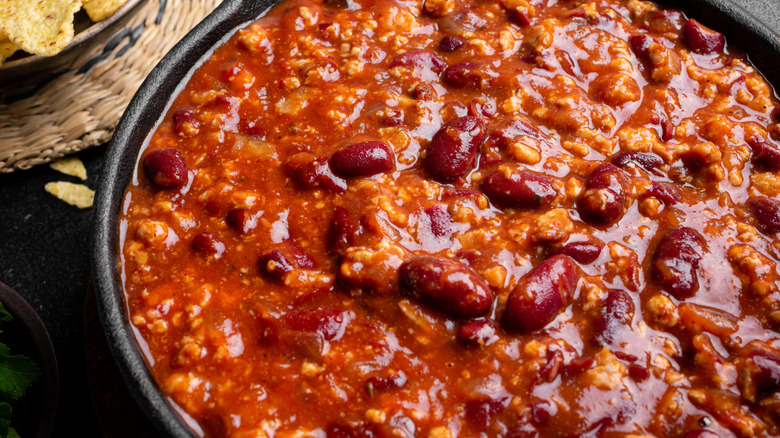
Between each of the vast and varied chilis in creation, and a globe dotted with ancient family recipes, chili can be a very fickle dish. You can make your chili chock full of beef and chorizo, make it vegetarian, or even vegan. You can make your chili with all manner of secret ingredients that will get everyone at the cook-off talking. Or you can make some crucial mistakes that will hopefully better inform your next batch. Tomatoes are a critical ingredient in plenty of chili recipes, but some can just turn out too, well, tomatoey. So we fired up the burners with "Cowboy" Kent Rollins, cookbook author and host of Outdoor Channel's "Cast Iron Cowboy," to ignite some answers.
"To tone down a chili that tastes too tomato-forward, stir in a little brown sugar," Rollins exclusively shared with Chowhound. "The sweetness helps balance the acidity of the tomatoes. Besides brown sugar, I love to bring out a little smokey flavor and a tad of heat, and this doesn't just come from chili powder. Don't be afraid to break out the chipotle peppers in adobo sauce."
Rollins' sweet and spicy tips are tops for obscuring said acidity, and there are a few other neutralizing paths you can take, too. Some folks swear by a pinch of baking soda in the pot, but this should be done very sparingly lest it becomes an unintended flavor. A splash of dairy like milk or sour cream has been known to tame those acid tastes, too.
Avoiding a total tomato overload
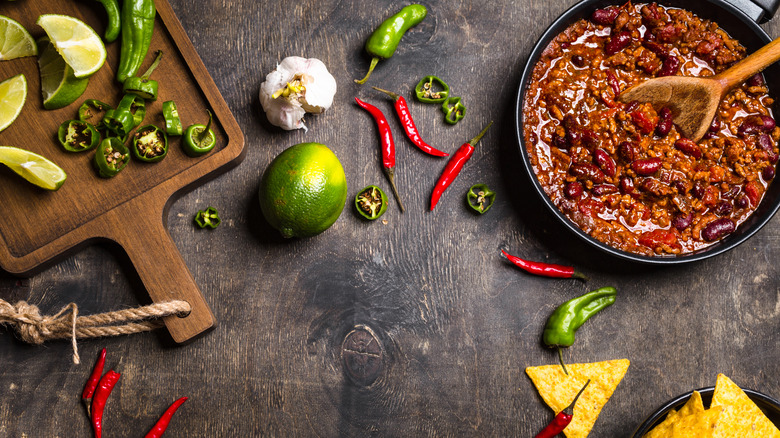
You may be wondering how a batch of chili can turn out so botanically-packed in the first place, since it isn't as though the number of nightshades varies per fancy San Marzano can. As tempting as it might be to just use 'em up all at once, you just might not need every last bit. "Cowboy" Kent Rollins has a pre-emptive fix: You can tamp down those turbo tomatoes by literally just using fewer. "If you have more time, the best fix is prevention," Rollins said. "Don't add all your tomato paste or tomato product at the start. Instead, add smaller amounts and taste as you go, adjusting toward the end if needed. This keeps the tomato flavor in balance." It also helps you layer your flavors more slowly and intentionally, adjusting as you go.
Should this more restrained approach leave you with any excess red stuff, you can easily store it for future use. You can remove unused canned tomatoes to an airtight container and store them in the freezer for a couple of months. It's also easy to freeze tomato paste with a bit of parchment paper and a resealable plastic bag, as well. Collect enough odds and ends, and you might be half on your way to your next pasta sauce or tomato gravy.