

Neither The Fridge Nor The Dishwasher: One Appliance Is Running Up Your Power Bill
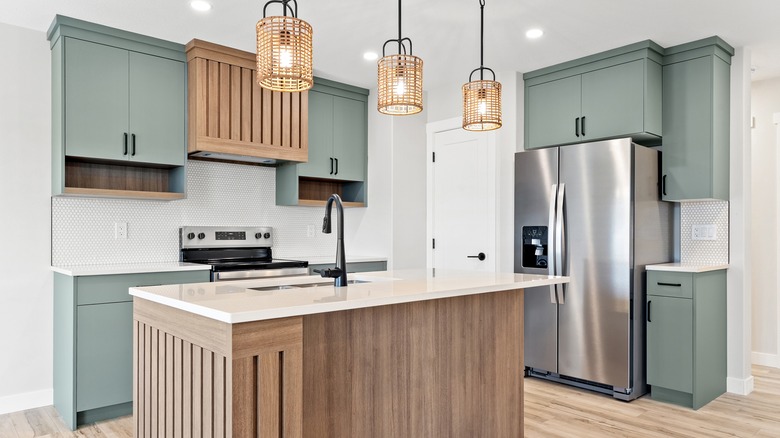
Trying to figure out how to lower your sky-high energy bill? When you look around your kitchen, it's easy to think that one of the main reasons your bill keeps creeping up is your constantly-running refrigerator or your daily-run dishwasher. In actuality, however, your electric oven is the likely culprit, as it tends to require far more electricity than most other kitchen appliances.
Not all ovens are exactly the same, of course. Larger ovens use more power than smaller ovens, and standard conventional ovens use more power than convection ovens. Purchasing an Energy Star-certified electric oven can go a long way in helping you save some serious cash, especially if you use your oven frequently. Newer ovens tend to be more energy-efficient than older ovens for several reasons, too, including better insulation systems. Since ovens aren't airtight, hot air that leaves your oven has to be regenerated — necessitating more energy use. Older ovens may also be more likely to have faulty temperature gauges, resulting in your oven getting hotter than necessary (and potentially overcooking for your food). If your oven is more than a decade old, it may be time to start exploring some energy-efficient electric oven options on the market.
Make these changes in your kitchen to bring down your power bill
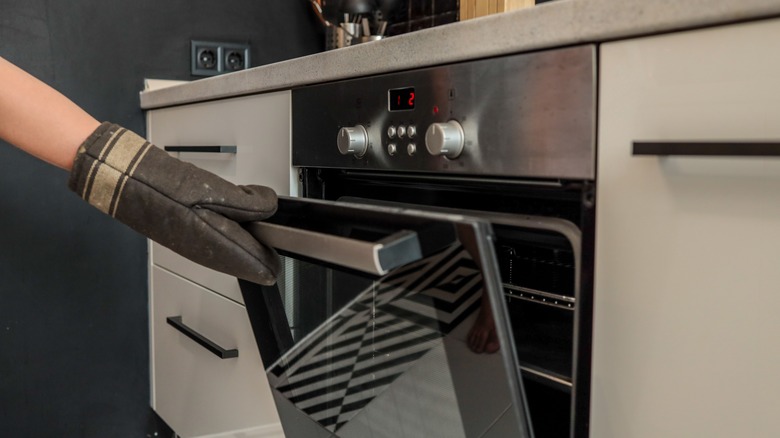
If you're trying to figure out how to bring down your power bill each month, your kitchen is a smart place to start. Take a look at the owner's manual (you should be able to find it online if you don't have a paper copy at home) to find out whether you actually need to preheat your oven. Some modern ovens are designed to allow home chefs to skip this step completely, enabling you to both shorten the time you spend in the kitchen and lower your energy bills.
Purchasing a good oven thermometer can also help you save some cash. Often, ovens need to be recalibrated to ensure that the temperature you're punching into the display is actually the temperature the oven reaches. Placing an oven thermometer within view can help you determine whether your oven is spot-on temperature wise or needs an adjustment. Use your owner's manual or look it up online if you find that you need to recalibrate your oven's temperature settings but don't know how to do so.
Finally, to seriously save cash, try to resist the urge to peek at your food while it's cooking. While this isn't always avoidable (for example, you may need to open the oven door to stick a toothpick in a cake to see whether it's done), peek as little as you can. Keeping the oven door closed helps to keep the heat where it belongs — cooking your food, not circulating through your kitchen.