

The Wood Pellet Mistake That Could Be Throwing Off Your BBQ
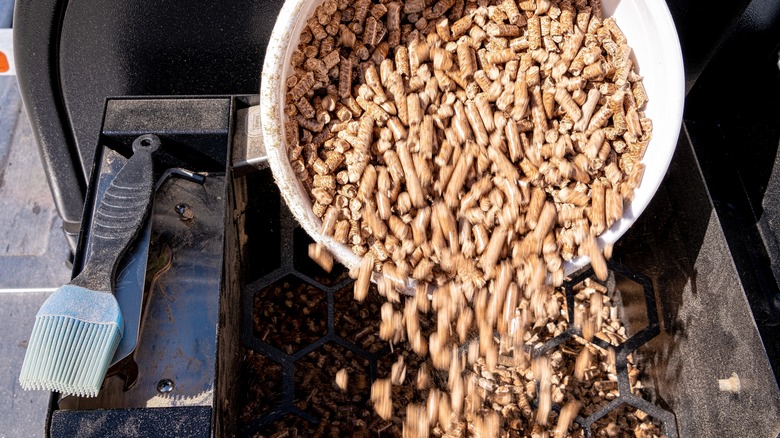
Grilling or smoking meat with wood fuel is the fun, time-honored way to infuse your barbecued food with irresistible smoky flavor. All it takes is your meat of choice, a quality pellet grill or smoker, and the wood pellets themselves. But as intuitive as this barbecueing method may sound, it does come with some hidden complications and potential risks to be aware of. One such consideration is proper storage and moisture control for your pellets.
For further insight as to why keeping your pellets dry is so important for barbecuing with wood, Chowhound asked chef Charlie McKenna, the Founder of barbecue sauce brand Lillie's Q. According to McKenna, "you don't want moisture on your pellets so that they burn and produce the right smoke flavor for what you are cooking." When stored incorrectly, pellets may not even ignite at all. (If you've ever tried to make a campfire with damp wood, you know just how hopeless the situation can get.) To avoid this error, McKenna says, the "best way to store [them] is [in] a closed bag that is stored in a moisture-safe container in a dark and dry place."
More wood pellet barbecue tips to keep in mind
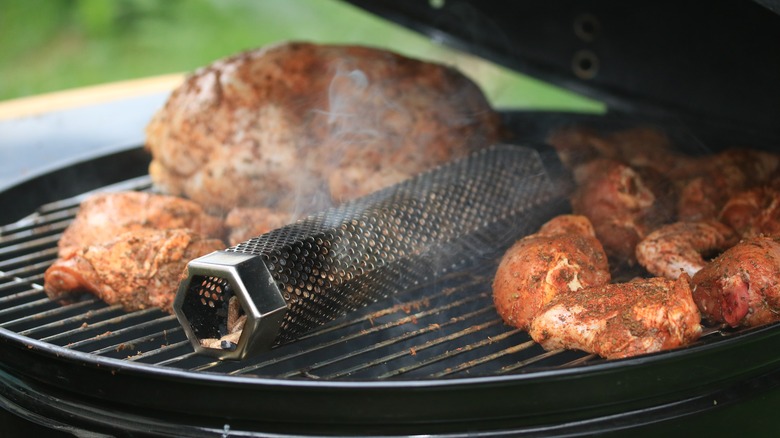
Even if your wood fuel is dry and stored safely, there could be other issues that arise during the cooking process. Chef Charlie McKenna says that while your wood pellets themselves are unlikely to "sabotage" your food, the pellet grill could. That's why it's critical to properly clean your pellet grill regularly, to prevent the buildup of ash and other residue that can negatively affect its cooking ability or even be dangerous. Also, keep in mind that different types of grills have different strengths and weaknesses. Pellet grills are great for low and slow-style cooking, but if you're trying to use it to sear meat quick and fast, it's probably not the right model.
Another factor to consider when barbecuing with wood is choosing the best "flavor." The type of wood pellets or chips you use can seriously affect the flavor of your meat, so you want to stick to some basic guidelines. "Each wood puts off a slightly different flavor profile or smoke intensity," McKenna says." Hickory and oak are stronger smoke woods, and should be used for more robust meats like beef and game, if you like a stronger smoke flavor." On the other hand, he advises, "fruit woods are a softer smoke that gives hints of sweetness and should be used for softer products such as pork and seafood." So, keep McKenna's advice in mind to make sure your wood-smoked barbecue is on point.