

There's A Calculated Reason Chain Restaurants Have So Many Menu Options

If you've ever picked up a menu and been simply overwhelmed by the sheer volume of choices, you definitely aren't alone. Some restaurants are actually known for their massive menus where there's something for everyone, while others make a point to keep things short and sweet, opting instead to do a few things exceptionally well. While both serve their purposes, why exactly do some chains take the route of offering endless options to diners? It turns out there is actually a very real, calculated reason for this choice, and Chowhound got the inside scoop from a few industry experts to help you understand the decision-making process behind this approach.
Dan Rowe, founder of the franchise development company Fansmart, and Eddie Fahmy, franchise director of the popular fast food chain Döner Haus, shared valuable insight on why chains follow this interesting strategy with their menus. "Chain restaurants often build extensive menus in an effort to appeal to a wide range of customer preferences, capture different dayparts, and stay competitive within their category," says Rowe, whose company matches entrepreneurs with franchise opportunities. The Cheesecake Factory, which is well known for being the chain restaurant with the hands-down biggest menu, is a great example. The menu is big enough to offer something for everyone, but there are always misses along with the hits when you've got a menu that extensive.
The argument for a smaller menu is definitely justified
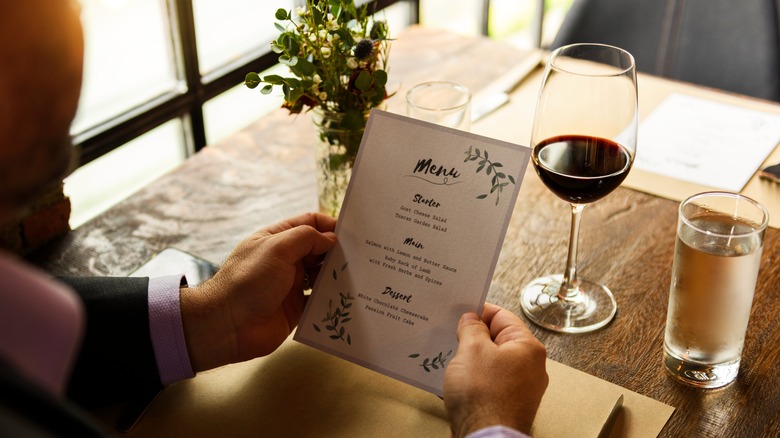
While there is clearly a reason for large menus and some diners are undoubtedly fans of the concept, that doesn't mean it is always a good idea. "While a large menu with a lot of choices may seem like a good idea," says Eddie Fahmy, "I actually don't think it's wise to present customers with too many options." He feels that it goes against the fast-casual experience many restaurants are trying to create for customer. "Even if you give them an excellent meal, what they'll remember is the stress when deciding what to eat from the extensive menu." In other words, Fahmy's concern with this menu model is that it makes the dining experience too complicated.
And it isn't just the customer that can benefit from a smaller, more concise menu. According to Dan Rowe, when it comes to franchising, a short but thoughtfully designed menu is easier to scale. "It's easier to replicate, faster to execute, and more resilient to market fluctuations," he says. "It's not about offering everything, it's about doing a few things exceptionally well, at scale." In-N-Out is a perfect example of a small menu done right. There are just a few menu options to choose from, and yet the lines at the drive-thru often extend out of the parking lot. And while diners who want a few more options can always hack the In-N-Out secret menu for more options, those options simply make creative use of the basic menu items that already exist on the chain's menu.
The restaurant business is an ever-evolving industry
Luckily, the restaurant industry knows how to pivot. We see this in pop-ups that come and go and in food trends that emerge out of nowhere and spread like wildfire, like all the foods getting the Dubai chocolate treatment everywhere you look. And as things evolve, it is likely we'll see more and more restaurants ditching the massive menus and going for a streamlined approach.
Dan Rowe and Eddie Fahmy also shared some insight on what the future might hold. Rowe has seen a shift when it comes to specific types of franchises — those in the QSR (quick service restaurants) and FSR (full-service restaurants) franchising spaces — which seem to be leaning toward more intentional, compact menus. In a world where operating costs are rising and consumer spending is down, restaurants that can train staff faster and reduce waste are able to operate more efficiently. Streamlined menus make that possible. "It also gives customers a clearer brand promise: what we're best known for and why they keep coming back," he says.
This sentiment falls in line with Fahmy's ideas about menu aesthetics. "Aesthetically, when designing a menu, you want to make it easy to read without making it overly complicated with an overhwelming number of options," he says. "When designing a menu, make it as simple as possible and well-engineered to make the guest experience easy."