

Why Store-Bought Tomato Paste Just Makes More Sense Than Homemade
We may receive a commission on purchases made from links.
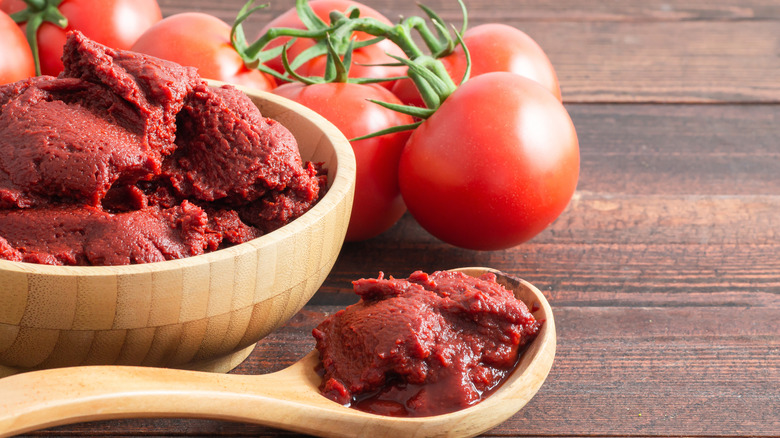
Tomato paste is a source of intrigue and sometimes confusion for novice home chefs. Made by simmering tomatoes for an extended time period and straining out their skins and seeds, it is often included in recipes that call for a punch of concentrated tomato flavor, but also invites a number of questions. How can you best use it in a dish? What's the difference between canned and tubed paste? And finally, should you rely on the store-bought stuff for everyday use, or is homemade the way to go?
To help answer this last question, Chowhound spoke to Sarah Galletti, the executive chef, founder, and creative force behind the Tattooed Chef frozen food line. Galletti's Italian roots mean that "the bar is high" for tomato-based sauces, she says, and many Italian cooks look down on using store-bought sauce instead of a simple, homemade recipe. Despite this stigma, when it comes to tomato paste in particular, Galletti says the choice between store-bought and homemade isn't so simple.
"It comes down to a trade off: convenience vs. personalization," she says. "Store-bought is consistent and convenient. Homemade is 'made for your palate.'" That means you have the option to decide "how sweet, tangy, or rich it gets," she explains. But in a rush, store-bought often makes more sense. "I always keep a tube in the fridge for weeknights," Galletti admits.
The best homemade and store-bought tomato paste
Though expert chef Sarah Galletti believes that store-bought tomato paste can be just as useful as the homemade variety, that's not a rejection of home cooking. Making tomato paste from scratch can be very rewarding, she clarifies, as long as it "fits your lifestyle." She says, "It's simple, it feels special, and it's a smart way to use up tomatoes that are about to turn."
To make the best homemade tomato paste, Galletti suggests using a "meaty" plum tomato, like San Marzano or Roma, which have fewer seeds and a more desirable texture than other tomato types. Her personal paste-making trick is to spread the puree on baking sheets and roast it low and slow in the oven. "It's less babysitting than stovetop cooking and gives you a beautifully concentrated flavor," she says.
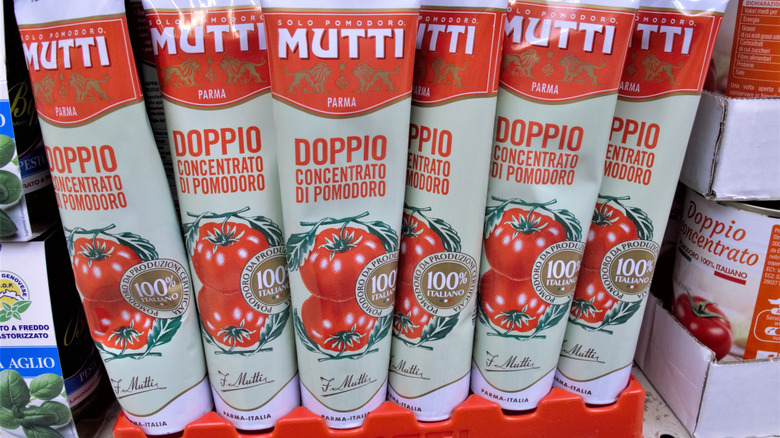
If you prefer to prioritize convenience over personalized flavor, stick to buying tomato paste at the store. When it comes to finding the best bang for your buck, Galletti recommends seeking out one particular Italian brand. "My Nonnina made hers by slow-drying tomatoes under the sun, and nothing beats that," she says. "But since I don't have that now, Mutti in a tube is my go to. It's 100% Italian tomatoes, super concentrated, and honestly, the closest thing you'll get to that homemade intensity."