

What To Look Out For Before You Buy A Stand Mixer At The Thrift Store

Food trends come and go, and they'll find their way in and out of your kitchen, but some tools never lose their value. Stand mixers are one of those staple tools every new kitchen owner dreams of having. There are so many things you probably didn't know your KitchenAid stand mixer could do. With one machine, you can whip cream, knead bread dough, mix batters, and even power specialty attachments that roll pasta or grind meat. Because they're so versatile (and pricey), it's easy to assume that nobody would part with one. Yet stand mixers turn up at thrift stores more often than you'd think.
Before you grab a stand mixer at the thrift store, check older machines for worn parts, cracked accessories, or rust that compromises their safety and capability. Second-hand stores, such as Goodwill, often inspect electronics to make sure they're in working condition before selling them. However, some items can become damaged after hitting the sales floor. Not every bargain is worth it, so it's important to know when to walk away from something that looks like a prize but is more of a problem than it's worth.
Rust and faulty parts can be a stand mixer hazard
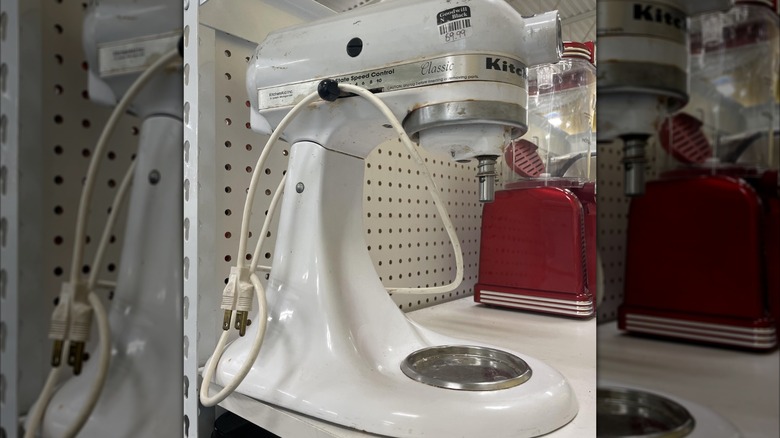
With standard use, a stand mixer can last a pretty long time, but even the best stand mixers can rust or wear down. For thrifted mixers, rust is the most common issue. Most stand mixers come with stainless steel bowls, which seem invincible, but it's still possible for them to rust. A cracked bowl, improper washing, or even your local water supply can be the culprit. Light discoloration on the stainless steel bowl or dough hook can usually be polished away with a baking soda paste and a non-abrasive scrubber.
You'll also want to keep an eye out for rust impostors. For some old models, what may look like rust is actually leaked oil from the gears. This could mean that the gears are ungreased and may break down or not work as well. Removing the parts, cleaning, and re-greasing is a simple fix. Knowing how and when you should clean your stand mixer will help avoid such issues. However, any heavy rust, pitting, or flaking metal is harder to fix and can contaminate food.
Even if there's no visible rust, you should test the machine's mechanics. The motor should hum without screeching or grinding noises, the speed settings should shift smoothly, and the tilt-head or bowl-lift should lock securely. If not, you run the risk of the machine being unable to withstand high speeds and prolonged usage. In the worst case, a part could even detach mid-mix. Replacement parts do exist, but the cost of them can quickly outweigh that thrift store value.