

What To Keep In Mind When Switching To Natural Peanut Butter For Baking
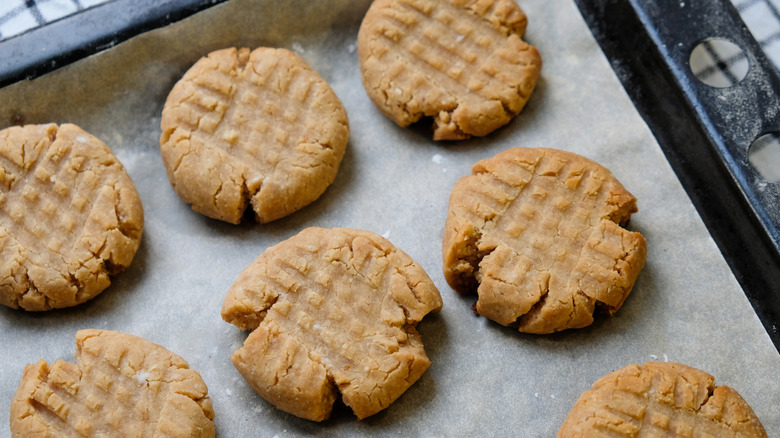
Both processed and all-natural peanut butter are delicious, and both can be used to create delicious peanut butter desserts (and even savory sauces). The two spreads need to be treated differently for baking and saucing success, however. Tara Bench, cookbook author and blogger behind Tara Teaspoon, spoke exclusively with Chowhound about what home chefs need to know when it comes to using both types of peanut butter for baking.
The difference between the two types of peanut butter is obvious at first glance — processed peanut butter is super thick, while both store-bought and homemade natural peanut butter tend to be runny, with oil separated from peanut solids. Bench says that the difference between the two is noticeable in baking. "You'll notice differences in texture and sweetness when baking with natural peanut butter versus conventional peanut butter," Bench says. "Baked goods made with processed peanut butter will have a noticeable chew and softness thanks to the added hydrogenated oils that keep things emulsified and smooth. Baked goods made with natural peanut butter may be crumbly and dry, and even greasier." She also says that baked goods made with processed peanut butter tend to be sweeter, as most processed peanut butters have a decent amount of added sugars. An important note: be sure to store natural peanut butter in the fridge after opening to preserve quality.
How to swap natural peanut butter for processed in your favorite recipes
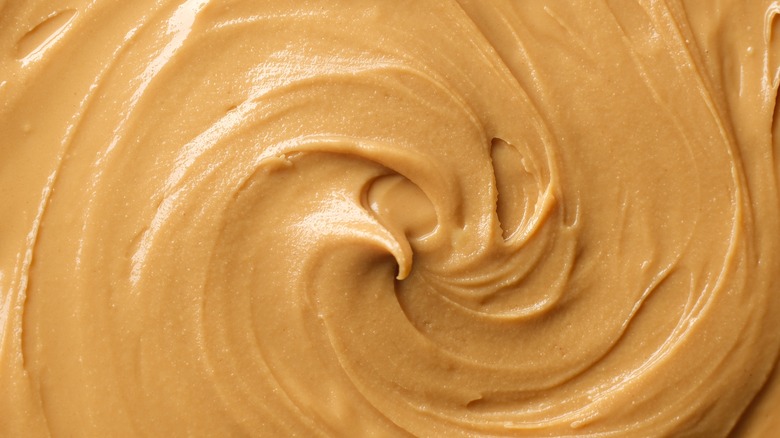
Whether you want to swap processed food out for more natural options or you simply prefer the taste of natural peanut butter, there are a few things that you'll need to know when you're switching out one for the other while baking. If you're using natural peanut butter in a recipe that calls for processed peanut butter, Tara Bench says that "you'll want to make some additions to try and duplicate the original peanut butter." She recommends adding a bit of powdered sugar to the recipe to make up for the sweetness natural peanut butter is missing. Accounting for textural changes also matters. "Try adding some neutral oil such as avocado or canola oil in place of the separated free oil in the natural peanut butter," Bench recommends.
There are some items — like cookies, cookie bars, and frostings — that are best made with processed peanut butter, according to Bench. "Natural peanut butter can make cookies more greasy and crumbly," she says. Muffin and cake recipes are typically more forgiving of a natural-for-processed peanut butter swap, but Bench says to be careful when you're making the switch, as you might end up with a taste and texture different from what you'd expect. If you want to incorporate natural peanut butter into your recipes but are concerned about texture and sweetness, try making the swap in savory peanut sauces, like Thai peanut sauce.