

The Pizza Chain That Competes With Your Favorite Fast Food Abroad But Is Unknown In The US
Ever heard of Telepizza? If you're in the U.S., there's a good chance you haven't, and yet it's one of the world's largest pizza chains out there, and one of the international fast food chains we'd love to try. Founded in Madrid in 1987 with the name PizzaPhone (it became Telepizza a year later), the company quickly expanded throughout Spain and into Latin America, building a following by offering fast delivery and menus with solid variety beyond just pizza at relatively affordable prices . At one point in the '90s, it was even outselling McDonald's in Spain, nabbing 50% of the fast food market share, and while that has since shifted, it's still Spain's biggest fast food chain by number of locations.Today it has more than 1,300 outlets across about 20 countries, making it a serious competitor against powerhouses like McDonald's.
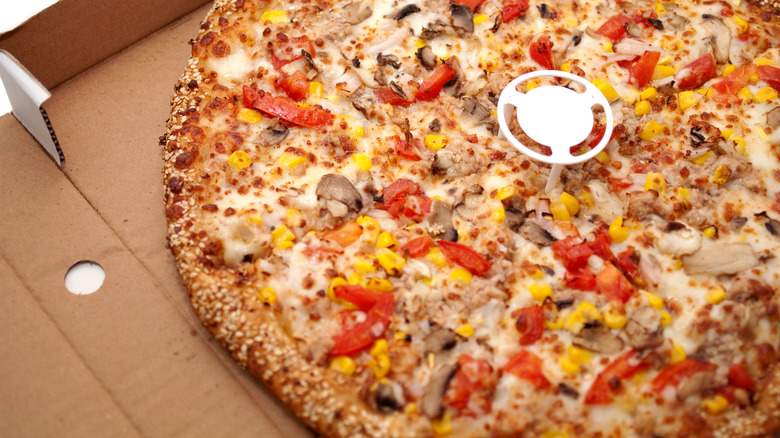
So, what does one actually eat at Telepizza? Unsurprisingly, pizza is a focus. On the Spanish menu, you'll see standards like pepperoni and Hawaiian pizzas (it's definitely more of a Dominos- or Little Caesars-style fast food pizza than a traditional Italian pie, as the presence of Hawaiian pizza probably suggests). But you'll also see adaptations to local tastes, with pizzas featuring jamón iberico or truffles, too. Head to another country where Telepizza operates, and you'll see a couple of different choices (for example, there's a pineapple-chicken option in Peru) but generally, it has a fairly standardized selection.
Telepizza's up-and-down trajectory
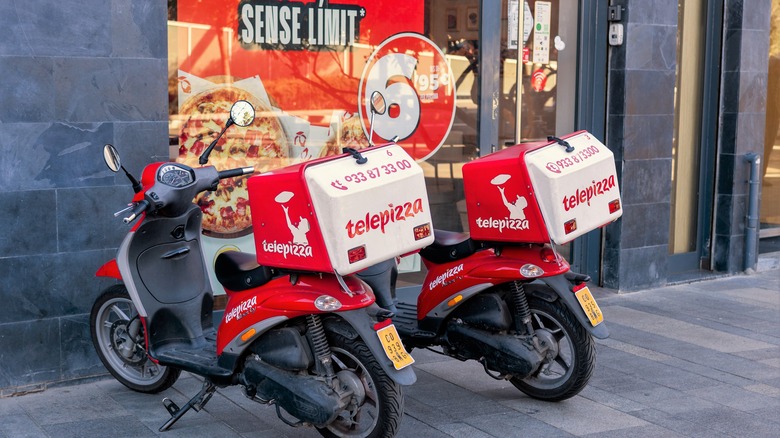
Telepizza first found success by (arguably) taking its cues from American fast food. Its founder, Leopoldo Fernando Pujals, was raised in America, and in the chain's early days, he took cues from Domino's by introducing a 30-minute delivery service. Since fast food take-out and delivery was not at all popular in Spain in the '80s, he also offered a dine-in option, paying attention to offering a clean, appealing environment for diners. The formula worked, and within 12 years of first opening a restaurant in Madrid, Pujals headed an empire of over 700 restaurants.
This fast expansion later caused problems, though, as the debts it ran up from expanding quickly collided with the 2008 financial crisis. A few years later, this resulted in Telepizza effectively selling itself to Pizza Hut, with Telepizza taking over the operation of all of Pizza Hut's Latin American restaurants.
For all its business troubles, Telepizza still tries to put an emphasis on the product itself: It has stuck with its slogan "the secret is in the dough" since its founding, and recently tweaked its recipe to make a lighter dough with more seasoning on its tomato sauce. For now, it seems like Telepizza will keep chugging along (although with no plans to enter the U.S.) with its approach of quality fast food pizza for an international audience.