

The Best Knife For Cutting Tomatoes Without Squishing Them
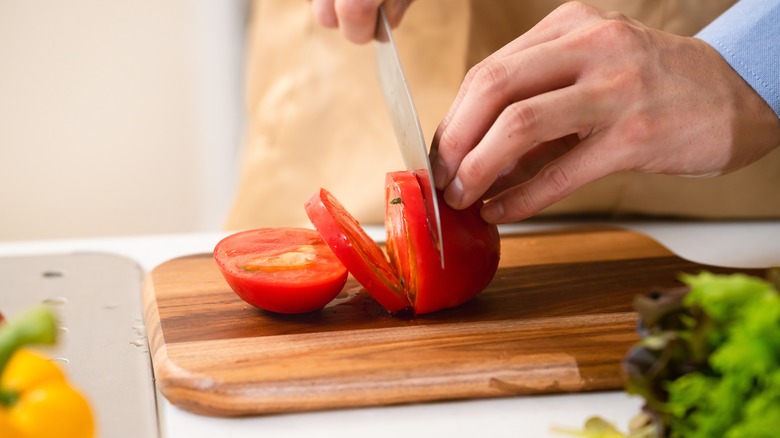
Cutting tomatoes with a blunt or ill-suited knife can quickly leave you with a messy mix of juice and scattered pulp. That's why slicing this fruit is often considered one of the best tests for a knife's sharpness. The secret to a clean slice comes down to the type of blade you use.
To find out which knife is best for cutting tomatoes, Chowhound spoke exclusively with Kieron Hales — a Managing Partner and Head Chef at Zingerman's Cornman Farms. "For most home cooks, a small, serrated knife — often called a tomato knife or a small bread knife — is the best choice," he said. "This will give you the cleanest results."
The jagged edge of a serrated blade can easily pierce a tomato's skin without crushing the flesh underneath. But Hales, whose culinary experience includes cooking in Michelin-starred restaurants and feeding royalty, explained that there's a distinction between a home and professional chef's approach to cutting tomatoes. "For everyday use at home, a serrated knife is more forgiving if your knives aren't sharpened often or if you're tackling very ripe, delicate tomatoes," Hales said. "For chefs or anyone who sharpens regularly, a straight-edged chef's knife is unbeatable for versatility. I can cut tomatoes, onions, herbs, and proteins all with one blade." So, while a comprehensive kitchen knife collection should include a serrated knife, you can also use a sharp carving or chef's knife for the job. It is, after all, the standard in professional kitchens.
Paring and chef knives can get the job done too
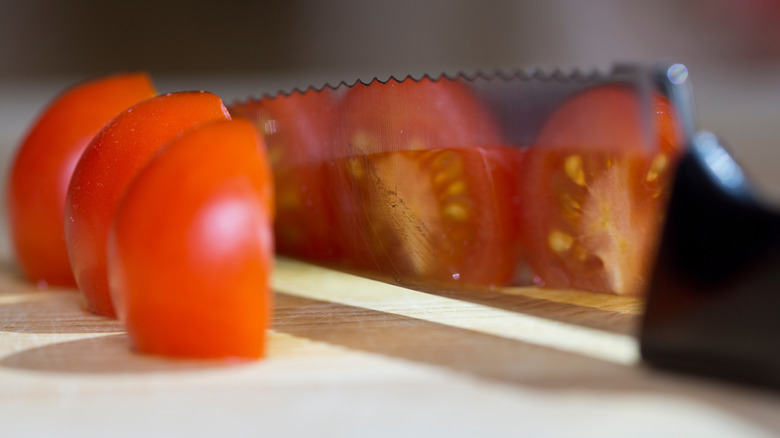
A serrated knife is perfect to use on tomatoes and can also work well with cheese and fruits like oranges and lemons — as long as it has this one quality. "Sharpness is non-negotiable," Kieron Hales said. "A dull knife, no matter how fancy, will slide over the tomato skin and crush it instead of cutting." Some of these serrated knives even feature a forked tip for lifting slices, and while they usually are the best for cutting tomatoes, Hales cautions against relying too heavily on them. "Personally, I would learn to use the small, sharp paring knife rather than having another knife that you will need to replace, as small serrated knives are hard and impractical to sharpen," Hales said.
If you've got a trusty chef's knife, which is a tool even home cooks should splurge on, you can use it to slice tomatoes, too — provided it's sharp enough to easily cut through the skin. However, the versatile knife's relatively large size can make it unwieldy with smaller fruits. Here, a paring knife works better as it can give you more accurate slice. In fact, keeping a paring knife on hand is always a good idea. This versatile little blade happens to be David Chang's favorite knife. "Serrated for insurance, straight-edged for precision and multipurpose use," Hales said.
Techniques for a perfectly cut tomato
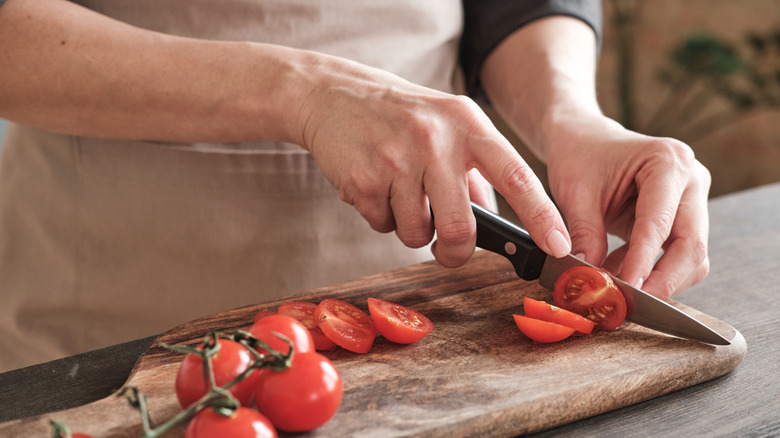
A sharp knife gets you most of the way with sectioning a tomato, but a little technique ensures consistent results. "Gentle pressure and a slicing motion are key," Kieron Hales said. "Let the knife do the work, don't press down; think of the cut like a golf swing and slice through." If you ever find yourself pressing too hard when slicing a tomato, either the knife isn't sharp enough or there is something amiss with your technique. The cut should come simply from the motion of the knife. To ensure the knife's edge applies even pressure on the tomato, and to avoid any slips and mishaps, use a stable surface when chopping, too.
To get the best results, Hales also recommends putting overly soft tomatoes in the fridge for about 15 minutes to firm them up before cutting. This means less squashing and more juice retention. Next, remember to cut the tomato with the skin side down. It's easier for knives to catch onto the fruit's flesh than its waxy skin. This can reduce bruising and uneven tearing of the tomato.
Finally, consider giving your straight-edged blade a quick grind beforehand, and you'll see just how effortlessly it slices. While slightly more complicated, it's possible to sharpen serrated knives at home without ruining the blade too, so you can also consider keeping one handy for tomatoes and other waxy-skinned produce that require chopping.