

The Oil Substitution To Try If Your Homemade Aioli Is Turning Out Too Bitter
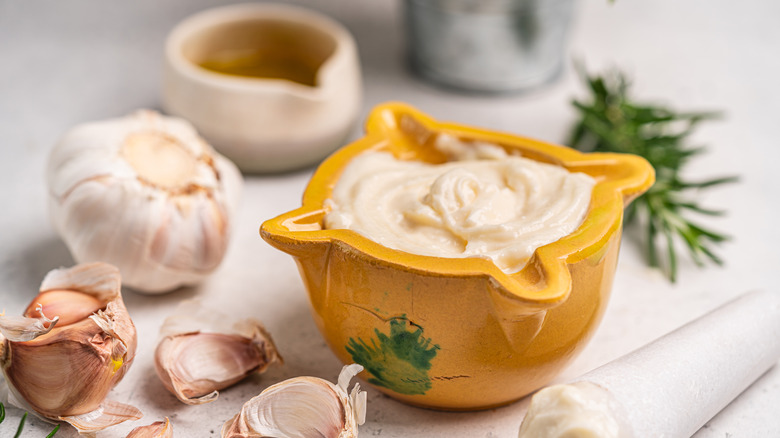
Some may consider aioli to be just a trendy name for mayo. But while it's possible to whip up a shortcut aioli by adding garlic and acid to a scoop of mayonnaise, mayo and aioli are two distinct sauces. Mayonnaise is made by emulsifying egg yolks and oil with an acid. Aioli's base ingredients — also emulsified — are garlic and oil (however, many homemade aioli recipes add yolks and an acid, increasing the similarities to mayo). But we are specifically looking at aioli, as the two key ingredients, garlic and oil, sometimes react in a way that causes the sauce to become bitter. To understand why that happens, we spoke exclusively with Sarah Galletti, executive chef, founder, and creative force behind the Tattooed Chef frozen food line. Her advice to avoid that bitterness? Swap some of the olive oil for a more mild and neutral alternative like avocado oil to "keep the emulsion silky without the bite," she said.
Bitterness in an aioli, Galletti told Chowhound, "usually comes down to two culprits: tired garlic and overworked oil." She further explained, "If you blitz garlic and olive oil together at high speed for too long, the sulfur compounds in garlic plus the antioxidants in extra virgin olive oil can go from bright and peppery to harsh and unpleasant." Many home chefs may turn to EVOO, assuming its rich, complex flavor will do wonders for their aioli. "Extra virgin olive oil is gorgeous," Galletti admitted, "but in aioli it's high maintenance." Sadly, EVOO is more likely to turn bitter when over-blended than a more neutral oil. Instead, her advice is to forgo the EVOO and blend a lighter olive oil with another neutral oil to get a balanced aioli sans any bitterness.
Select your oil and add-ins thoughtfully
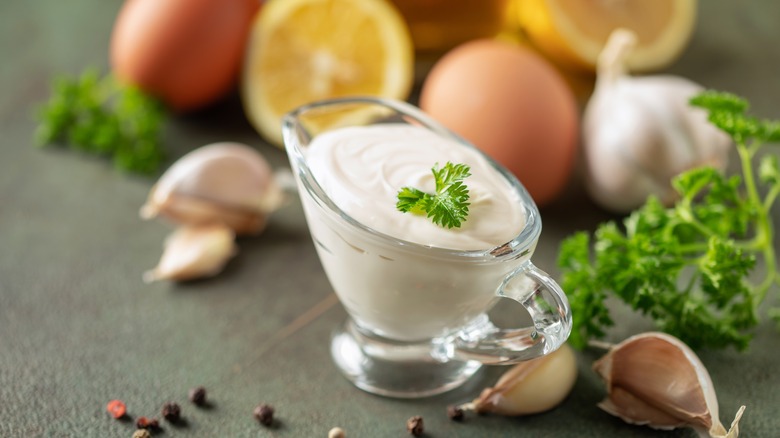
If you're still concerned about serving a bitter aioli, Sarah Galletti has a couple more tricks up her sleeve. As old and tired garlic is another common reason for bitterness in an aioli, making sure to use fresh ingredients is a good start. And when it comes to mixing, Galletti's suggestion is to be gentle. She recommends using a hand whisk or mortar and pestle to mix your aioli; this will greatly reduce the risk of over-mixing and give you more control.
Finally, consider adding other flavors to balance out any potential bitterness: lemon juice, roasted garlic, and Dijon mustard are all good options. The lemon juice will give your aioli a brighter flavor, the roasted garlic a rounded sweet tone, and the Dijon some stability and creamy smoothness. "Basically: think of bitterness as something you nudge back into harmony, not something you fight," she advised. In other words, if your aioli is tasting bitter, don't shy away from adding a harmonizing element that you already have in your kitchen. Besides those already mentioned, some of the best ways to give your aioli a flavor boost include sun-dried tomatoes, capers, and roasted red peppers. Of course, consider the dish you're making it for before adding something too out of the ordinary. A malt vinegar aioli, for example, might go well with fish and chips, but its powerful flavor won't complement just any dish.