

How To Know When Scallops Are Done So You Don't Overcook Them
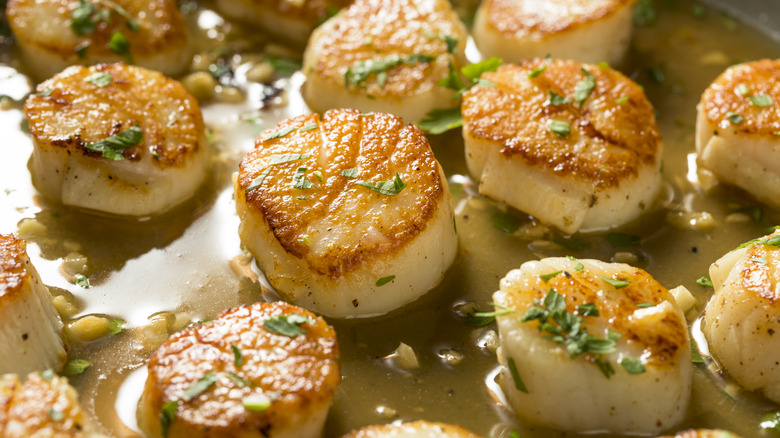
Have you ever eaten a plate of buttery, rich scallops at a restaurant and thought, "I could do that" — only to find out that cooking perfect scallops at home is trickier than you imagined? Despite how deceptively simple preparing them seems, a few easy-to-make scallop mistakes often stand between you and the tender, succulent seafood of your dreams. That's because making perfectly seared scallops is all about timing — any longer than a minute or two on each side, and you risk overcooking the delicate molluscs, leaving them rubbery and unappetizing.
To avoid this tragic fate, watch your scallops carefully for telltale signs of doneness. For the inside scoop on what these are, Chowhound spoke to Sarah Galletti, the executive chef, founder, and creative force behind the Tattooed Chef frozen food line. When it comes to visible cues, Galletti explained, "Raw scallops are translucent and glossy. Perfectly cooked scallops? Opaque edges with just a kiss of translucence in the center." In fact, she recommends pulling scallops off the pan while the center still looks slightly translucent, because leftover heat will finish cooking them. In contrast, she says, "Overcooked scallops go fully opaque, shrink, and sometimes wrinkle."
Watching your scallops isn't the only way to check for doneness, she advises — you can also touch them. "Raw feels mushy, done feels springy and just a little soft, and overcooked feels firm and rubbery," Galletti says.
Why your scallops are rubbery and how to save them
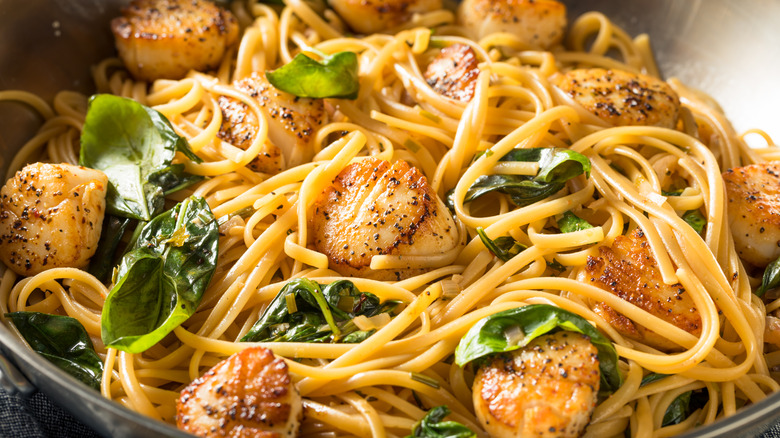
You've heard that scallops should only be seared for one to two minutes at most, but the question remains: why? According to chef Sarah Galletti, "[It's] because scallops are lean little gems with no fat buffer. They cook lightning fast, and one minute too long turns them from buttery to rubbery." Fatty proteins like steak and pork belly or bacon can be cooked for longer, because fat acts as an insulator and keeps the meat moist during heat exposure. On the flip side, lean proteins, especially seafood like scallops, have much less connective tissue to break down and a higher water content, and thus cook more quickly.
Extra water weight is undesirable when cooking scallops because the moisture loss prevents browning in the pan, also known as the Maillard reaction. That's why we always recommend buying dry-packed scallops over wet-packed ones. On a related note, patting scallops until they're bone-dry and using a smoking hot pan are key to getting a good sear, Galletti says.
Unfortunately, despite best efforts, sometimes you still end up overcooking scallops. When that happens, don't panic — just rethink your dish, Galletti advises. "The heartbreak of a rubbery scallop is real, but you can still salvage the flavor," she says. "Chop them up for a chowder, fold into a seafood pasta, or bake them into a breadcrumb-topped dish where texture matters less. Think of them like a sweet seafood accent rather than the star of the plate."