

For More Flavorful Homemade Pickles, Never Skip This Step
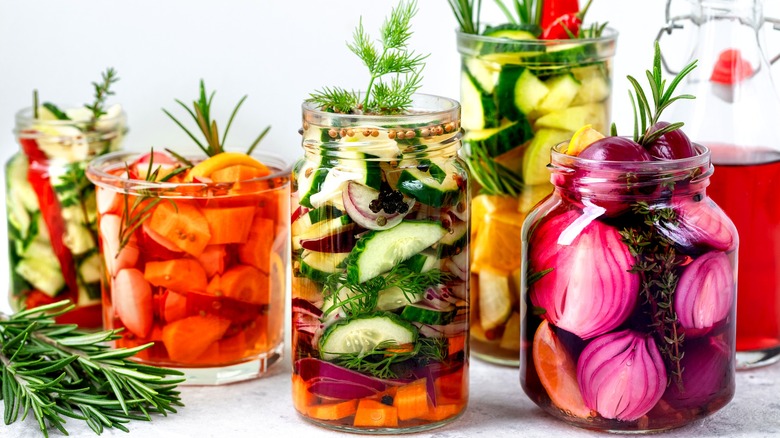
However simple pickles may seem, they're actually a product of a complex scientific process with a ton of factors affecting the end result. For instance, the freshness of your ingredients plays a huge role in the taste and texture of your pickles, while extra steps like smashing cucumbers first can boost the crunchiness of homemade pickles tremendously. One often-overlooked part of the equation is how toasting the brine's spices can give your pickles a major flavor boost.
"Toasting spices, especially if they have been in the back of your pantry for a while, will boost the intensity of their flavor," traditional cooking expert Mary Bryant Shrader explained in an exclusive Q&A with Chowhound. Shrader is the creator of the Mary's Nest YouTube channel and website, and the author of both "The Modern Pioneer Cookbook" and "The Modern Pioneer Pantry." She went on to tell us that, "The aroma that you smell when you toast spices comes from the release of natural essential oils contained within the spice. It's these essential oils that contain the actual flavor of the spice."
Spices contain flavorful compounds and oils that are released when they're ground, heated, or eaten. Toasting breaks down the spices' cellular structures, unlocking those volatile compounds that contribute to their flavor and aroma. The heat can also induce the Maillard reaction on the spices, and the resulting caramelization adds depth, nuance, and intensity to the overall profile. It's the same reason that makes blooming a simple step to create more flavor in spices; toasting just does it without the addition of oil, which you may not want in your pickle brine.
Which spices to toast, and which to keep away from the heat
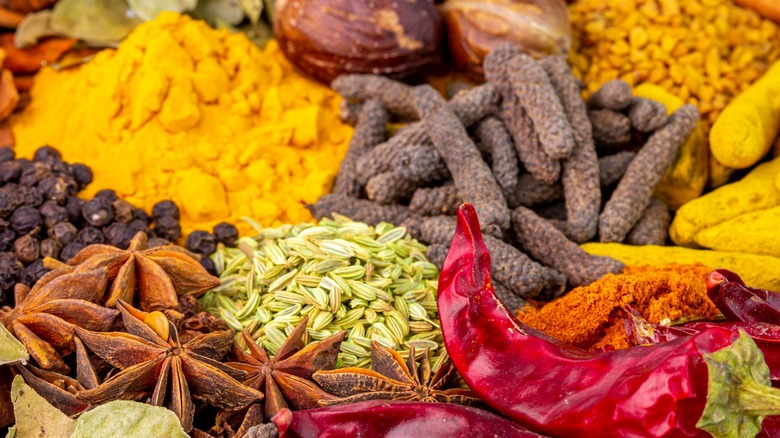
According to Mary Bryant Shrader, you should stick to toasting only whole spices. "Cracked spices expose the essential oils directly to the heat when toasting and can cause the oils to burn and develop an 'off' flavor," she explained. It's one of many techniques that professional chefs use to make the most of their whole spices.
Shrader said the most common spices that are toasted for pickling include black peppercorns, cloves, coriander seeds, cumin seeds, fennel seeds, and mustard seeds. She also mentioned allspice berries, anise seeds, fenugreek seeds, nigella seeds, star anise, and cardamom pods as other good options. For cardamom specifically, she advised toasting the whole pod without cracking it open; the seeds themselves are delicate and can scorch during the toasting process.
In terms of what to avoid, Shrader told Chowhound, "Delicate whole spices, powdered or ground spices, as well as fresh or dried herbs, do not do well with toasting." Specifically, she said to steer clear from toasting bay leaves, cinnamon sticks, chili flakes or powders, and dried dill seed or dill weed, as well as dried basil, oregano, parsley, thyme, and other leafy herbs. Ginger powder, paprika, and turmeric powder are a no-go as well. They either scorch too quickly or develop terrible flavors when toasted, so it's best to add them to your pickling brine either as-is or fresh.
How to toast spices for pickling
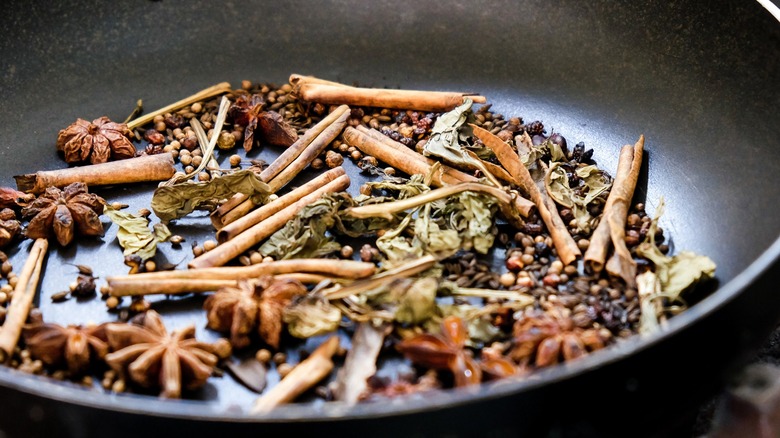
The secret to toasting spices for your pickling brines is to do it in a small skillet (make sure it's dry) on low heat, Mary Bryant Shrader said. "Low heat will draw out the essential oils contained in whole spices, increasing the intensity of their flavors while not damaging those delicate oils contained in the spices," she explained.
Shrader suggested keeping the spices moving on the pan either by tossing or stirring with a wooden spoon. This helps prevent them from burning, which is especially important because it doesn't take long for them to toast. They're usually done within one to three minutes; you'll know they're ready when you can smell a mild fragrance wafting from your skillet. Toasting them for too long or on too high a heat can burn off the volatile compounds they contain and make them less aromatic and flavorful.
Once they're done toasting, you can crush the spices either with a spoon or a mortar and pestle; whichever's handier works as long as you avoid grinding them into a powder. Crushing your spices lightly, especially when they're freshly toasted, maximizes their flavor and aroma. From there, you can mix them into a brine that's been gently warmed, as the heat will help distribute the spices' flavors throughout the liquid. The spices should balance any sharp vinegary notes and bring a depth of flavor your pickles otherwise wouldn't have if they weren't toasted, even when you use quick pickling methods to save on time.