

How To Reheat Pasta In The Microwave Without Having Cold Spots Ever Again
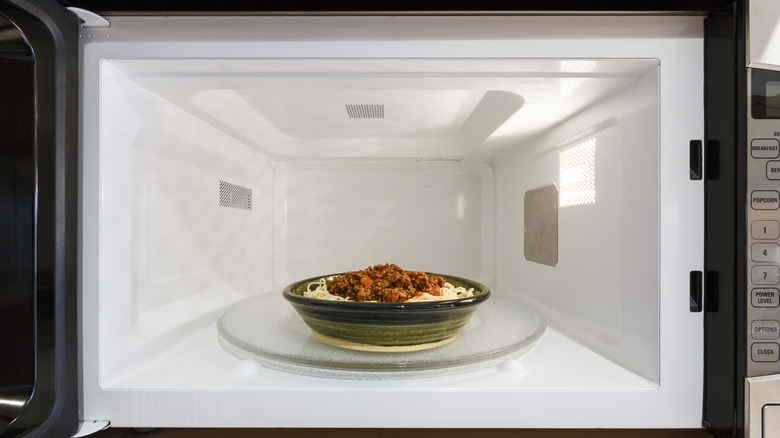
The microwave is unmatched in terms of kitchen convenience, but turning that cold plate of food steaming hot in a matter of minutes (or seconds) often involves cutting some corners. Any bread that's microwaved will lose texture, and several common foods aren't the best suited to microwaving. Fortunately, some irksome outcomes like soggy, chewy, or unevenly heated foods can be avoided by simply understanding how the microwave functions. It's also key to unlocking all that this versatile kitchen stalwart can do, and you might just start using your microwave even more often.
A microwave essentially works by stimulating the water molecules inside food, and since food's moisture level is crucial to its texture, an inherent change in the eating experience is to be expected. The higher the moisture in a food, the less the change is noticeable. Thus, soups and saucy dishes are perfect for reheating in the microwave. A larger liquid component and better distributed moisture in a dish will usually lead to more satisfactory results when microwaved. However, those notorious cold patches can still show up in relatively "wet" dishes like pasta.
In general, the denser a food, the more intensely it needs to be microwaved. Thus, a quick way to deal with cold patches the next time you reheat pasta is to ensure it is spread out instead of in one dense, starchy mass. Warm it on a plate instead of a bowl; for even better heat distribution, arrange the pasta in a ring, keeping the center empty and essentially forming a large donut shape. While not foolproof, the ring method works better than most others, and combined with a few more microwave hacks, ensures your microwaved pasta never has cold spots again.
Why the ring method for heating food in the microwave works
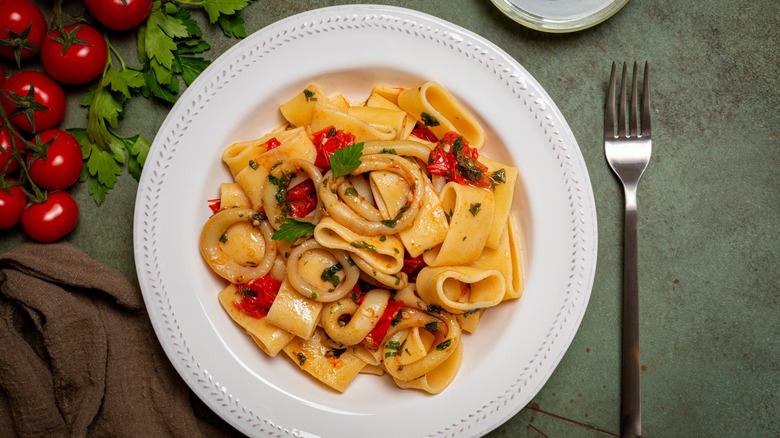
The ring method works by increasing the surface area of the food that's directly exposed to the microwaves' heating action. The effectiveness of microwaves is strongest at the surface. Thus, maximizing the surface area and reducing very thick layers of food, both of which can be achieved by arranging food in a ring, increases the chances of even heating. However, this method doesn't completely help one avoid the microwave's cold spots, since their location can vary based on the appliance. Generally, the rotation of the tray helps avoid a single area of the food from remaining in the cold spot.
Practically, the ring method reduces the chances of any spots left completely cold, but the efficiency of the method comes down to the food being heated. It works well with most types of pasta, which can be easily arranged into a relatively even ring. In multiple tests, the pasta was simply spread on the plate instead of forming it in a ring, and the even heating effect worked in that case as well.
Ultimately, any method that increases the surface area of your food gives better heating. Often, simply spreading it out on the plate can do the trick. However, the more you spread out the food, the faster it loses moisture, so try and avoid the pasta drying out. Dishes with components of varying density will almost always heat unevenly. In, say, spaghetti and meatballs heated using the ring method, the meatballs and the pasta will be at different temperatures due to their differing densities. However, both will be heated, and the chances of a cold spot will be much lower.
Different foods heat differently in the microwave
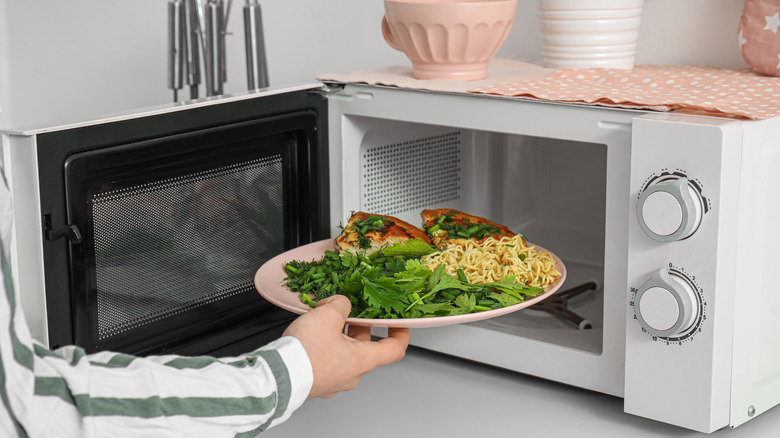
How effectively a dish heats up and, therefore, whether you can expect its insides to be cold even after microwaving it, depends on its components. Microwave radiation penetrates food, heating water molecules as it goes in, but losing energy itself. The depth that this radiation achieves differs across foods. For example, the heating effect is able to penetrate starchy foods significantly deeper than proteins. Thus, potato and pasta, which are starchy, will heat up faster and more thoroughly than meat in a microwave. You simply have to heat meat for longer, and it eventually warms all the way through. For this, use a lower heat level instead of making the mistake of always microwaving on the highest setting. Generally, foods like meat and other proteins or even thick soups) heat up more evenly when a lower heat setting is used and the food is microwaved for longer. This also helps avoid the surface of the food from quickly getting very hot, even while the inside remains cold.
Another crucial factor to ensure certain foods not only heat up but also retain their texture as best as possible is to conserve moisture. Steam can help improve how thoroughly and evenly food heats up, so it's a good idea to try and retain as much steam as possible around the food you're microwaving. One way to achieve this is by covering it with a lightly damp paper towel or even a microwave-safe lid. Alternatively, simply sprinkle a few teaspoons of water on the food you're about to heat up. The excess water turns to steam, helping heat the food and preventing it from drying out.