

According To Science, It Might Be A Bad Idea To Booze Up On An Airplane
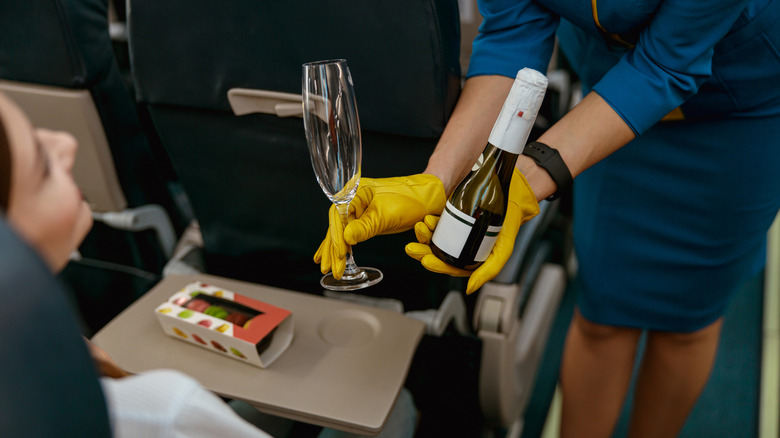
It's no secret that plane travel can be stressful. There's the chaos of the airport, the discomfort of sitting in small seats beside strangers for hours at a time, and the phobia of flying that estimates say between 15% and 40% of adults in the United States experience, per Metropolitan State University of Denver. All that stress has many passengers reaching for a drink or two, or sometimes more. Most long flights offer alcoholic beverages for purchase, and you can even bring your own traveling cocktail kit with garnishes for an elevated experience. But, as much as a stiff drink can relax an anxious flyer, it can also have negative effects on sleep and overall health.
One 2023 study, published in the Thorax medical journal, found that consuming alcohol in an airplane cabin environment decreased participants' blood oxygen levels and increased their heart rates during sleep, straining their cardiovascular systems and compromising sleep quality. High altitudes already lower air pressure and make breathing more difficult; adding alcohol only worsens those effects.
Beyond sleep quality, alcohol also affects hydration levels. According to expert Kathleen Benson, CSSD, CPT, and RDN at VNutrition, "Alcohol acts as a diuretic, increasing fluid loss. In flight, this adds to the dehydrating effect of cabin air, which can make you feel more tired, foggy, or bloated." That doesn't mean you can't drink on flights at all, but Benson does warn that doing so may worsen anxiety or fatigue. "Effects are often stronger in the air than on the ground," she says. If you find that alcohol increases your anxiety or significantly worsens your health on the ground, understand that it only get worse in the air. In that case, we advise skipping the booze and trying a refreshing ginger ale instead.
The healthiest ways to drink alcohol on a flight
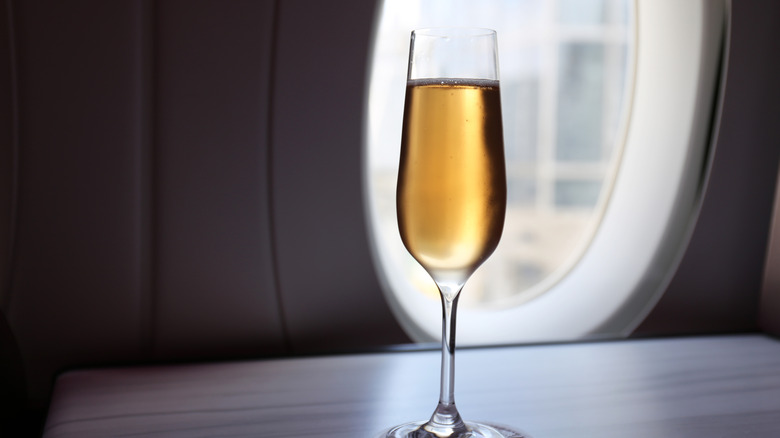
Despite the risks, many still choose to indulge in an in-flight drink. Kathleen Benson says it's a safe enough choice for most healthy adults, as long as you practice moderation. To help avoid dehydration or fatigue, Benson suggests taking a few precautions. "Pair it with a snack (ideally with protein), and drink a glass of water alongside it," she advises. "This helps slow absorption, maintain hydration, and keep blood sugar more stable." This means finding something healthy to nosh on is essential, even if some airplane food should be avoided.
In addition, Benson suggests "lower-alcohol options, like a wine spritzer, a small glass of Champagne, or dry white wine, may be more supportive during travel since they're typically served in smaller portions and contain less alcohol and sugar than many cocktails. Pacing yourself and staying hydrated this way can help you feel more comfortable in-flight and avoid that sluggishness more alcohol can bring." Just don't bother springing for a top-notch wine in the air since flying dulls your sense of taste.