

Asparagus Takes On The Greatest Flavor When Using This Unexpected Seasoning
We may receive a commission on purchases made from links.
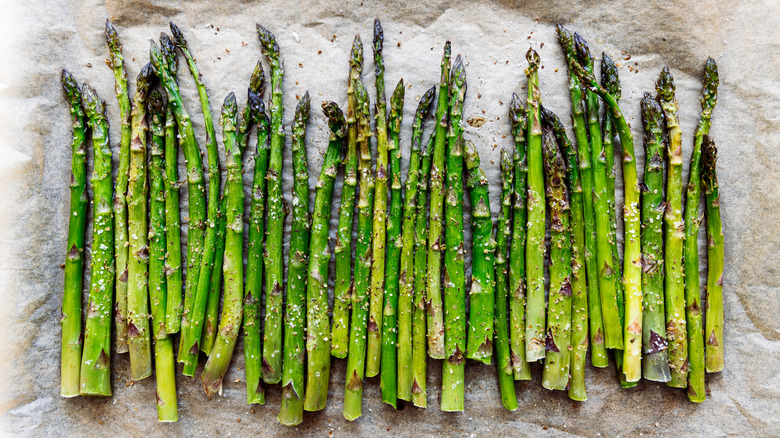
Asparagus is a nutritionally viable ingredient with a lot of potential — you just need to know how to unlock it. Speaking with Nisha Vora, vegan recipe developer and NYT best-selling author of "Big Vegan Flavor," Chowhound got some insight about how to make the most of this grocery staple, and it's not what you may initially think. "I love seasoning asparagus with fresh garlic, lemon zest, and flaky sea salt for a classic but delicious flavor pairing." Most notably, she recommends "a sprinkle of dukkah."
If you've never heard of dukkah before, it happens to be an Egyptian blend of herbs and spices. Our expert goes on to say that "most varieties of dukkah contain sesame seeds and some form of nuts, which are lovely pairings for asparagus." This is because the textural variety between the soft cooked asparagus and crunchy spice seasoning does wonders for elevating a dish. Which Vora thinks, "can add a fun pop of indulgent textural contrast to vegetal asparagus."
Sprinkling this spice blend over top of your asparagus is one thing, but there are additional ways to aid in this ingredient's kick. This, in part, comes down to the cooking technique you plan to use before adding your spice blend. Our expert says, "after grilling, pan-frying, or roasting asparagus, you can simply sprinkle some dukkah on top." But you don't have to stop there. She notes that you could also "top your asparagus with a creamy sauce such as a yogurt sauce or aioli." That said, it is important to get to grips with when to use various types of asparagus in your different recipes before you hit the grocery store.
Other interesting spice mixes to try
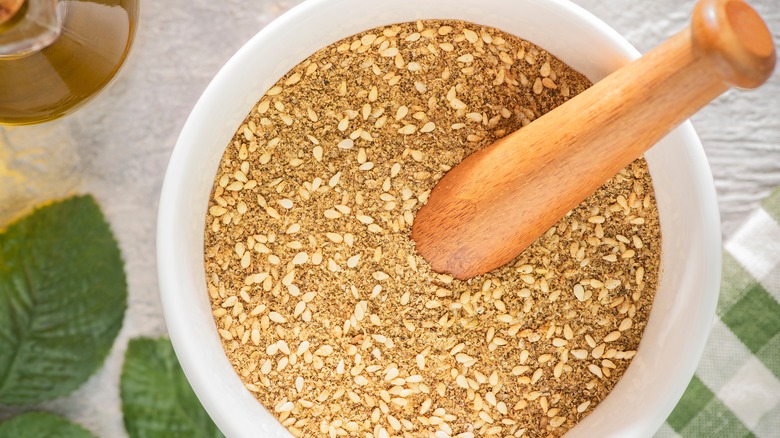
The great thing about dukkah is that it goes well with a variety of vegetable dishes. This may sound like an interesting blend to incorporate into your weekly dinner recipes, but there are many other exciting go-to spices that Nisha Vora recommends. "I like using bold, global flavors to make vegetables more exciting." Dishes that may otherwise feel tired, can be elevated with spice mixes and flavors you wouldn't normally use. Adding another reason why it's good to note the difference between spices and seasonings.
"Za'atar is another Middle Eastern favorite for its earthy, herby flavor, especially on eggplant, cauliflower, or carrots," Vora says, which can of course be mixed in with asparagus and many other vegetables you feel inclined to include. Saffron and sumac are other spices that may seem elusive, but it turns out they also make phenomenal additions to your vegetable recipe rotation. "For instance, sumac adds a tart, citrusy kick to roasted cauliflower or potatoes, as well as pickled onions or cucumber salads."
Many of these combinations don't require you to run to a specialty grocer either. "A drizzle of toasted sesame oil plus soy sauce and a shake of roasted sesame seeds can take a steamed broccoli or green beans from boring to fun in a flash," says Vora. Other texturally varied ingredients can really make the most of your vegetable dishes. Vora says that "caramelized shallots plus toasted nuts, such as walnuts or pine nuts, are another fab pairing for asparagus." Just make sure you avoid these 12 seasoning mistakes when you start planning your next recipe.